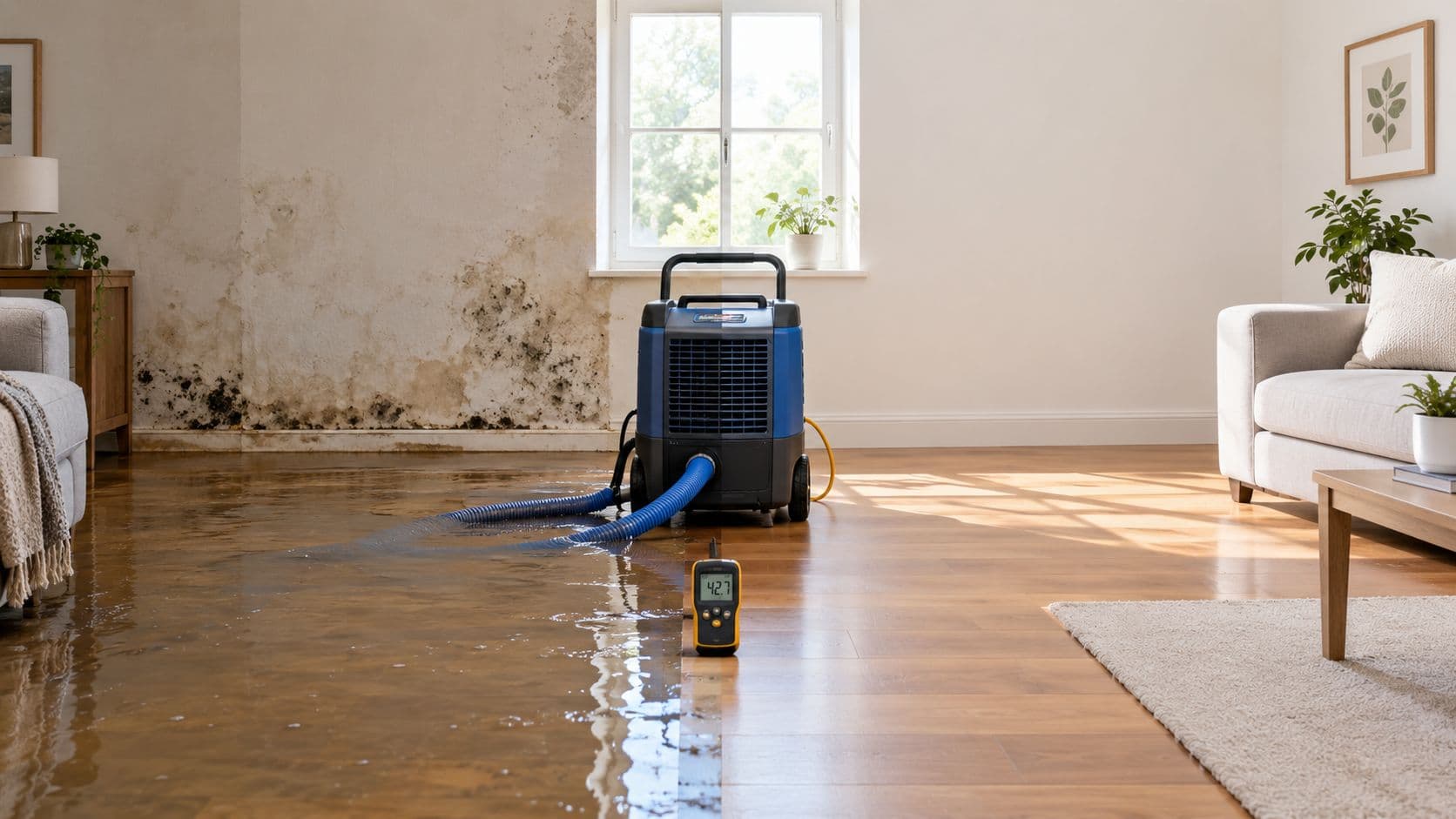
About $1,300 to $5,800 is a common national range for combined water extraction and drying, with rates around $3 to $7.50 per square foot. Extraction alone is often only a small part of the final mitigation bill.
A failed sump pump, burst supply line, or overflowing appliance can turn a familiar room into a calculation nobody wanted to make. The standing water is visible, but the expensive part may be underneath the carpet, behind the baseboards, inside the drywall, or under the subfloor. A sensible water extraction cost estimate separates the first pump-out from the drying, sanitation, demolition, monitoring, and repairs that may follow.
What Most Homeowners Pay for Water Extraction
A failed sump pump leaves a homeowner with two separate decisions: pay for standing-water removal, or authorize the full mitigation work needed to make the space dry and safe. Those services overlap, but they are not the same bill. The practical national benchmark for combined extraction and drying is about $1,300 to $5,800. The published water-damage pricing benchmark places clean-water damage near $3.50 per square foot, gray-water damage near $5.25 per square foot, and severe black-water damage near $7.50 per square foot. It also shows a 500-square-foot clean-water basement averaging about $1,750 for extraction and drying.
Use those figures as a planning range, not as a phone quote. A small, accessible area with clean water may require limited extraction and short-term drying. Water that spreads across several rooms, reaches porous materials, or contains contamination usually requires more labor, equipment, protection, and disposal.
| Job Scope | Low | Average | High | Typical Unit Rate |
|---|---|---|---|---|
| Combined extraction and drying | About $1,300 | Varies by loss | About $5,800 | About $3 to $7.50 per square foot |
| Minimum service call | About $300 to $500 | Applies to small jobs | Varies by scope | Varies by service |
| Gray-water damage | Varies by area | Varies by scope | Varies by scope | About $5.25 per square foot |
| Severe black-water damage | Varies by area | Varies by scope | Varies by scope | About $7.50 per square foot |
The bill becomes easier to assess when you separate the first visit from mitigation. Extraction covers pumping and removing pooled water. Mitigation can add moisture checks, air movement, dehumidification, material removal, sanitation, monitoring, and preparation for repairs. Ask which of those items the estimate includes before comparing totals.
Five questions usually explain the difference:
- What category of water entered the property?
- How much flooring, drywall, and structure got wet?
- How quickly did extraction begin?
- What equipment and labor will drying require?
- Does the quote include structural drying, or only removal of standing water?
Timing can shift the scope. A prompt extraction may limit how far water travels into materials, while delayed action can turn a removal job into a broader mitigation project.
Practical rule: A low extraction quote is not necessarily a low restoration cost. Compare the complete scope, including drying, monitoring, sanitation, removal, and exclusions, rather than the first number given by phone.
Regional labor rates affect the estimate, but the quote should still show what the crew will remove, what it will dry, how moisture will be monitored, and which repairs are excluded.
What Water Extraction Is and How the Process Works
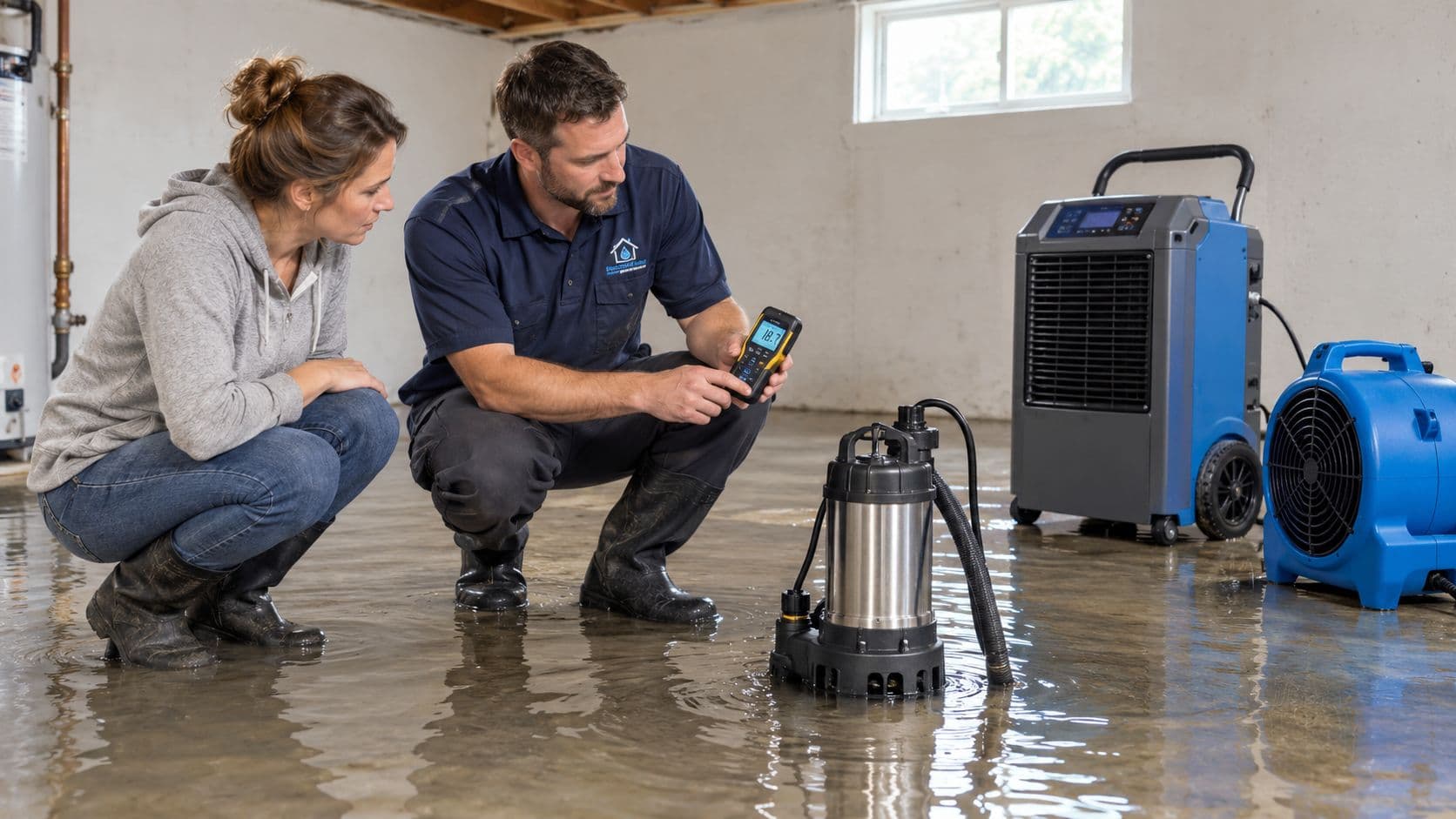
Water extraction is the physical removal of standing or pooled water from a building. Crews may use submersible pumps for deeper water, truck-mounted extraction systems for large losses, and weighted wet vacuums for carpet, pad, and hard surfaces. The equipment choice depends on water depth, access, flooring, and whether the water is contaminated.
Water behaves in layers. It may sit visibly on top of a floor, soak into carpet and pad, wick upward into drywall, and travel beneath baseboards or flooring. Removing the surface water doesn't prove that the building is dry. It only removes the part that can be seen or reached first.
The extraction stage
The first pass uses high-volume equipment to remove the largest amount of standing water quickly. Once the visible pool is gone, technicians shift to lower-volume pickup and specialized extraction from carpet, pad, seams, and difficult edges. They also inspect areas where water can remain trapped, including closets, thresholds, floor transitions, and gaps beneath cabinets.
The work normally follows this sequence:
- Assessment and safety check: The crew identifies the source, affected rooms, electrical hazards, and apparent water category.
- High-volume removal: Pumps and extraction units clear standing water.
- Detailed pickup: Technicians remove residual water from flooring and edges.
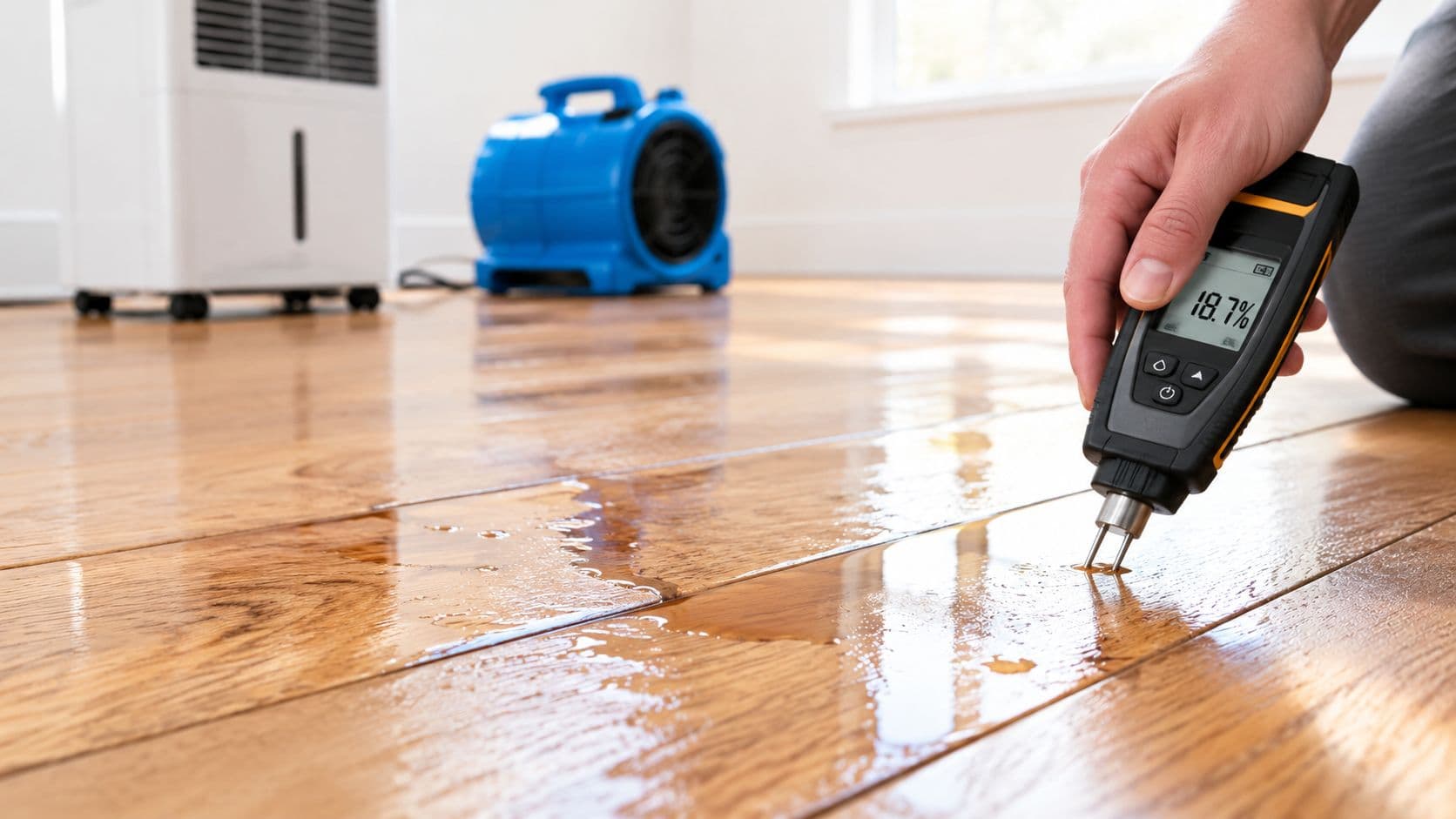
- Moisture inspection: Meters and other detection methods help locate wet materials that aren't obvious.
- Structural drying: Air movers and dehumidifiers remove moisture from materials and indoor air.

Extraction isn't the same as mitigation
Drying comes after extraction. Air movers increase evaporation from wet surfaces, while dehumidifiers remove moisture from the air so materials can continue releasing it. Depending on the loss, drying can last several days, and pricing guides commonly report equipment charges of about $500 to $1,500 per day, with typical drying lasting three to seven days. Current restoration pricing guidance separates these equipment and duration costs from the initial service call.
Mitigation is the wider process. It can include containment, sanitation, antimicrobial treatment, removal of unsalvageable materials, disposal, moisture monitoring, and preparation for reconstruction. The water mitigation guide explains why extraction is only one stage in controlling water damage.
A homeowner paying only for a pump-out may still need to pay for drying and material removal. The estimate should make that distinction explicit.
The Main Price Drivers Behind Every Estimate
A water extraction estimate reflects more than the amount of water on the floor. The key pricing decision is whether the property needs extraction alone or full mitigation. Area, access, water category, timing, and the materials involved determine which bill you receive.
Extraction is often priced by square footage, with minimum service charges for small jobs. A small removal-only visit may stay below $1,000, while severe Category 3 mitigation can exceed $20,000 once sanitation, disposal, demolition, and structural drying are included. Drying-equipment charges are billed per day and are covered in the process section above.
Area and access
Square footage matters, but room layout can change the labor substantially. A large open basement is usually easier to service than a smaller loss spread across a bathroom, hallway, closet, and cabinet run. Crews may need more hose, equipment movement, setup time, and moisture checks when water crosses room boundaries.
Equipment count also rises with the number of affected rooms. A two-room loss may need four to six air movers, compared with one or two for a single room. That increases both daily equipment charges and the time required to place, monitor, and remove the machines.
Materials add another layer. Tile over a sound slab is easier to inspect and dry than carpet pad, hardwood, insulation, drywall, or a saturated subfloor. Hidden cavities may require additional inspection and controlled removal before the crew can verify that drying is complete.
Water category
Clean supply-line water generally requires the least treatment. Gray water from certain appliance leaks or plumbing overflows creates a higher cleaning, containment, and disposal burden. Black water from sewage or gross contamination demands the most protective handling and often expands the job beyond extraction.
IICRC-aligned categories distinguish Category 1 clean water, Category 2 gray water that can cause illness on contact, and Category 3 grossly contaminated water that may contain pathogenic or toxigenic agents. The category definitions explain why two losses with the same floor area can produce very different estimates.
Timing and equipment
Fast extraction can limit how far water penetrates porous materials. Delayed response can change the scope from removal alone to removal plus demolition, disposal, sanitation, and extended drying. Emergency dispatches may also carry an out-of-hours premium.
| Cost Driver | What It Covers | Typical Range or Premium | When It Applies |
|---|---|---|---|
| Extraction area | Pumping and detailed water removal | About $3 to $7 per square foot | Standing or absorbed water |
| Minimum service call | Travel, setup, labor, and initial response | About $300 to $500 | Small jobs and emergency dispatches |
| Drying equipment | Air movers, dehumidifiers, and related labor | Billed by day | Structural drying after extraction |
| Water category | Containment, cleaning, sanitation, and disposal | Higher as contamination increases | Gray- and black-water losses |
| Duration | Continued equipment use and monitoring | Depends on drying time | Wet drywall, flooring, cavities, and subfloors |
A quote that lists only square footage is incomplete. Ask whether it includes material removal, contamination controls, equipment duration, moisture monitoring, and final verification. Those details show whether you are paying for extraction alone or the mitigation the property needs.
DIY Extraction Versus Hiring a Professional
DIY extraction makes sense only when the incident is small, recent, clean, and confined to a surface that won't trap moisture. A shallow spill on a sealed concrete floor is a different problem from water that has entered carpet padding, drywall, insulation, cabinets, or a subfloor.
A wet/dry vacuum can remove visible water from a limited area. Fans can help air movement, but household equipment can't reliably confirm whether moisture remains behind a wall or beneath flooring. The homeowner also needs to stop the source safely and avoid electrical hazards before attempting cleanup.
DIY is reasonable when
- The source is stopped: No active leak, overflow, or rising water remains.
- The water is clean: The incident came from a clean supply source rather than sewage or contaminated backup.
- The materials are nonporous: Sealed concrete or similar surfaces are easier to inspect and dry.
- The area is limited: Water hasn't crossed rooms or entered hidden cavities.
- Moisture can be verified: The surface and surrounding materials can be checked rather than judged by appearance alone.
Professional extraction becomes the better financial choice when water has sat for more than 24 to 48 hours, when carpet pad or drywall is wet, when the source involves gray water, or when the affected area is roughly more than 100 square feet. These thresholds are practical decision points, not guarantees. Guidance on water-damage repair costs explains why prolonged drying and hidden saturation can move extraction from a modest service into a much larger project.

The professional advantage
Restoration crews bring higher-capacity extraction equipment, moisture meters, and methods for checking baseboards, flooring assemblies, and subfloors. They can also separate salvageable materials from those that require removal. That matters because a room can look dry while moisture remains inside a wall or under a finished floor.
The guide to drying wet drywall offers a practical way to judge when surface drying is insufficient. The cheapest immediate action isn't always the cheapest completed job. Professional work is often justified when contamination, hidden moisture, or scale makes a failed DIY attempt likely.
Add-On Charges That Often Surprise Homeowners
The first phone estimate often covers the most visible task, removing standing water. The final invoice can include a second layer of work because drying and mitigation require time, equipment, access, and sometimes removal of wet building materials.
A homeowner should ask whether the estimate includes each of these categories:
- Drying equipment: Air movers and dehumidifiers may be billed for each day they remain on site. The charge continues if materials haven't reached the contractor's drying target.
- Moisture monitoring: Follow-up readings confirm whether walls, floors, and cavities are drying. Removing equipment too early can leave trapped moisture behind.
- Cleaning and treatment: Gray- and black-water events may require containment, sanitation, antimicrobial treatment, and controlled disposal.
- Demolition and disposal: Wet carpet pad, baseboards, drywall, insulation, and other porous materials may need removal when they can't be dried or cleaned effectively.
- Contents handling: Furniture and personal property may need to be moved, packed, cleaned, or stored before the crew can reach the affected structure.
- Reconstruction: Replacement flooring, drywall installation, painting, cabinet work, and finish repairs usually sit outside the initial mitigation scope.
Why the base number changes
Extraction removes water. It doesn't automatically restore the room. If water traveled under flooring, the crew may need to open or remove materials to expose the wet assembly. If the water category requires sanitation, the labor and disposal process becomes more involved than a clean-water pump-out.
Drying charges also depend on placement and duration. A contractor may need several machines in separate rooms, then return for monitoring before removing them. A quote that bundles everything into one vague “cleanup” line makes it difficult to tell whether a low price reflects efficiency or missing work.
Ask for this before signing: The estimate should identify extraction, drying equipment, monitoring, treatment, demolition, disposal, and reconstruction as separate scopes.
The water extraction cost guide draws the important distinction between extraction alone, which can range from about $300 to $3,500, and full water-damage work, which can reach roughly $1,200 to $25,000 or more once drying, materials, monitoring, and repairs are included. That gap is why the first number should never be treated as the complete bill.
Sample Scenarios and Realistic Cost Estimates
The bill depends on what happened before the crew arrived. A clean supply-line break, a finished-basement flood, and an appliance leak left unnoticed can involve very different scopes, even when the visible water looks similar. The key decision is whether extraction is enough or the property needs full mitigation, including drying, treatment, demolition, and repairs.
A small clean-water incident
A burst supply line affecting part of a bathroom may need rapid extraction, focused air movement, dehumidification, and moisture verification. If water remains on a nonporous surface and has not entered walls or flooring layers, the job may end after drying is confirmed. Water under baseboards or inside a floor assembly changes the scope because those materials can retain moisture after the surface appears dry.
Area size still matters, but access and timing can matter more. A small leak addressed immediately may require extraction and verification only. The same leak left overnight can lead to material removal and reconstruction.
A finished basement loss
A sump pump failure across a finished basement usually involves several affected materials. Carpet pad, lower drywall, trim, stored contents, and subfloor areas each require separate decisions. Extraction starts the work, followed by demolition where needed, treatment based on the water category, equipment placement, monitoring, disposal, and possible reconstruction.
The benchmark table above shows that a clean-water 500-square-foot basement averages about $1,750 for extraction and drying alone. The benchmark example illustrates why room size and scope belong together on an estimate. Materials, contamination, and repairs can move the final bill well beyond extraction and drying.
A delayed appliance leak
A leak behind a dishwasher, refrigerator, or washing machine can cost more than a larger event caught at once. Water may wick into cabinets, baseboards, flooring, and the wall cavity. A delayed leak commonly adds $800 to $2,500 in cabinet, drywall, and flooring work. If the water is gray, cleaning and disposal controls add further work, while swelling can signal damage below the visible finish.
| Scenario | Affected Area | Likely Scope |
|---|---|---|
| Recent clean-water leak on a limited hard surface | One contained area | Minimum call, extraction, drying verification |
| Finished basement water loss | Multiple surfaces and porous materials | Extraction, drying, demolition, treatment, disposal, and possible repairs |
| Delayed appliance leak | Flooring, baseboards, cabinets, or wall cavity | Extraction, contamination controls, drying, and material-specific repairs |
Compare visible water with affected construction before accepting a quote. A smaller leak can produce the larger invoice when it sits under flooring or inside a wall. A broader clean-water event may remain manageable when the crew reaches it quickly and extraction is followed by verified drying.
Insurance Coverage, Deductibles, and Documentation
Insurance usually turns on the cause and the policy language. Sudden, accidental water events such as a burst pipe may receive different treatment from gradual leaks, neglected maintenance, sewer backup, or flooding. Sewer backup coverage may require a separate endorsement, and standard homeowners coverage often doesn't treat outside flooding the same way as an interior plumbing loss.
A deductible can consume much or all of a smaller extraction invoice. The policy may also distinguish between Actual Cash Value, which accounts for depreciation, and Replacement Cost, which may pay differently when damaged materials are replaced under the policy's conditions. The insurer may have rights concerning contractor selection, so the homeowner should read the policy and ask the adjuster how that process works.
Document before the room changes
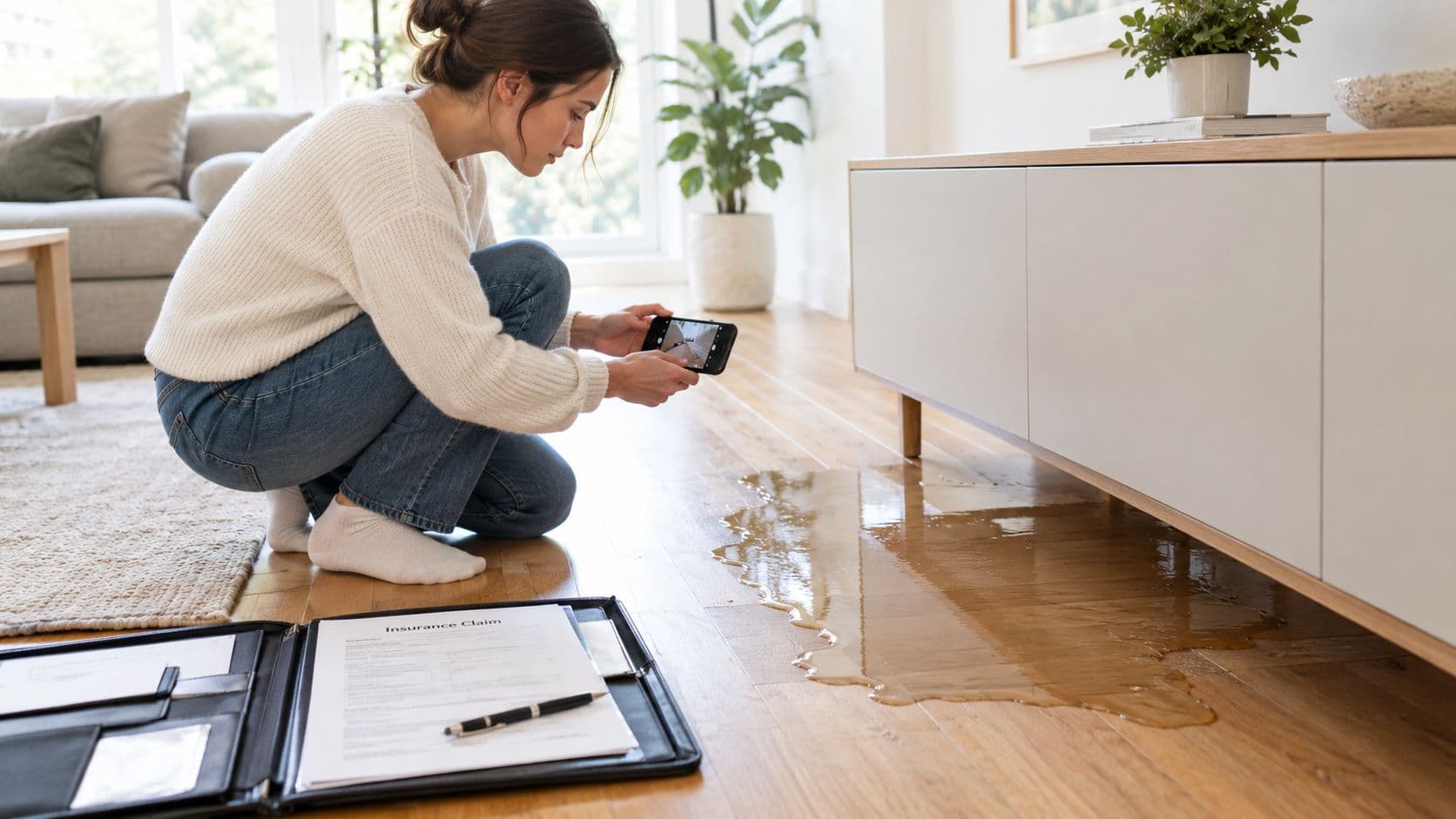
Safety comes first, and active water should be stopped when it can be done safely. After that, documentation should begin before materials are removed, provided delaying emergency mitigation won't increase damage.
- Photographs and video: Capture standing water, wet materials, room boundaries, damaged belongings, and the source if visible.
- Incident timeline: Record when the problem was discovered, when the source was stopped, and when professionals were contacted.
- Itemized estimate: Request separate lines for extraction, drying, monitoring, treatment, demolition, disposal, and reconstruction.
- Moisture records: Keep readings, equipment logs, and notes from inspection visits.
- Receipts: Save emergency purchases, temporary protection, equipment rental, and mitigation payments.
The water-damage inspection guide can help a property owner understand what an inspection should document. An adjuster's approval may take time, but waiting for approval before stopping active water damage can make the property worse and complicate the claim.
The practical approach is to notify the insurer promptly, ask what emergency work is authorized, and preserve evidence while qualified professionals control the loss. Good documentation doesn't guarantee coverage, but it gives the claim a clear factual record instead of leaving the adjuster to reconstruct the event from a final invoice.
Getting Quotes and Knowing When to Act Fast
A comparable quote requires an on-site inspection. A phone estimate can identify a likely service range, but it can't reveal moisture behind baseboards, under flooring, or inside a wall cavity.
A homeowner should ask each contractor for the same information:
- Request a written, itemized scope: Extraction, drying, monitoring, treatment, demolition, disposal, and reconstruction should be separated.
- Ask how drying will be verified: Equipment placement and moisture readings should be explained, not treated as an unexplained daily charge.
- Confirm relevant credentials: Ask whether the technicians hold appropriate restoration training and certification.
- Clarify water category: The estimate should state whether the loss is treated as clean, gray, or black water and why.
- Check exclusions: A low mitigation quote may exclude flooring, drywall, contents, or reconstruction.
Several signs call for action within hours rather than days: standing clean water that has remained for more than 48 hours, visible drywall staining, warped hardwood, musty odors, or any Category 2 or Category 3 contamination. IICRC-aligned severity guidance also distinguishes Class 2 damage, involving 5% to 40% of the combined affected area, from Class 3 damage affecting more than 40%, often including ceilings, insulation, carpet, pad, and subfloor. The water-damage class definitions show why affected area should be measured across materials, not guessed from the floor alone.

The decision rule is straightforward. If water has crossed room boundaries, wicked into baseboards, or touched porous materials, a certified restoration professional should be contacted promptly. PostDamage provides water-damage guidance and can help consumers identify an appropriate next step without treating the first extraction number as the whole financial picture.
PostDamage helps homeowners, landlords, and small businesses understand water extraction, drying, mitigation, and insurance documentation after a loss. Visit PostDamage to describe the situation and find guidance for the next practical step.