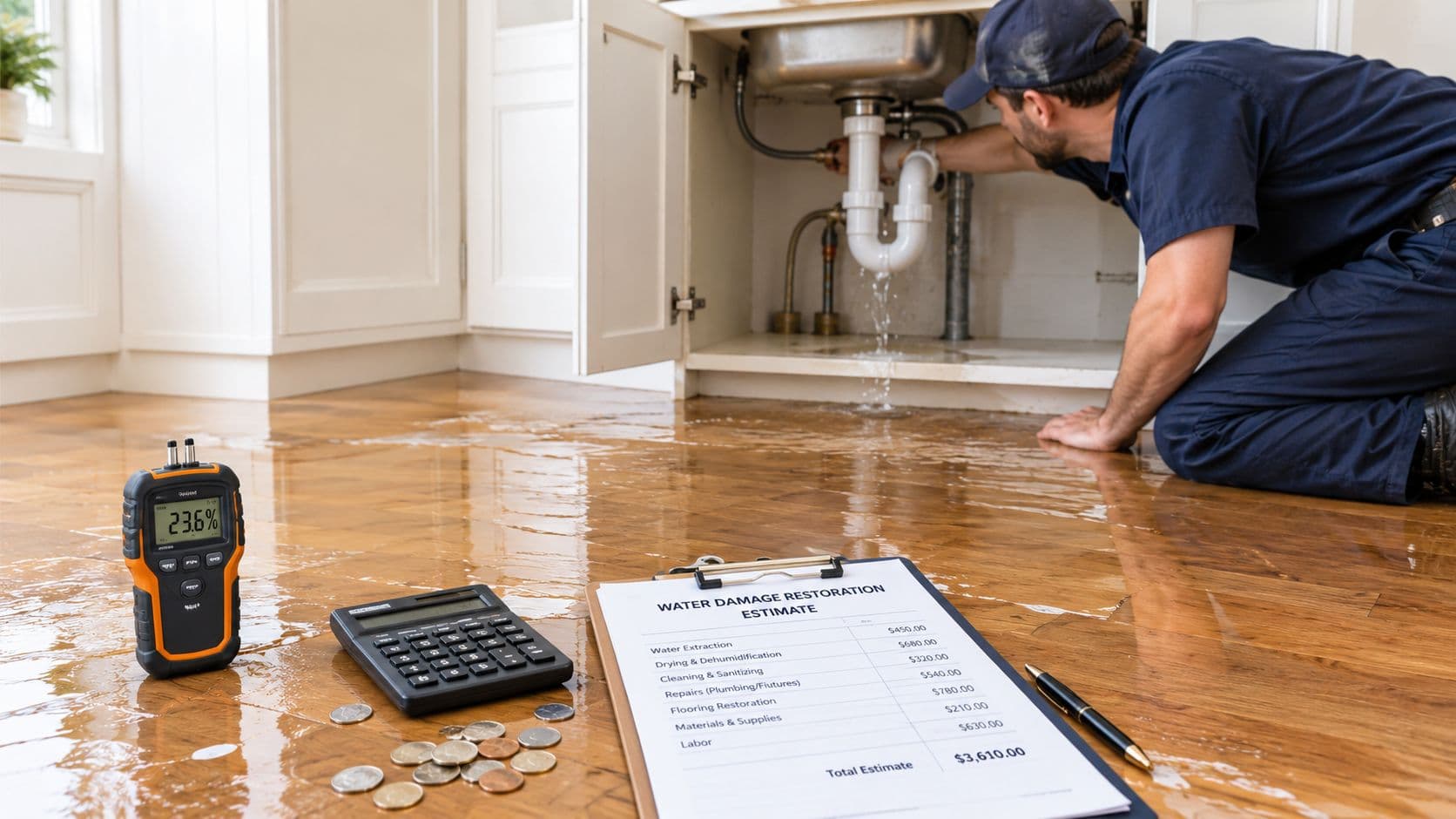
A universal residential water damage restoration cost doesn't exist, but a useful U.S. benchmark is an average insurer payment of approximately $15,400 for water-damage and freezing claims from 2019 through 2023. That figure isn't a contractor quote, and the final bill depends on whether the loss stops at emergency mitigation, requires structural drying, or reaches reconstruction.
A homeowner may discover a wet ceiling after a pipe failure, hear water running behind a wall, or find a flooded room after an appliance leak. The visible puddle is only the starting point. The invoice follows the water into flooring, drywall, insulation, cabinets, subfloors, contents, and concealed cavities.
The most useful way to evaluate the bill is to separate emergency mitigation, structural drying, and reconstruction. Each phase has different cost drivers, and response time often determines whether a loss stays in the first phase or expands into all three.
Understanding Water Damage Restoration Cost Phases
A homeowner finds water spreading across a kitchen floor late in the evening. The supply valve is shut off, standing water is removed, and the affected belongings are moved away. At that point, the final water damage restoration cost isn't known, because the structure still needs to be inspected and verified dry.
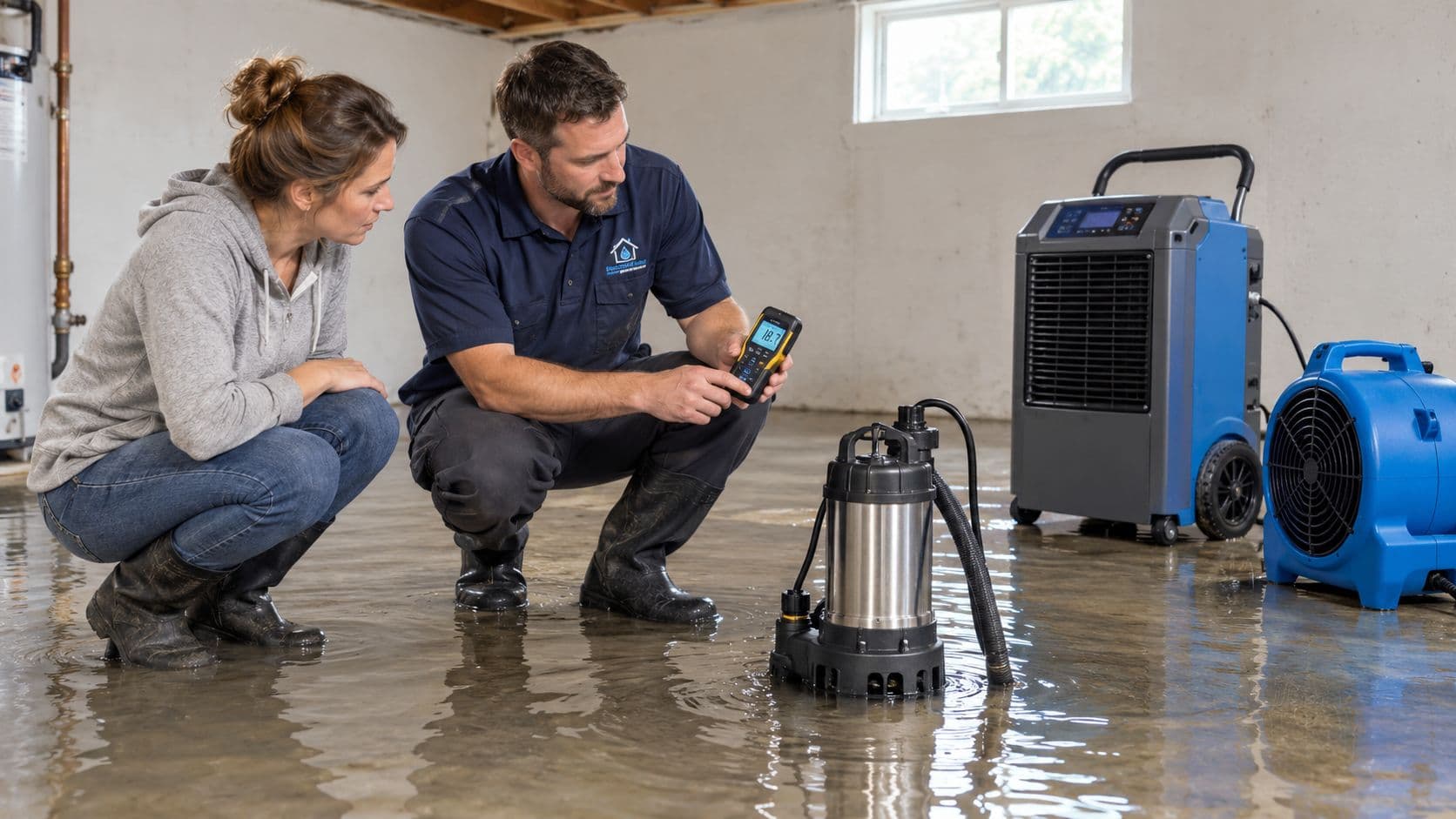
The first phase is emergency mitigation. It includes stopping or controlling the source when that can be done safely, extracting standing water, protecting unaffected contents, and identifying the wet footprint. A contained sink or appliance leak may require little beyond extraction and targeted drying. A burst pipe under a bathroom can send water beneath flooring, into wall cavities, and through the ceiling below.
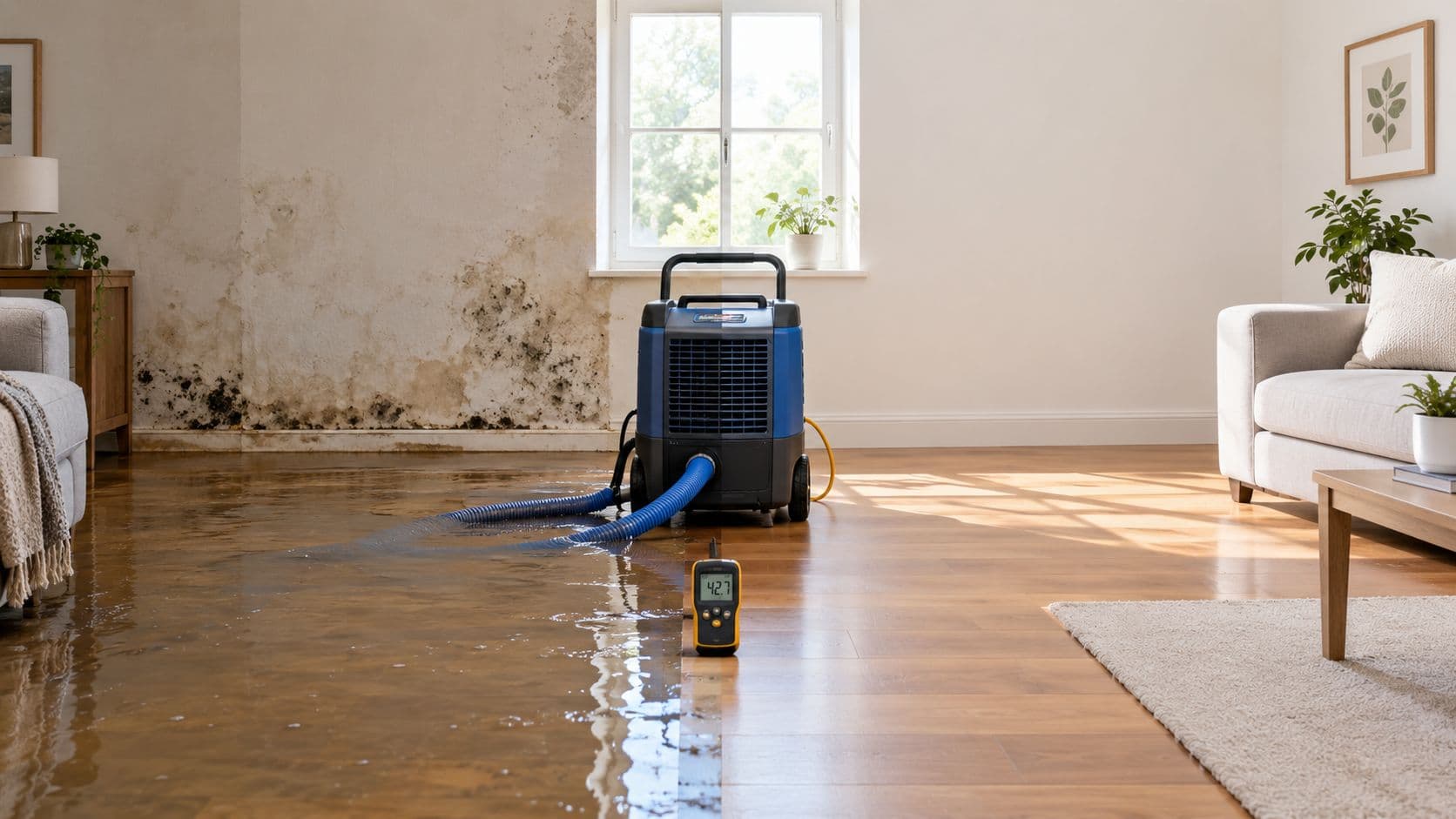
The second phase is structural drying. Restoration technicians use air movement, dehumidification, moisture readings, and follow-up checks to determine whether drywall, flooring, framing, insulation, and subfloors are drying. Equipment duration matters because the bill reflects the number of days required to bring materials back to an acceptable moisture condition, not just the amount of water visible during the first visit.
The third phase is reconstruction. At this point the estimate shifts from preserving materials to replacing them. Line items may include selective demolition, disposal, drywall, insulation, flooring, baseboards, cabinet components, paint, and finish work.
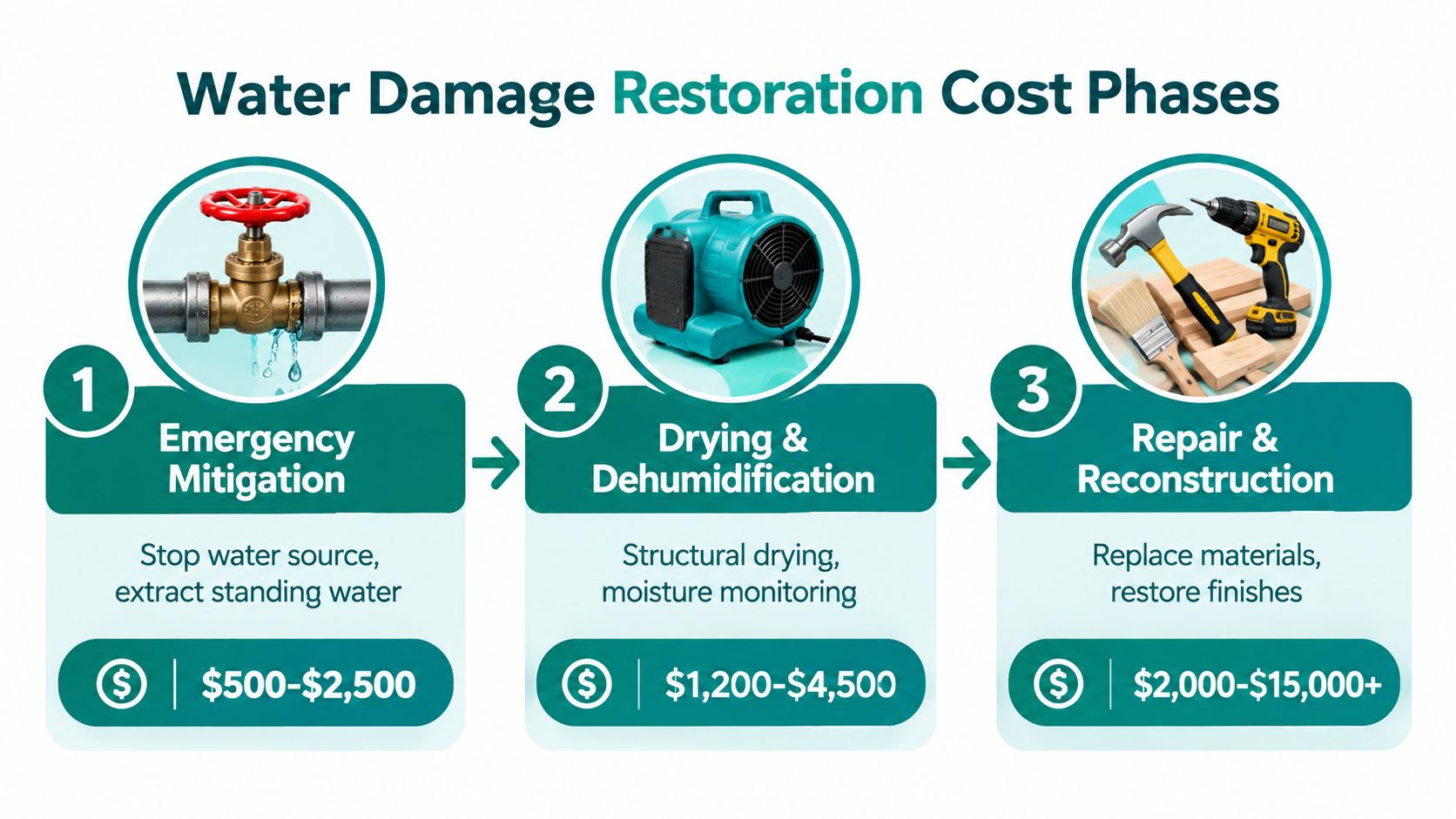
What each phase pays for
A professional estimate should separate the phases rather than combine every activity into one unexplained total.
- Emergency mitigation: Water extraction, source control, contents handling, protection of unaffected areas, and the first moisture inspection.
- Structural drying: Air movers, dehumidifiers, moisture monitoring, cavity access, and drying verification.
- Reconstruction: Removal of unsalvageable materials, disposal, replacement, finishing, and work needed to return the room to its prior condition.
A homeowner comparing estimates should also distinguish emergency work from repairs. A mitigation company may remove water and dry the building, while another trade completes reconstruction. The water mitigation process explains why extraction and stabilization should happen before cosmetic repairs.
Practical rule: A low visible-water volume doesn't prove a low-cost loss. Moisture behind a wall or under a floor can create more work than a larger, fully exposed spill.
The national insurance benchmark for water-damage and freezing claims was an average paid loss of $13,954 during the 2018 through 2022 period, with water damage and freezing representing 27.6% of U.S. homeowners insurance claims in 2022, according to the reported homeowners insurance claim data. That benchmark includes more than extraction, and it isn't a quote for a particular room or property.
The practical conclusion is direct. The fastest path to a lower bill is usually not negotiating the final repair price. It's limiting how much work reaches the drying and reconstruction phases.
Cost Breakdown by Water Category and Severity Level
Water source changes the estimate before room size does. A clean supply-line leak can often follow ordinary extraction and drying procedures. Water from a toilet overflow, appliance discharge, or other contaminated source may require more protective measures, containment, cleaning, disposal, and material removal.
Floodwater requires a separate analysis. It may carry contaminants, enter from outside, affect lower building assemblies, and damage contents over a wider area. FEMA's flood-loss evaluation describes flooding as a major property-loss category and shows that modeled costs vary according to flood depth, location, and elevation. Those figures shouldn't be used as a contractor quote, but they demonstrate why flood cleanup can exceed the budget for a localized plumbing leak.
The water category sets the rules
Clean water generally comes from a supply pipe or another source that hasn't been contaminated. The cost question focuses on how far it traveled, which materials absorbed it, and whether concealed moisture remains.
Gray or contaminated water demands more caution. An appliance overflow or wastewater event may require cleaning and sanitization beyond ordinary extraction. The affected material may look intact while still requiring removal because it absorbed contaminated water.
Black water includes sewage and other seriously contaminated sources. A homeowner shouldn't treat it as a normal do-it-yourself drying job. Protective equipment, containment, specialized handling, and disposal can become part of the scope.
EPA guidance also separates materials by their ability to absorb water. Nonporous hard surfaces may be cleaned and dried, while wet porous materials with established contamination may need removal. EPA's material guidance explains why carpet, ceiling tiles, and other absorbent materials can create replacement costs that tile or other hard surfaces may avoid.
Severity is about depth, spread, and access
Two rooms with the same visible footprint can produce different estimates. A shallow surface loss on intact tile is not priced like water that reaches a subfloor, saturates insulation, or enters a wall cavity. Access also matters. Open flooring allows direct extraction, while concealed moisture may require careful inspection, limited demolition, and cavity drying.
| Water Category | Severity Level | Typical Cost Range | Key Cost Drivers |
|---|---|---|---|
| Clean water | Localized, exposed surfaces | No responsible universal range | Extraction, affected material, equipment duration, moisture verification |
| Clean water | Multiple rooms or concealed moisture | No responsible universal range | Structural drying, wall or floor access, contents handling, reconstruction |
| Gray or contaminated water | Localized area | No responsible universal range | Protective procedures, cleaning, sanitization, disposal, material condition |
| Gray or contaminated water | Deep or widespread saturation | No responsible universal range | Containment, demolition, drying, disposal, replacement, reconstruction |
| Black water or floodwater | Any affected area | No responsible universal range | Contamination control, protective equipment, specialized disposal, building and contents damage |
The table avoids false precision because verified national data describe insurance losses and flood damage, not standardized contractor prices by category and room size. A credible estimate should identify the water source, affected square footage, saturation depth, material type, contamination, and access conditions.
The most important distinction is between mitigation cost and total restoration cost. Extraction may stabilize the property, but it doesn't automatically cover demolition, drying, contents, or rebuilding. A homeowner who receives a low initial emergency estimate should ask which later phases are excluded.
How Response Time Changes Restoration Cost
Time changes the line items. During the first hours, a contained loss may require extraction and controlled drying. As moisture remains in porous materials, the scope can add demolition, disposal, replacement, and more complex monitoring.
The EPA guide to mold, moisture, and home damage recommends drying wet areas and contents within 24 to 48 hours. Its guidance also calls for water extraction, reduced humidity, and airflow for wet carpet and backing, with the subfloor checked rather than assumed dry.
That window isn't a guarantee that contamination will or won't develop. It's a practical risk-management threshold. A contractor still needs moisture readings, visual inspection, and checks inside assemblies before declaring the structure dry.
The same loss can produce different scopes
A small clean-water spill handled promptly may remain a drying project. If carpet backing, drywall, insulation, or flooring stays wet beyond the recommended period, some materials may no longer be practical to preserve. The estimate then changes from equipment and monitoring to removal, disposal, replacement, and finish repair.
The economics are straightforward:
- Early response limits the wet footprint and protects salvageable materials.
- Delayed extraction increases equipment needs and allows moisture to migrate.
- Extended saturation can add demolition and disposal.
- Unverified drying leaves concealed moisture that can trigger later repair work.
The EPA commercial and school moisture guidance notes that prolonged moisture can lead to cleanup costs ranging from tens to hundreds of thousands of dollars in some building contexts. That statement isn't a prediction for a residence. It reinforces the cost principle that the longer wet building materials remain untreated, the more the potential scope can expand.
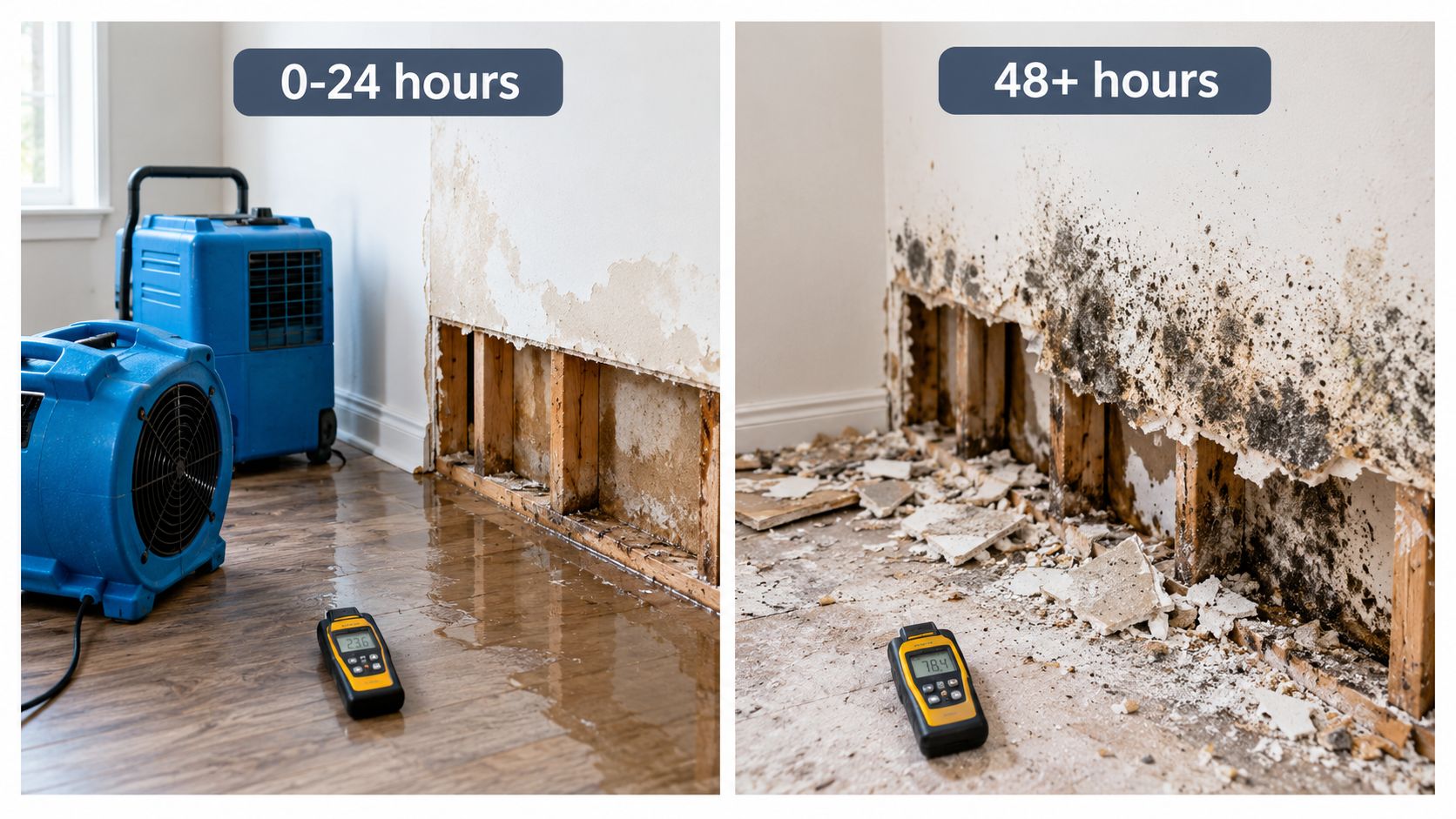
Safe actions and unsafe shortcuts
A homeowner can shut off water when possible, keep people away from electrical hazards, document the conditions, and move unaffected belongings to a dry area. Air movement should begin only when electrical safety and water contamination have been assessed.
Household fans around sewage-contaminated water are a poor shortcut. They can spread contaminated droplets and don't replace containment or professional drying. Demolition also shouldn't begin before photographs and an insurance plan are in place, unless immediate safety requires removal.
Moisture readings are more useful than a dry-looking surface. A wall, subfloor, or cabinet can appear normal while retaining enough water to change the repair scope.
DIY Cleanup Versus Professional Restoration
DIY cleanup makes sense for a small, clean, exposed spill that can be removed and verified dry quickly. It becomes a false economy when water has entered walls, flooring systems, insulation, cabinets, or electrical areas.
The homeowner's real comparison isn't a rented extractor versus a restoration invoice. It's visible cleanup versus verified drying. Basic equipment may remove surface water, but it may not measure moisture inside a wall or under a floor. A professional crew can combine extraction, commercial dehumidification, directed airflow, and moisture documentation.
When DIY is reasonable
A homeowner may handle limited cleanup when all of the following apply:
- The source is controlled: No active leak remains, and electrical or structural hazards aren't present.
- The water is clean: There's no sewage, suspected contamination, or floodwater.
- The materials are exposed: Water hasn't entered walls, insulation, subfloors, or concealed cavities.
- The affected area is limited: The spill is small enough to extract, clean, and monitor without specialized equipment.
- Dryness can be verified: The homeowner can check affected materials rather than relying on touch or appearance.
The water cleanup guidance for affected properties can help a homeowner organize immediate decisions, but general advice can't replace an inspection when the water has traveled beneath finishes or behind assemblies.
When professional help earns its cost
Professional restoration is the stronger choice after a burst pipe, multi-room loss, ceiling intrusion, sewage event, flood, or any incident involving hidden moisture. It's also appropriate when flooring swells, drywall softens, odors persist, cabinets absorb water, or the source remains uncertain.
The cost trade-off is clear. DIY work may reduce the initial outlay, but missed moisture can convert a contained cleanup into demolition and reconstruction. Professional work costs more at the start because it includes equipment, labor, monitoring, safety procedures, and documentation.
A homeowner should ask for a written scope that identifies extraction, equipment, monitoring, demolition, disposal, cleaning, and reconstruction separately. The estimate should also state what isn't included. That detail matters more than a low headline number.
Insurance Documentation and Cost Control
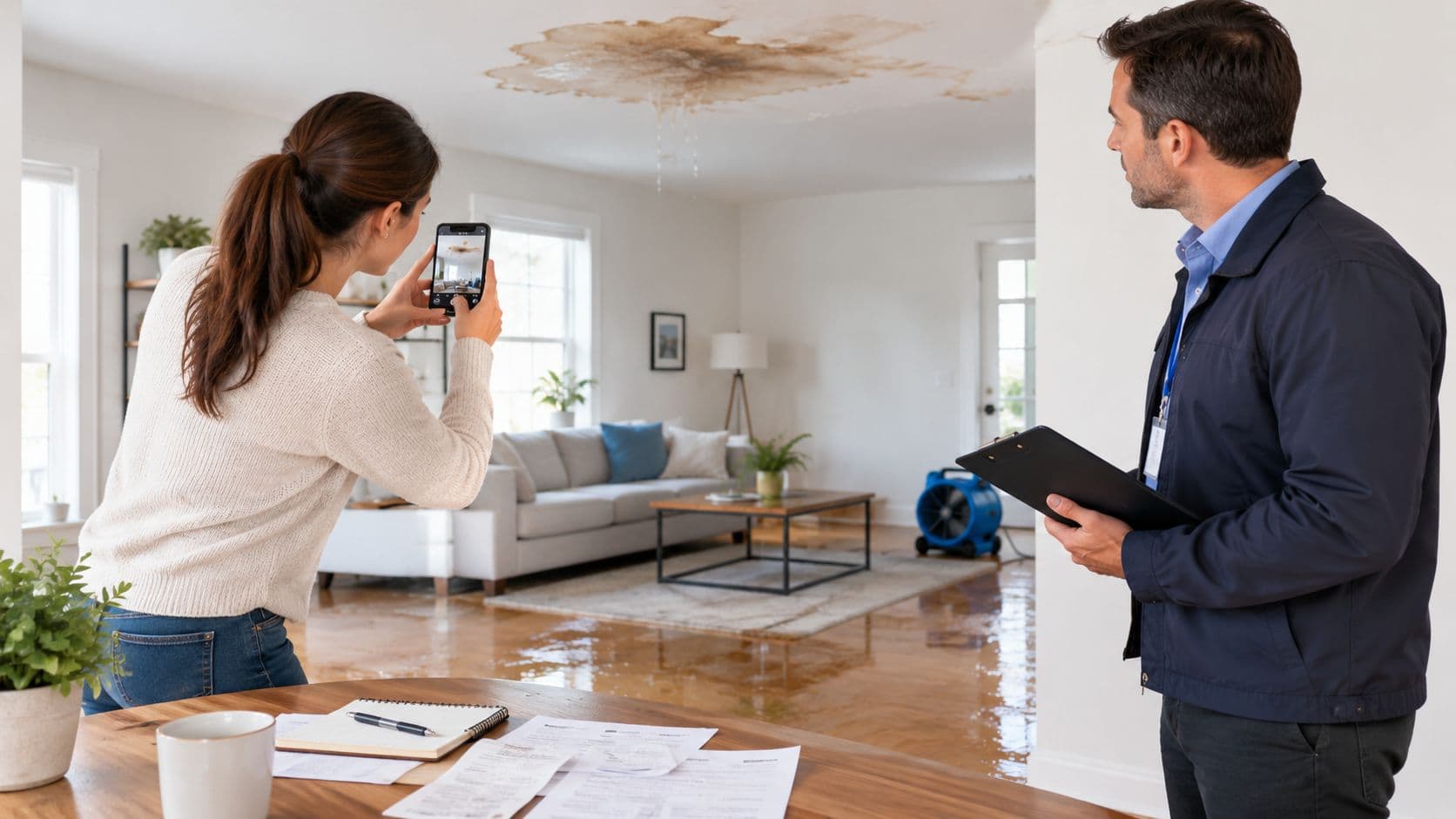
Insurance decisions begin with evidence. Before materials are moved or removed, a homeowner should photograph the source, standing water, affected rooms, damaged contents, ceilings, walls, flooring, and visible moisture paths. Timestamps, videos, invoices, and notes about when the loss was discovered create a clearer record.
A useful file should contain:
- Incident details: The date and time discovered, suspected source, actions taken, and whether the water was shut off.
- Visual evidence: Wide room views, close-ups of damage, affected contents, and areas where water traveled.
- Mitigation records: Contractor invoices, equipment logs, moisture readings, drying checks, and notes about removed materials.
- Scope separation: A distinct list for emergency mitigation, structural drying, contents handling, demolition, and reconstruction.
- Policy questions: Deductible, exclusions, limits, temporary living expenses, contents coverage, and any code-upgrade provisions.
The average insurer payment for water-damage and freezing claims was approximately $15,400 for 2019 through 2023, based on Insurance Information Institute data reported in this insurance payout analysis. That is an insurance-loss benchmark, not a universal contractor price, and it includes the overall covered claim rather than emergency extraction alone.
Ask for line-item clarity
An estimate should state how much equipment is being used, how long it is expected to run, which materials require removal, and whether contents handling is included. It should also identify whether the price covers only mitigation or includes reconstruction.
A homeowner shouldn't assume that a policy covers every water event. Floodwater, groundwater, sewer backup, sudden plumbing failures, roof-related intrusion, and appliance leaks can fall under different coverage terms. A standard homeowners policy and flood insurance aren't interchangeable, and coverage depends on the source and policy language.
The guidance for water leaking through a ceiling is relevant when an upper-level leak affects rooms below. Documentation should show both the original source area and every room or assembly that received water.
Documentation rule: The strongest claim file connects the event, the affected materials, the mitigation performed, and the requested reconstruction in a single timeline.
A homeowner should report the loss according to the policy's requirements, preserve damaged materials when safe and practical, and avoid making permanent repairs before the carrier's process allows them. Emergency work that prevents additional damage may be necessary, but photographs and written records should come first whenever conditions permit.
Making the Right Restoration Decision
The right decision depends on the water source, the depth of saturation, and whether dryness can be verified.
A small clean-water spill on an exposed, hard surface may justify careful homeowner cleanup and monitoring. A leak behind drywall, a burst pipe, a soaked subfloor, a flooded lower level, or any contaminated event deserves professional assessment because the visible footprint doesn't reveal the full scope.
A practical decision path looks like this:
- Active water: Shut off the source when safe, avoid electrical hazards, and arrange immediate extraction.
- Visible but limited water: Document the area, remove unaffected belongings, and assess whether porous materials or concealed cavities are involved.
- Swelling, soft drywall, persistent odor, or hidden moisture: Stop treating the loss as cosmetic and request professional moisture verification.
- Contaminated water or flooding: Keep occupants away from the affected area and use qualified help for containment, cleaning, drying, and disposal.
- Insurance involvement: Preserve photographs, readings, invoices, and a phase-separated estimate before reconstruction begins.
Waiting for a better price can be the wrong financial decision when wet materials are continuing to absorb water. The more reliable cost-control strategy is prompt source control, targeted extraction, measured drying, and a written scope that separates work that preserves the building from work that rebuilds it.
PostDamage provides situation-specific water-damage guidance and can connect homeowners, landlords, property managers, and small businesses with appropriate local professionals through a single request instead of multiple sales calls.
Homeowners dealing with a leak, burst pipe, flooded room, or hidden water intrusion can describe the incident through PostDamage to clarify the next step, organize the restoration decision, and connect with appropriate local help when professional service is needed. The earlier the scope is understood and the drying process is documented, the more control the property owner has over the final restoration bill.