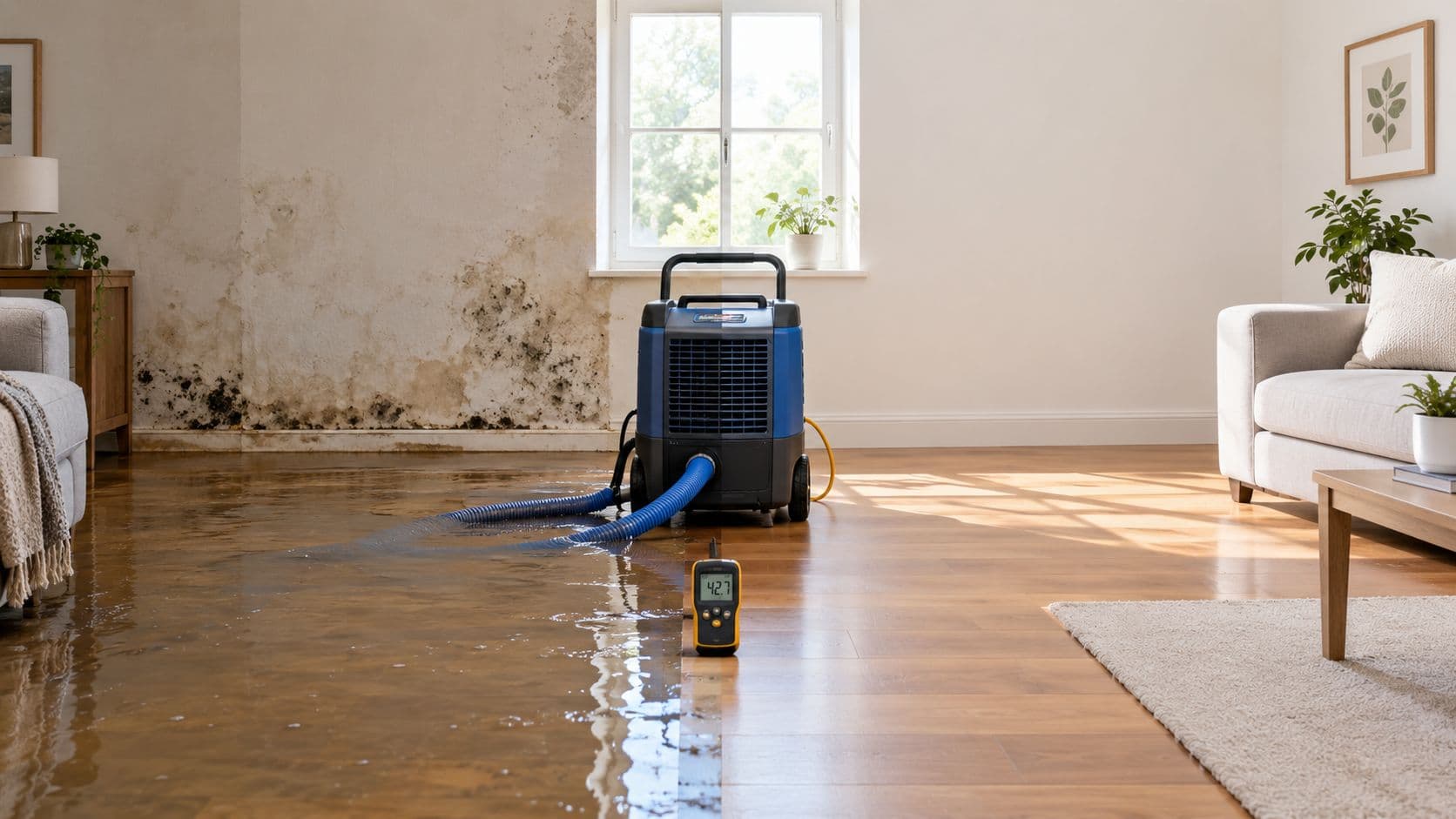
Water damage repair cost usually lands between $1,400 and $6,400 for most projects, with a national average near $3,800, and pricing often runs about $3 to $7.50 per square foot depending on contamination. That's the starting point when a hallway is soaked before sunrise and someone has to decide whether this is a small cleanup or a full restoration job.
A burst supply line, a toilet overflow, or a ceiling stain from upstairs all look different, but the bill usually follows the same logic, water category, spread, drying time, demolition, and rebuild. Homeowners who understand those pieces stop guessing and start estimating with some confidence.
What Water Damage Repair Cost Looks Like in Real Homes
A bathroom supply line can fail before breakfast and turn a small mess into a real restoration job. The floor outside the bath is wet, the baseboards swell, and the hallway carpet starts to hold water. That usually stays below a full rebuild, but it stops being cheap once moisture reaches drywall, insulation, or the layers under the floor.
The typical U.S. water damage repair cost clusters around $3,865 to $3,869, with most projects falling roughly between $1,383 and $6,369, and severe losses reaching $16,000 or more. One industry guide also places common per-square-foot pricing at about $3 to $7.50. Those numbers give you a starting range, not the final bill.
Practical rule: the room name matters less than the water type and how far it spread.
Why the same square footage can cost wildly different amounts
Clean water from a supply line is one job. Contaminated water from a drain backup is a different job because it requires more labor, more disposal, more protective gear, and more sanitation steps. That is why two 200-square-foot losses can land in very different price bands.
A small leak that stays on top of finished surfaces may be handled with extraction and drying. Once water gets into drywall, insulation, subflooring, or a crawl space, the bill rises because those materials often need demolition before they can be dried properly. Estimates should list extraction, drying, and demolition separately before rebuild. A ceiling leak that runs through the assembly is a good example of how the visible stain is often the smallest part of the problem.
That hidden moisture is what owners miss. They price the puddle they can see, then get surprised when the invoice follows the water inside the wall, under the flooring, and into the framing. A short inspection before anyone approves the quote keeps the job honest and the budget grounded.
The Five Line Items on a Restoration Bill
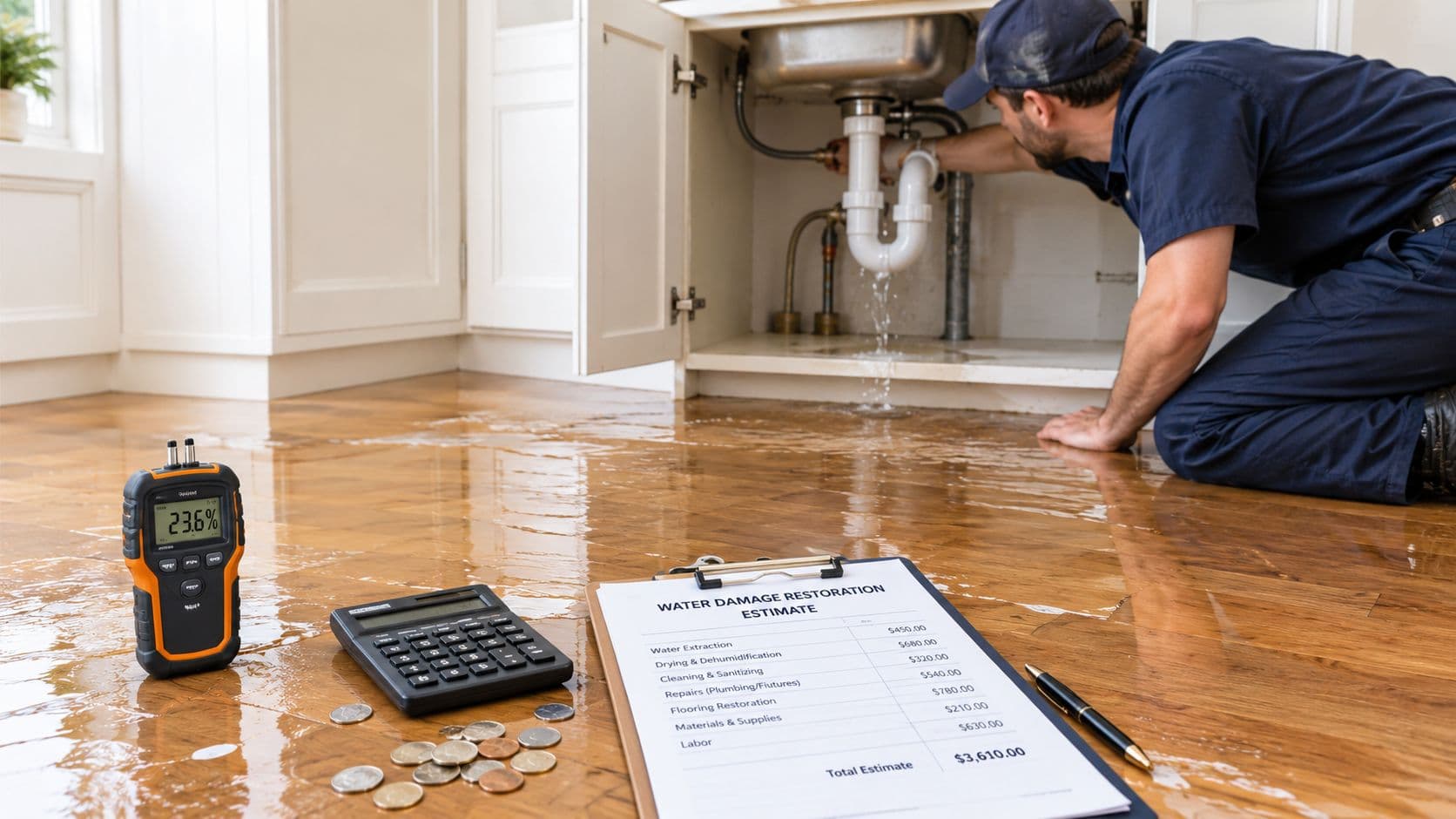
A restoration invoice becomes easier to judge when every task has its own line. Extraction, drying, demolition, rebuilding, and mold work require different equipment, labor, and schedules. Ask for each category separately before approving the job.
Extraction, drying, demolition, rebuild, and mold follow-up
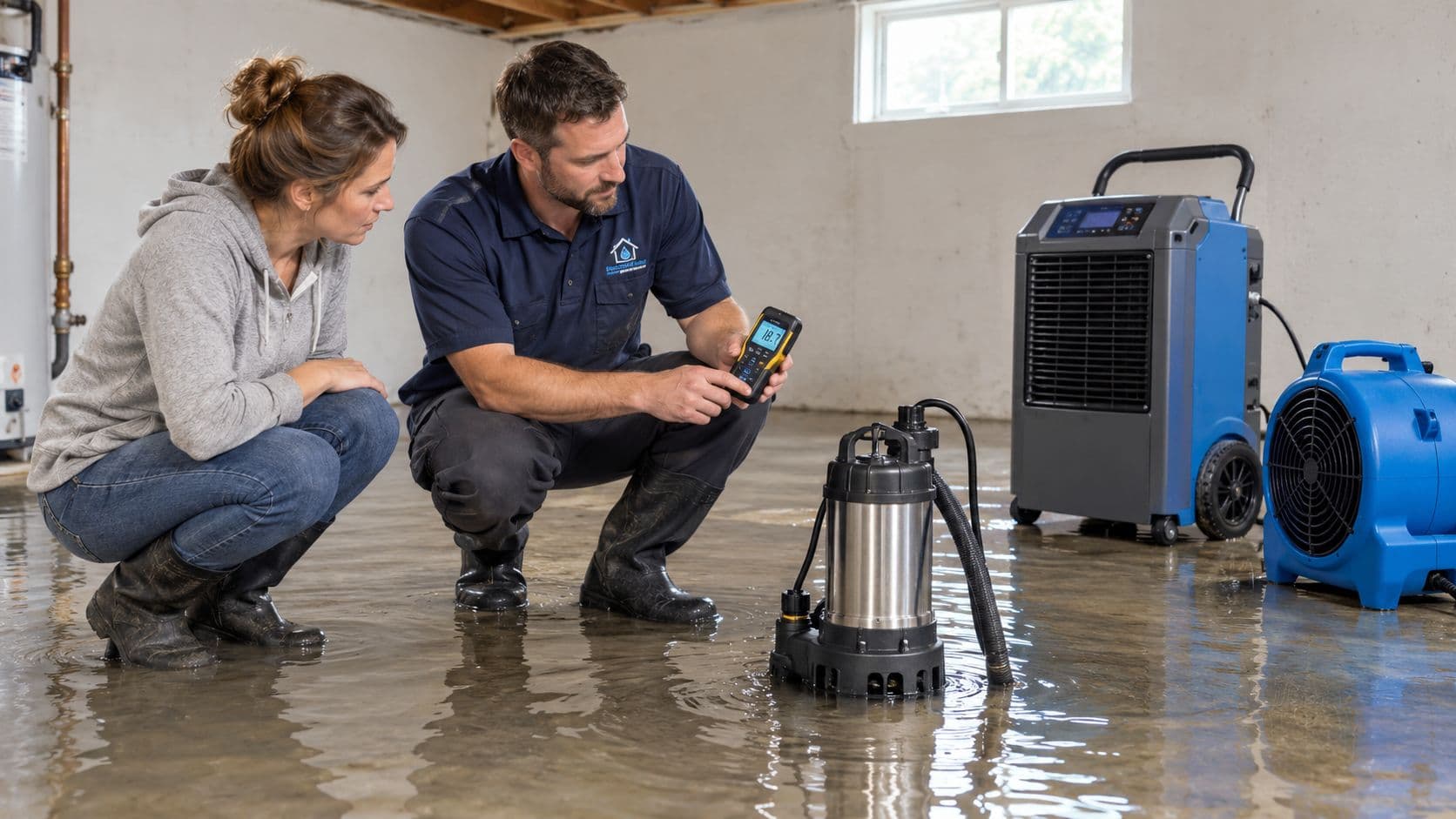
Water extraction removes standing water with pumps, vacuums, and labor. It commonly falls around $500 to $4,000 (understand where mitigation ends and rebuild begins). The final amount depends on how much water is present, how far it traveled, and how quickly crews can reach it.
Structural drying follows extraction. Air movers, dehumidifiers, and moisture checks work over several days to dry framing, subflooring, and wall cavities. This stage is usually priced around $1,000 to $3,500. A room can look dry while moisture remains behind the wall or beneath the floor, so drying should not be approved based on appearance alone.
Demolition removes materials that cannot be dried or restored safely. Wet drywall, baseboards, carpet pad, and other porous materials may need removal, commonly costing $500 to $2,500. The estimate should identify what will be removed and why.
Rebuild and repairs come after mitigation. This line covers replacement drywall, flooring, trim, paint, and other finished materials, often running from $800 to $8,000+. Mitigation stops the active damage. Rebuilding restores the room.
Mold remediation may follow a delayed response to category 2 or 3 water. It can involve sanitation, containment, removal, and additional disposal, adding $500 to $6,000. The longer contaminated materials remain wet, the more likely this separate scope becomes.
| Line Item | Low End | High End | What It Covers |
|---|---|---|---|
| Water extraction | $500 | $4,000 | Pumps, vacuums, labor to remove standing water |
| Structural drying | $1,000 | $3,500 | Dehumidifiers, air movers, moisture monitoring |
| Demolition | $500 | $2,500 | Removal of unsalvageable drywall, baseboards, pad |
| Rebuild and repairs | $800 | $8,000+ | New materials, finish work, paint, flooring repair |
| Mold remediation | $500 | $6,000 | Added sanitation and removal work after delay |
Review the invoice in two parts: mitigation and rebuild. A mitigation-only quote may look manageable, then a separate repair bill follows. Require an itemized scope, moisture readings, demolition notes, and clear exclusions so the first number does not hide the project cost.
Water Categories and How They Change the Price
Water category changes the restoration bill because contamination changes the required work. Clean supply water may be dried in place, while contaminated water often requires removal, sanitation, protective equipment, and stricter disposal.
Clean water, graywater, and blackwater
Category 1 comes from a supply line or faucet. Category 2 is graywater from a dishwasher, washing machine, or toilet containing urine. Category 3 is blackwater from a sewer backup or river flooding. Typical category pricing is about $3 to $4.50 per square foot for Category 1, $4 to $6 per square foot for Category 2, and $6 to $7.50+ per square foot for Category 3, according to this water damage restoration cost overview.
Category 1 is usually the simplest to dry when the response is fast. Category 2 costs more because porous materials may require removal and disposal controls become stricter. Category 3 demands full protective gear, containment, sanitation, and potentially separate hauling procedures.
A 500-square-foot loss can remain relatively manageable with clean water, then become far more expensive when contamination enters the job.
Square footage alone cannot predict the invoice. The same affected area may need limited drying after a clean supply-line leak, while graywater or blackwater can add demolition, protective measures, sanitation, and disposal. Those requirements increase labor and extend the restoration scope, so the category must appear clearly in the estimate.
Six Factors That Drive the Final Number
The final invoice doesn't move in one direction. It rises or falls based on a few predictable variables, and the order matters.
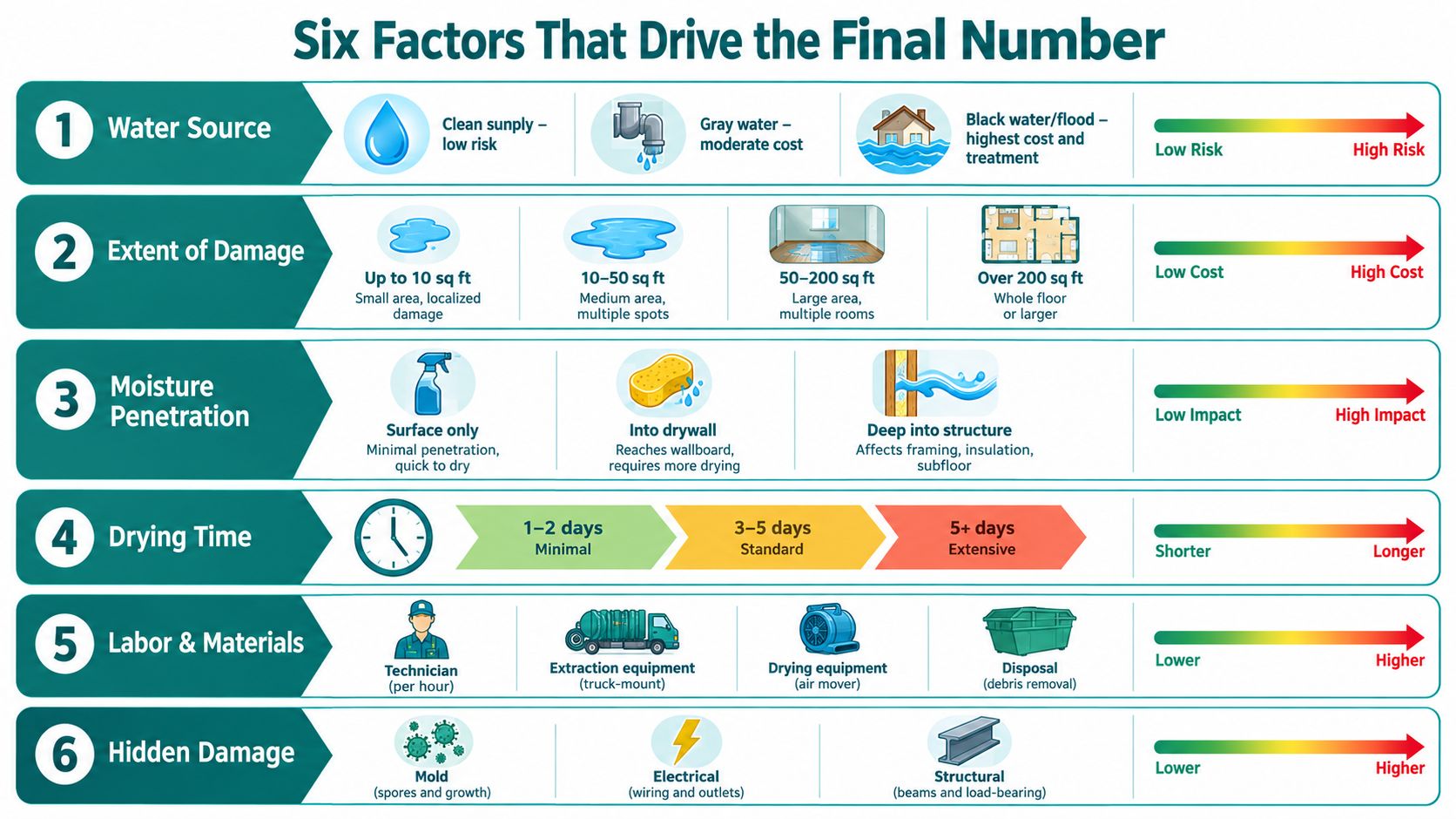
The factors that matter most
Water source comes first because it determines contamination risk. Clean supply water is cheaper to handle than drain water or outside flooding.
Extent of affected area is next. More square footage means more extraction, more drying equipment, and more labor hours.
Water category sits right behind that. Clean, gray, and black water each trigger a different cleanup standard.
Affected materials can move the bill fast. Carpet padding, hardwood, drywall, insulation, and cabinets do not respond the same way once wet.
Region also matters because labor rates vary. In many markets, the final price can swing noticeably between rural and metro jobs, sometimes by a wide margin even when the damage looks similar.
Response time is the one variable owners can still control. Every extra day gives water more time to spread into assemblies, which usually means more demolition and longer drying.
Practical rule: the first 24 hours matter more than most people want to admit.
A small, clean-water issue caught early can stay on the lower end. The same event ignored overnight can reach into drywall, trim, and subflooring, and that turns a simple cleanup into a much larger job. Speed does not erase damage, but it can keep the repair path from getting complicated.
When DIY Makes Sense and When It Does Not
DIY has a place, but only when the job is small, clean, and shallow. Once water gets contaminated or moves behind building materials, a homeowner is usually no longer dealing with a simple cleanup.
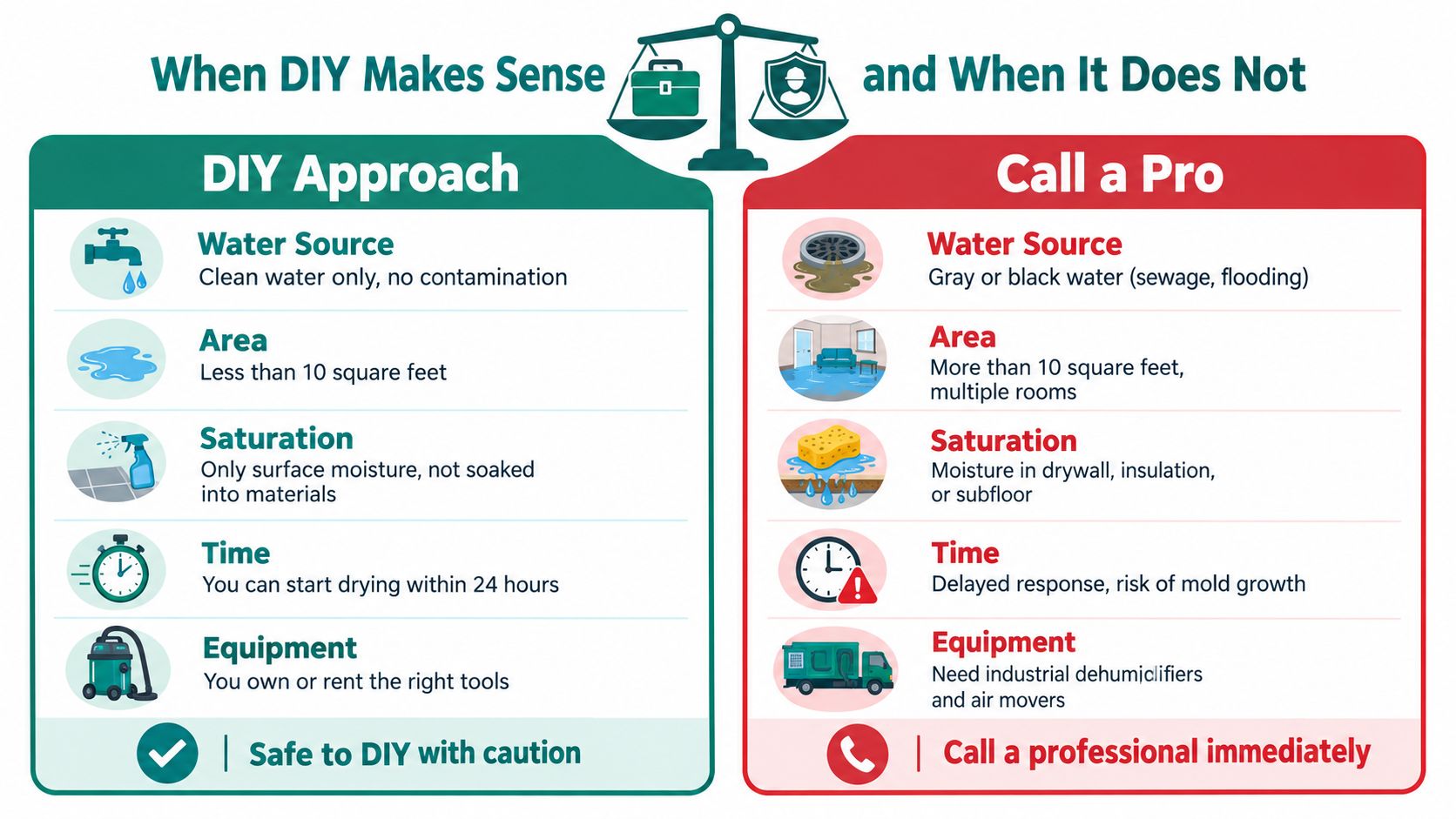
The line between a small cleanup and a restoration job
A small clean-water event affecting under 10 square feet can sometimes be handled with a wet-dry vacuum and box fans if the homeowner starts right away. That is the narrow lane where DIY makes sense.
The moment gray or black water is involved, the job stops being casual. Water near electrical systems, moisture that remains after 48 hours, visible mold, or saturation in subfloor or wall cavities all push the work into professional territory. Insurance claims also demand documentation and a clear scope, which makes a certified crew the smarter move even when the area seems moderate.
The equipment gap matters too. Professional crews bring industrial dehumidifiers, air movers, moisture meters, thermal imaging, and antimicrobial treatments that most homeowners do not have on hand. That gear is not luxury, it's what gets hidden moisture out of the structure.
If the job is larger than one room, smells contaminated, or shows signs of structural saturation, a professional estimate is cheaper than guessing wrong. PostDamage can help match the situation to the right next step, including when documentation and restoration help need to happen immediately.
Three Sample Scenarios With Itemized Costs
The same home can produce very different bills. Water category, affected square footage, response time, and the materials in the path determine which line items appear and how large they become. These are hypothetical illustrations, not market-rate quotes.
A small leak, a graywater overflow, and a whole-home flood
Scenario 1, a clean supply-line leak under a bathroom. Assume roughly 30 square feet of affected flooring. The work may include water extraction, structural drying, moisture checks, and baseboard replacement. A hypothetical total is about $900 to $1,800, depending on material damage and drying time.
Scenario 2, a dishwasher or washing-machine overflow. Graywater reaches the kitchen and an adjoining room, adding sanitation, cabinet, and wall work. A hypothetical range is $2,400 to $5,000 for extraction, antimicrobial treatment, structural drying, cabinet toe-kick replacement, and partial drywall repair. Faster response can limit demolition, while delayed drying can expand it.
Scenario 3, a whole-home flood from a severe water event. Black-water handling, removal of saturated materials, structural drying, mold follow-up, and phased reconstruction create a much larger project. A hypothetical total may reach $8,000 to $25,000 or more, based on the affected square footage, contamination, and rebuild scope.
| Line Item | Scenario 1, Supply-Line Leak, Clean | Scenario 2, Graywater Overflow | Scenario 3, Whole-Home Flood, Black Water |
|---|---|---|---|
| Water extraction | Low | Moderate | High |
| Structural drying | Low | Moderate | High |
| Demolition | Minimal | Partial | Extensive |
| Rebuild | Baseboard and minor patching | Partial drywall and cabinet repair | Phased reconstruction |
| Sanitation / mold follow-up | Usually none | Possible | Likely |
Use the table to estimate your own bill by line item, not by headline total. A small clean-water loss may stay limited to extraction, drying, and minor repairs. Contamination or added square footage increases sanitation, demolition, and reconstruction costs quickly. The practical question is which buckets your loss requires, and how much material each bucket contains.
Insurance Coverage and Documentation That Protects Your Claim
A burst pipe floods the hallway overnight. By morning, the water is gone, but the claim still depends on what you can prove and what your policy covers. Coverage usually depends on whether the event was sudden and accidental, where the water came from, and which exclusions or endorsements appear in your policy. Check the declarations page and endorsements before assuming any repair line will be reimbursed.
Coverage varies by cause and policy
Policies may cover reasonable mitigation, extraction, drying, and repairs to affected structure or contents, subject to limits and the deductible. Gradual leaks, neglected maintenance, sewer backup without the applicable endorsement, and external floodwater may fall outside standard coverage. Carrier rules and state requirements vary, so verify each category with your insurer rather than treating this table as a guarantee.
| Water-Damage Event | Typical Coverage | What to Verify |
|---|---|---|
| Burst pipe | May be covered | Confirm the policy treats the event as sudden and accidental |
| Appliance hose failure | May be covered | Ask whether resulting damage is covered and the failed part is excluded |
| Gradual leak | May be excluded | Check exclusions for wear, maintenance, and long-term seepage |
| Sewer backup | Depends on endorsement | Confirm whether backup coverage was added |
| External floodwater | Usually needs separate flood coverage | Check whether the source meets your policy's flood definition |
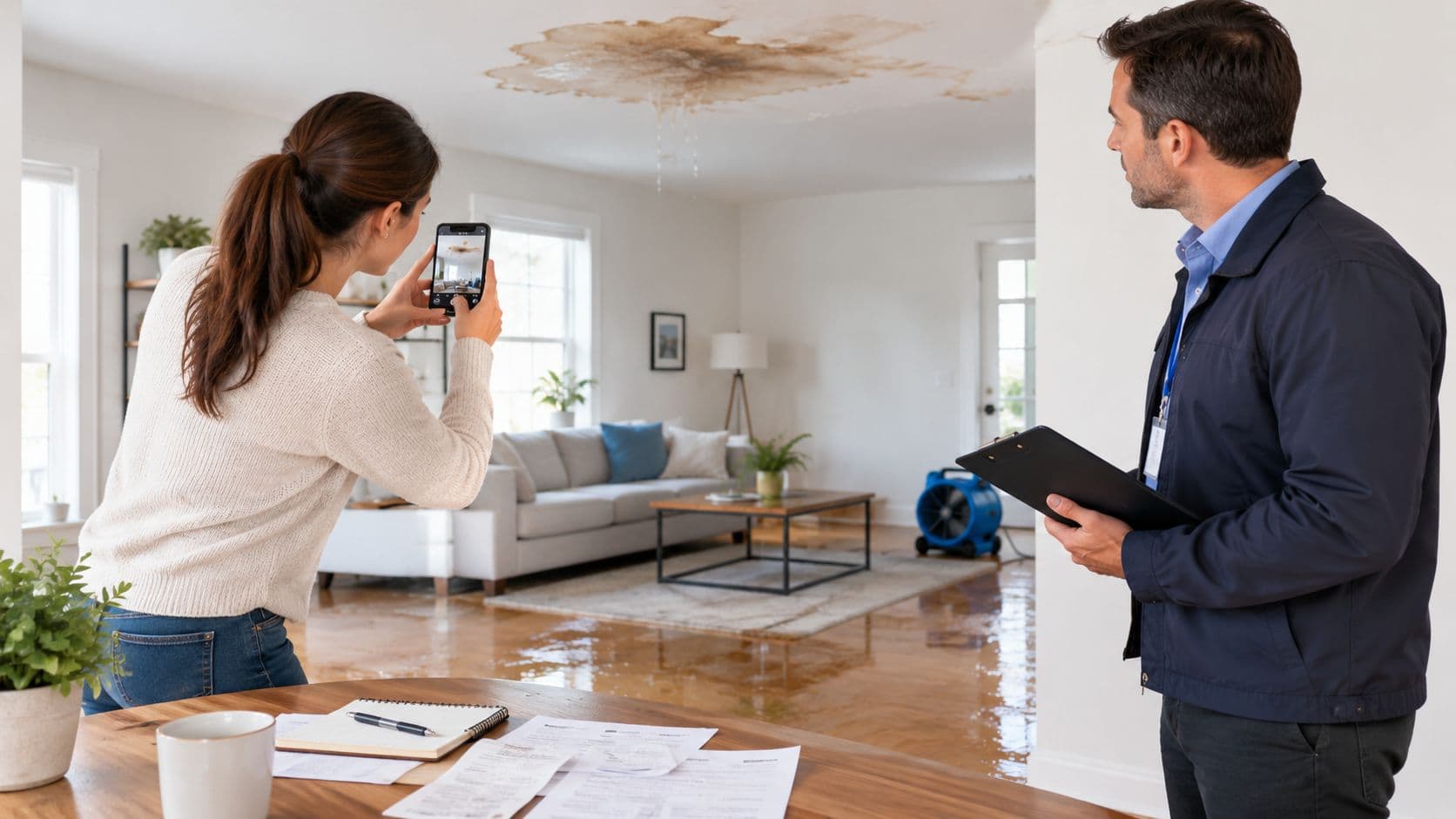
Documentation protects the claim. Photograph and record video before moving damaged materials when it is safe, note when you discovered the loss, identify the source if visible, and keep itemized estimates and invoices for every work stage. A dated timeline helps the adjuster distinguish emergency mitigation from demolition, drying, and later rebuilding.
Save receipts for emergency expenses. Keep the mitigation invoice separate from the rebuild estimate, and ask contractors to describe the affected rooms, materials, moisture readings, equipment, labor, and disposal work clearly.
For a practical checklist, see what a proper water-damage inspection should capture. A complete inspection record gives you a clearer basis for discussing scope with the adjuster and contractor.
Your Next Steps After Water Damage
The right order matters more than panic cleanup. Safety comes first, documentation comes second, and drying starts as soon as the source is controlled.
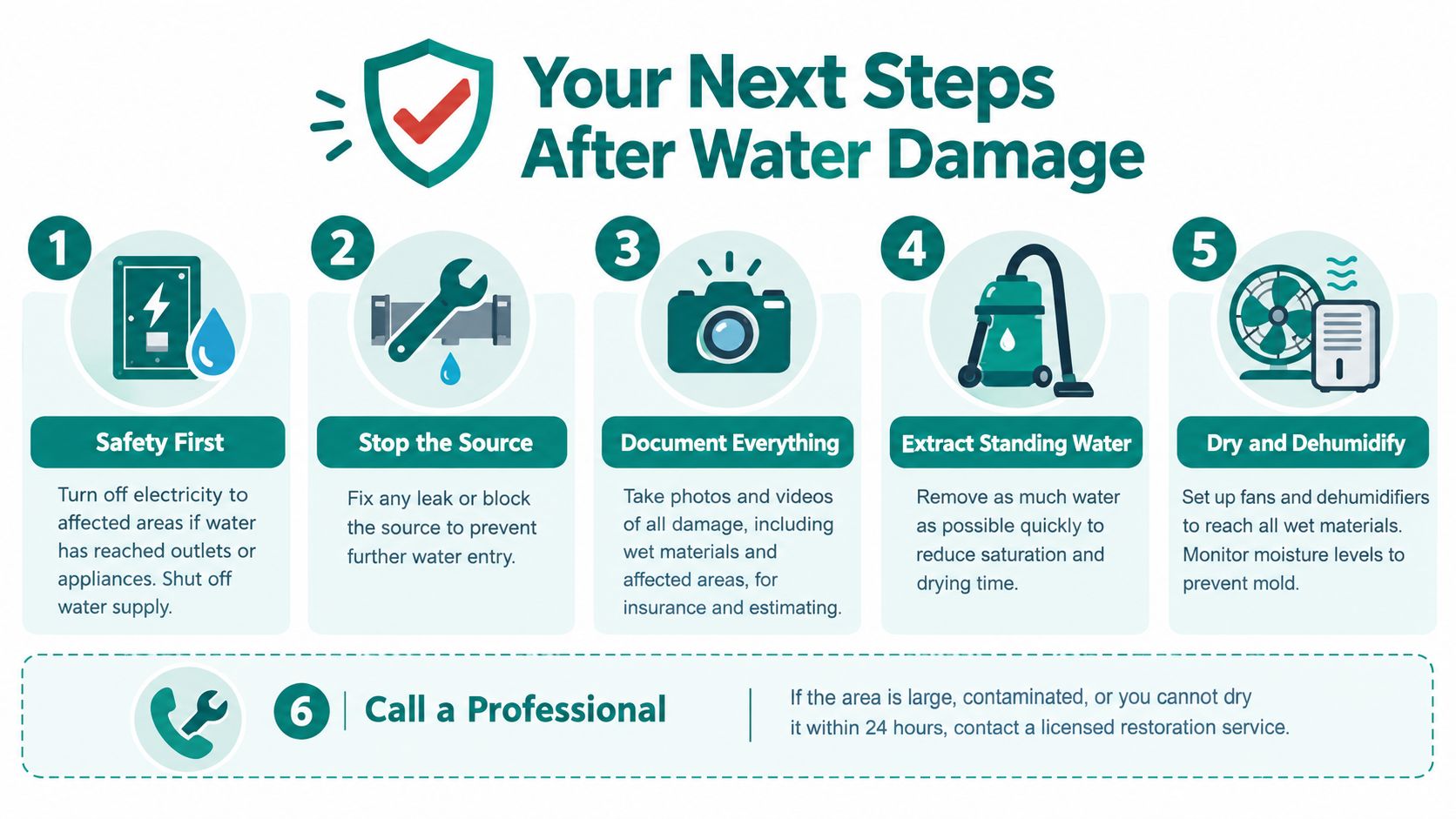
A short checklist that keeps the loss from getting worse
Safety first. Turn off electricity to affected areas if water reached outlets or appliances, and shut off the water supply if a fixture or pipe is still leaking.
Stop the source. The leak has to end before any serious drying work can succeed.
Document everything. Photos, video, and a short written timeline make the claim easier to support later.
Extract standing water. Fast removal reduces how far moisture moves into materials.
Dry and dehumidify. Fans and dehumidifiers should reach every wet material, and moisture readings should guide the work.
Call a professional when needed. Contaminated water, a large area, or anything that won't dry quickly deserves a licensed restoration response.
If the damage involves more than one room, contaminated water, or visible structural compromise, the smarter move is to bring in professional help early. PostDamage helps people sort out the next step after water damage, and that usually saves time, money, and bad assumptions.
If the water is still active, the clock is already working against the property. Visit PostDamage to get clear guidance on what to do next after a leak, flood, or overflow, and use the site to decide whether the job needs mitigation, insurance documentation, or full restoration help.