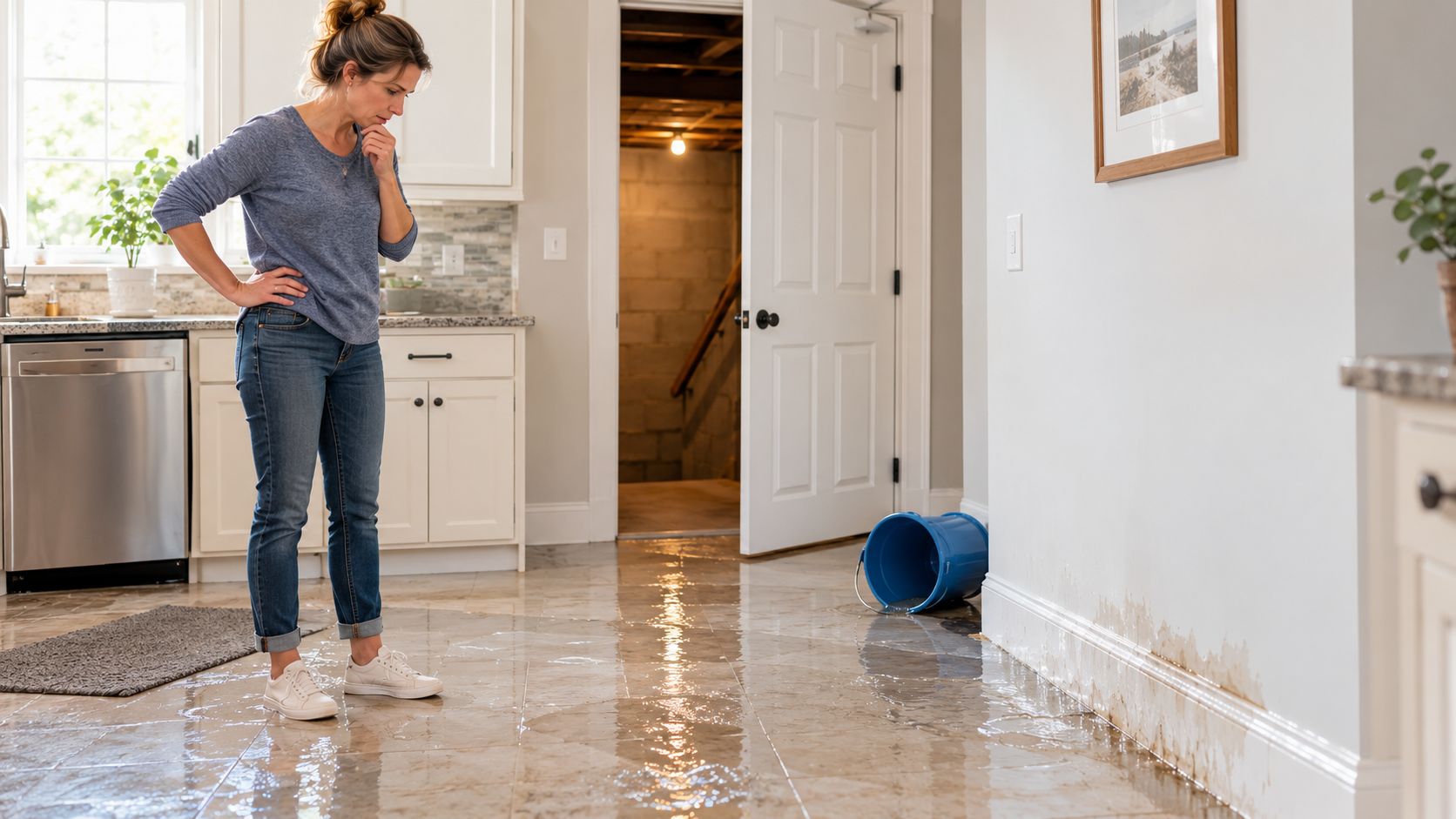
The kitchen floor is already shining before anyone has made coffee. A basement sump has quit, or the shop carpet squelches when the lights come on. The instinct is to cut wet drywall, drag the rug to the curb, and get a contractor started. That instinct can wreck the file.
Knowing how to file a water damage insurance claim means treating the water as a coverage problem first and a cleanup problem second. One storm or one failed pipe can belong on more than one policy. Photos have to show cause, timing, and cost, not only wet rooms. The policy and the jurisdiction still decide what is paid.
What to Do the Moment You Find Water
A supply line lets go overnight. By morning the linoleum is a shallow lake, the toe kicks are swollen, and the ceiling in the unit below has a dark ring. A landlord sees the same ring in a rental. A shop owner finds stock boxes sitting in an inch of water behind the counter. Cutting everything out before anyone has seen it feels productive. It also throws away the proof.
The carrier needs a prompt notice, a plain description of what happened, and evidence of the cause before debris disappears. Insurance Information Institute data summarized by the National Association of Insurance Commissioners shows that water damage and freezing accounted for 22.6% of homeowners-insurance claims in 2023, and that approximately 1.6% of insured homes had this type of loss. That frequency is roughly one water or freezing claim for every 60 to 67 insured homes in a typical year. This is a common, expensive homeowners loss, not a rare disaster.
Severity has moved with frequency. The average water-damage or freezing claim was approximately $12,514 during 2017 to 2021, and later industry summaries put averages near $15,400 for 2019 to 2023. Those amounts are why photographs, videos, mitigation records, and a room-by-room inventory matter as much as the mop.
Stop only what will get worse
Homeowners, landlords, and small-business owners should make the building safe, shut off water or power when leaving them on is dangerous, and call the insurer or agent as soon as reasonably possible. Ask which forms are required. Pull the policy, every endorsement, and any prior correspondence before the first conversation fades.
Practical rule: Sudden pipe breaks and appliance failures can be treated differently from long-term seepage, maintenance problems, or excluded flooding. The first report should name the failed part and the time it was found, not a guessed coverage label.
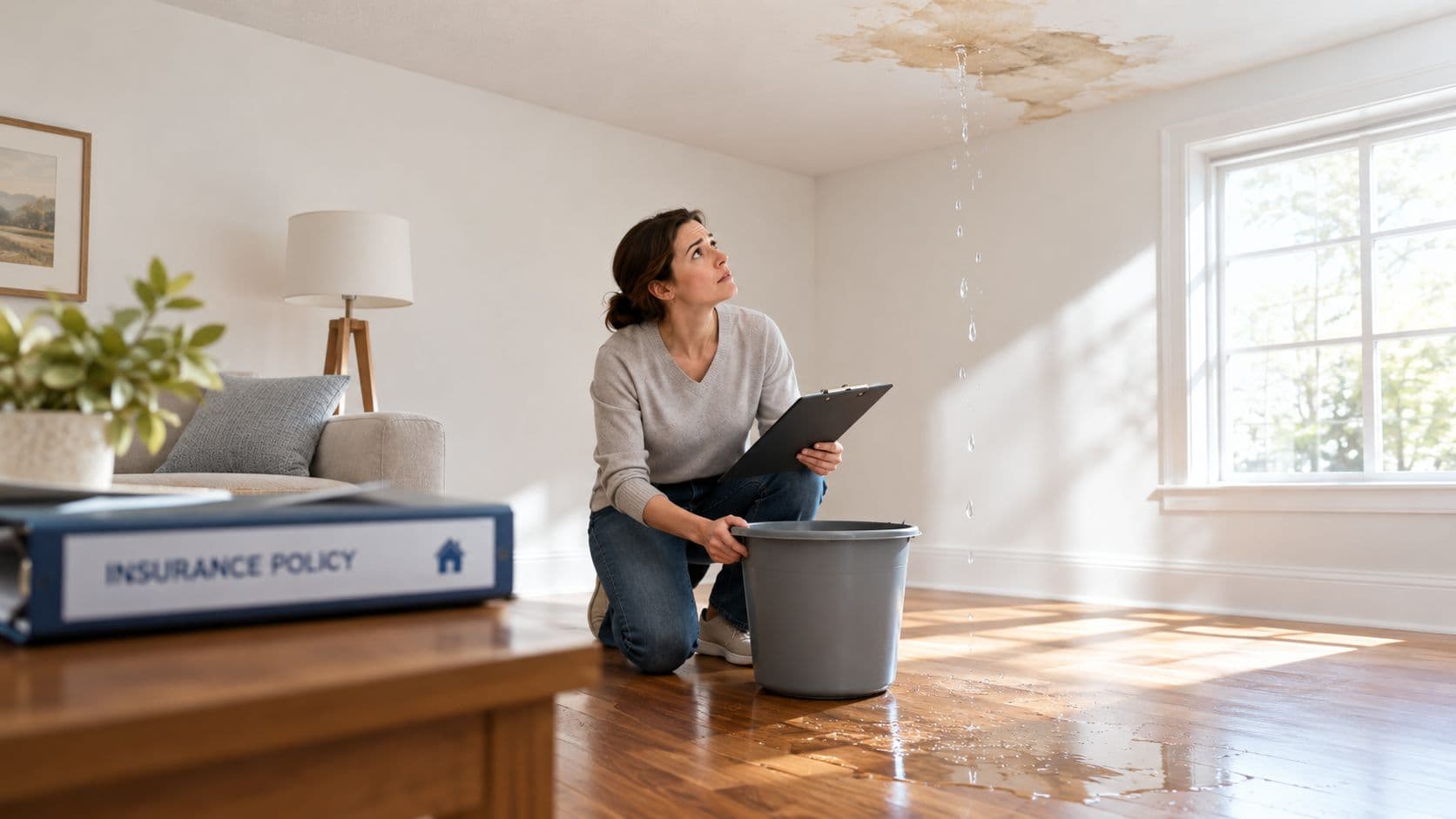
A mark overhead is easy to misread as a simple drip. When the stain starts in the ceiling, a closer look at water leaking through a ceiling helps separate the entry point from the room that got wet.
Temporary extraction, a tarp, or securing an unsafe opening is reasonable mitigation. Irreversible demolition and a signed rebuild contract are not the first-hour job.
Which Policy Actually Covers the Water
One phone call to "the insurance company" is often incomplete. A burst supply line, a failed appliance, wind-driven rain through a roof opening, a sewer or drain backup, groundwater, storm surge, and river or surface-water overflow are not the same loss. Filing only one of them can hide the other.
FEMA states that most homeowners policies exclude flood damage, while a flood policy covers direct physical damage caused by a qualifying flood. A homeowners policy may instead respond to other causes, such as wind-driven rain or a roof opening. The same storm can produce both. An owner may need to file with the flood insurer and the homeowners or commercial property insurer, and work with more than one adjuster.
Say what was seen, not a label
The first notice should describe where water entered, how high it rose, what failed, and when it was found. It should not stamp the event flood, leak, or sewer backup before those facts are clear. Coverage and the responsible policy can change with that label. Preserve the failed part when it is safe to keep it. Photograph the entry point and the water path before parts go in the trash.
For a shop, warehouse, or rental building, building, contents, flood, equipment-breakdown, and business-interruption coverages can each be in play. Report the event to every carrier that might respond. Ask each one, in writing, which coverage and which deductible apply. An avoidable single-policy filing is how a second coverage gets missed.
| Water source | Policy path to confirm | What to say first |
|---|---|---|
| Burst supply line or failed appliance | Homeowners or commercial property policy | Time found, what broke, and where water traveled |
| Wind-driven rain or roof opening | Homeowners or commercial property policy, not assumed flood | Opening in the building, weather, and interior path |
| Sewer or drain backup | Policy or endorsement, confirmed in writing | What came up, from which drain, and how far it spread |
| Groundwater, storm surge, or river overflow | Flood policy, including NFIP where that is the coverage | Water entering from the ground up, depth, and source outside |
| Shop equipment, stock, or closed operations | Building, contents, equipment, flood, and business income, each checked separately | What stopped working, what stock was lost, and hours closed |
Coverage remains policy-specific and jurisdiction-specific. The routing job is to keep every plausible carrier on notice with the same factual description.
How to Document Cause Timing and Cost
Wet-room photos do not settle a fight over sudden damage versus long-term seepage, wear, or an excluded source. The file has to show when the water was found, where it entered, and what it cost.
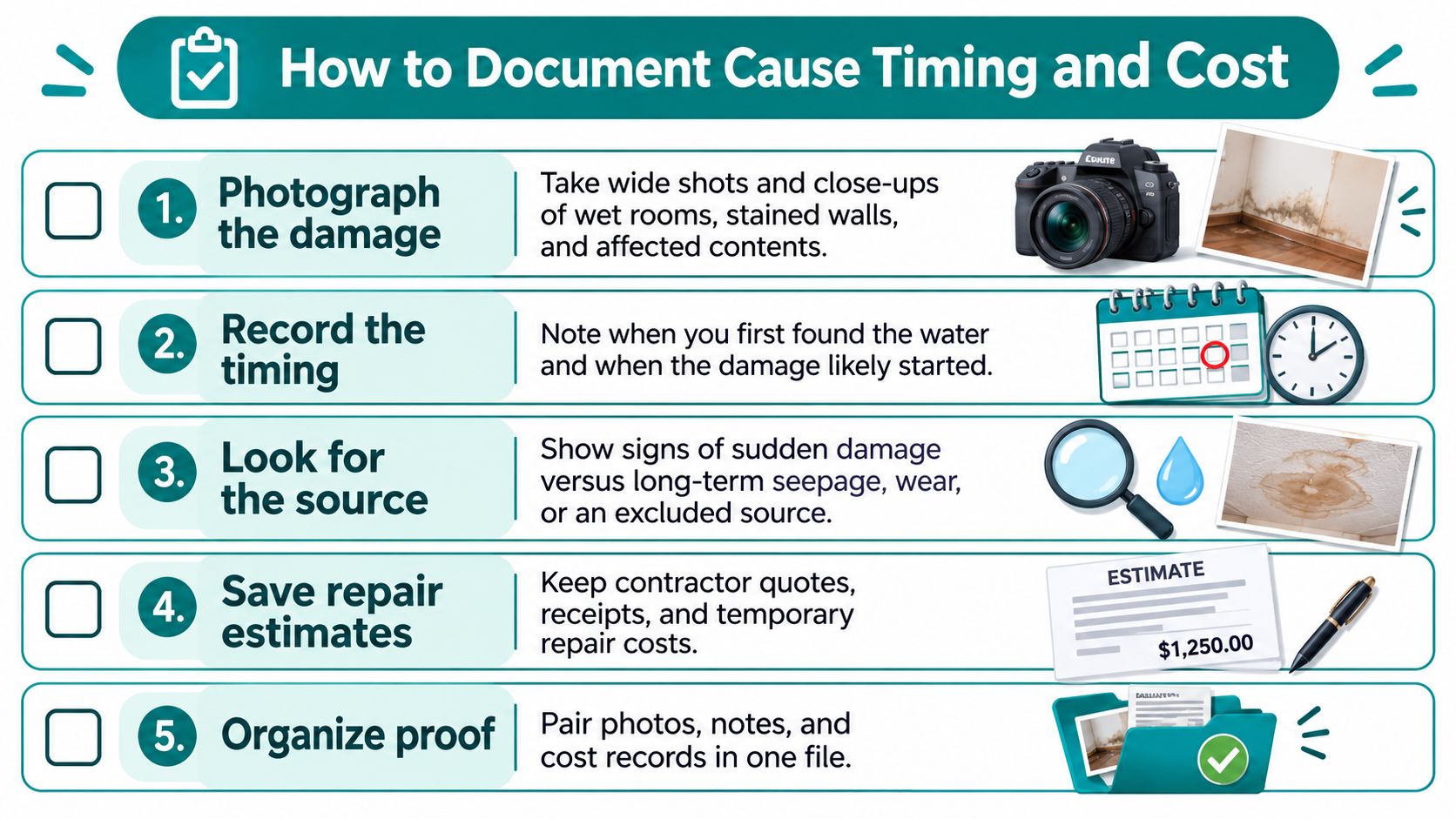
The National Association of Insurance Commissioners recommends retaining the policy, correspondence, claim forms, conversation notes, repair records, and receipts. FEMA advises documenting damaged items before disposal and keeping samples of carpet, flooring, curtains, and wallpaper. Photograph and video every affected area before moving, removing, or discarding materials.
Build the file in order
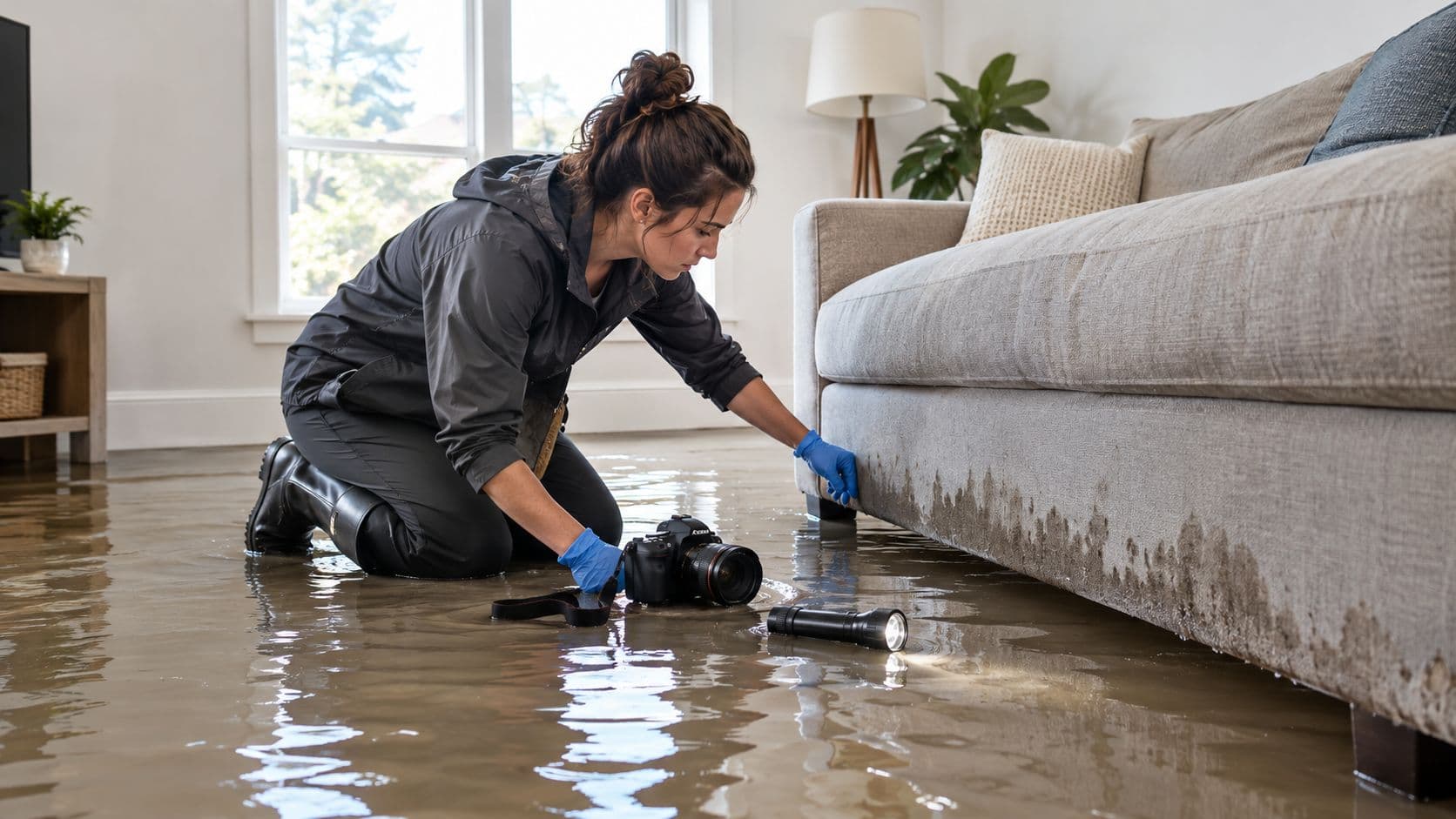
- Stabilize, then shoot. Make the property safe and report the loss. Then capture wide views and close-ups of walls, floors, ceilings, appliances, contents, water lines, the entry point, and the path the water took. Organize files by room and keep metadata when the camera still has it.
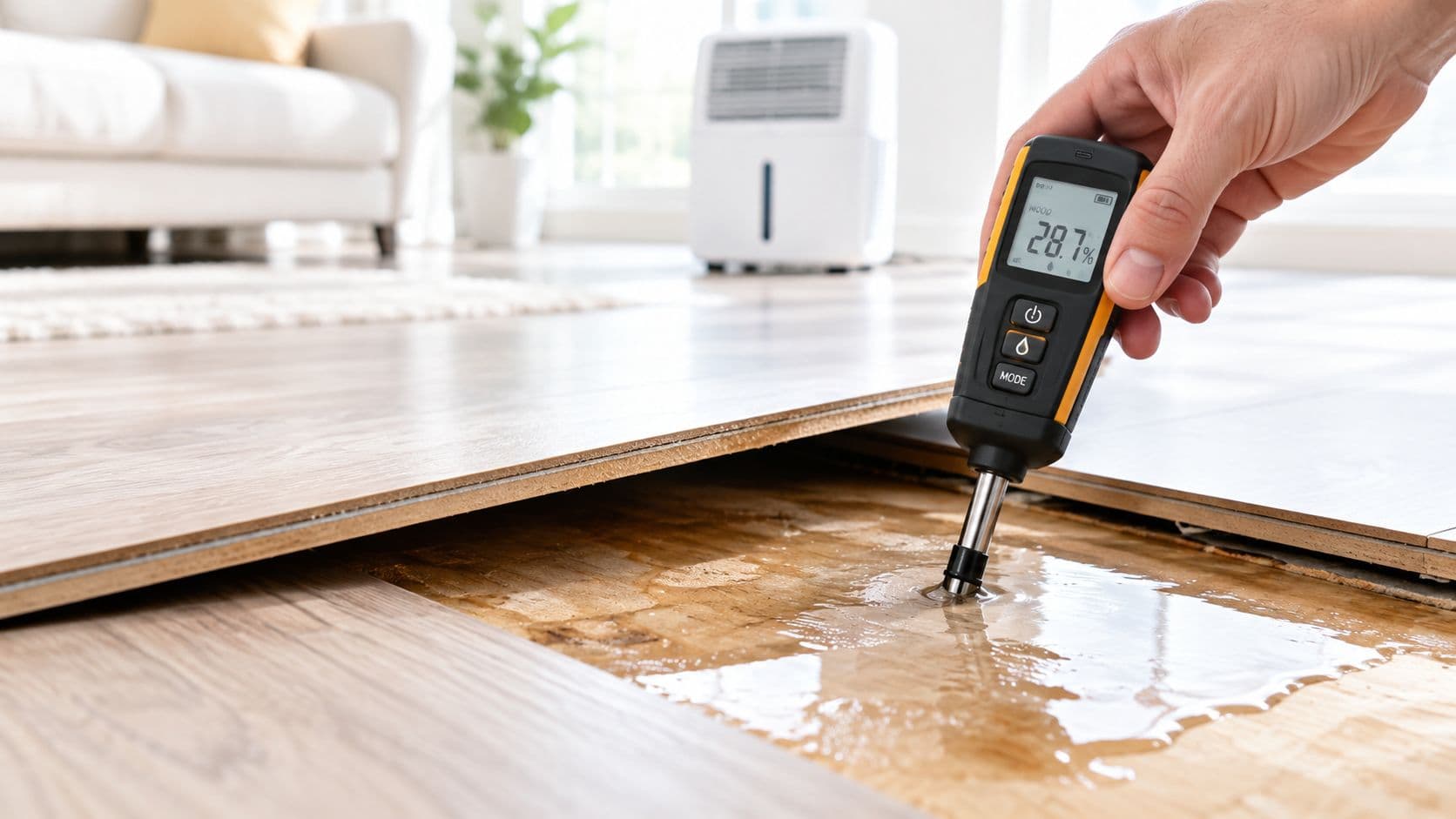
- Date the discovery. Write the first discovery time, weather notes, plumber or engineer findings, moisture readings, serial numbers, and emergency invoices in one dated folder. A compelling picture still does not prove when the loss began.
- Inventory every item. Use quantity, description, brand, model or serial number, purchase location, age, replacement cost, and estimated actual cash value. Those fields match what formal inventories ask for and block unsupported lump-sum guesses.
- Split emergency work from permanent repair. Extraction, drying, and temporary covering can limit further damage. Do not start irreversible repairs before scope and coverage are confirmed. Keep every invoice and payment record.
- Hold the failed part. If it is safe, do not throw out the burst fitting, the appliance hose, or sample flooring before inspection.
A photo of a soaked room shows the result. The entry photo, the timestamp, and the invoice show the claim.
For a business, add closed hours, payroll, extra expense, inventory loss, tenant impact, and the calculation basis for any business-income claim. That record is what later supplements stand on when hidden damage shows up.
Filing the Claim and Meeting the Adjuster
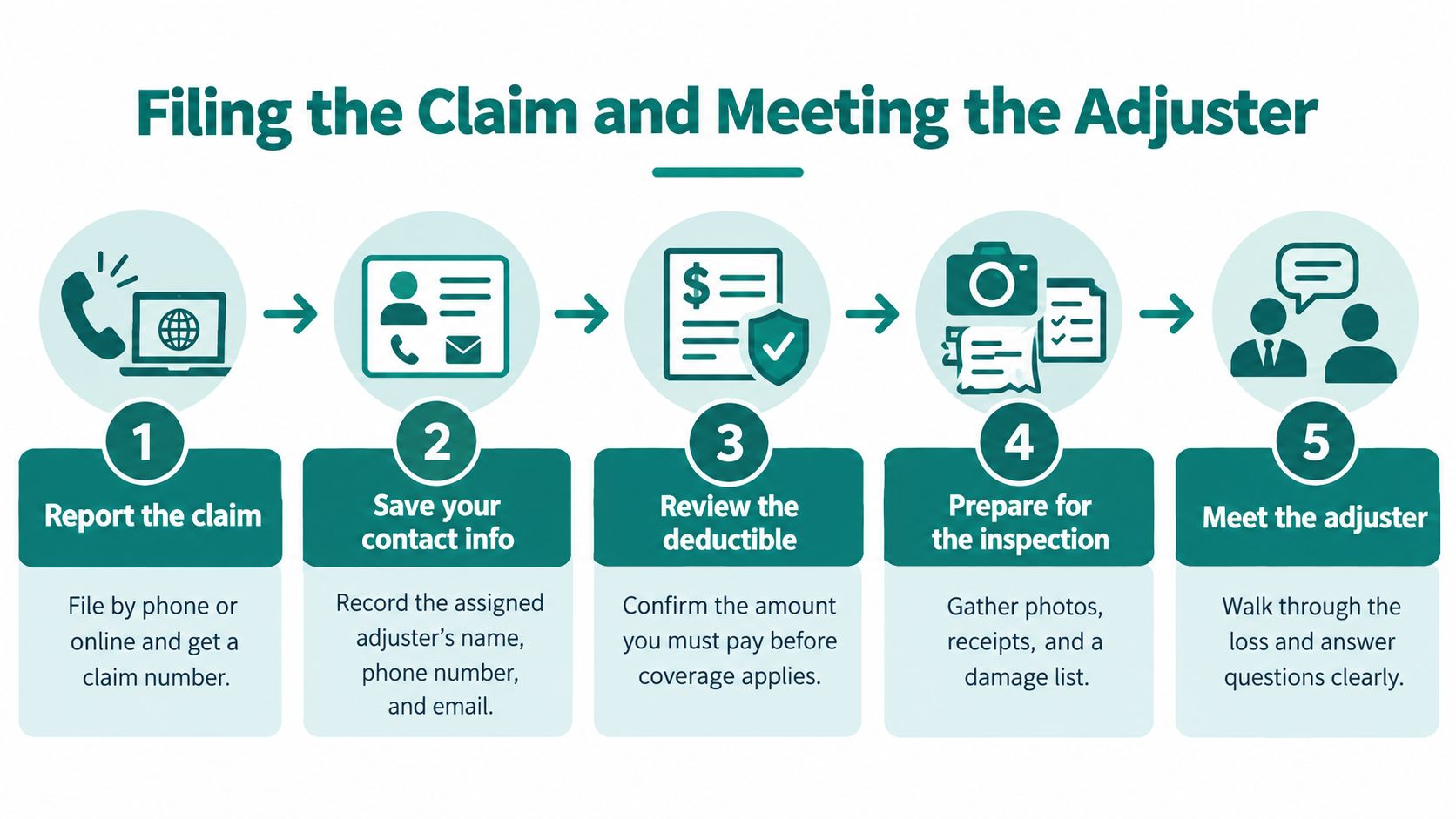
Phone notice and online notice do the same job. Get a claim number, the assigned adjuster's name and contact information, the deductible, limits, exclusions, and every endorsement. Write down each conversation, including who spoke and what was promised next.
The notice should match the careful description already given to each carrier: when the water was found and what the source appeared to be. Do not upgrade that description into a coverage conclusion on the form.
Treat the inspection as a working session
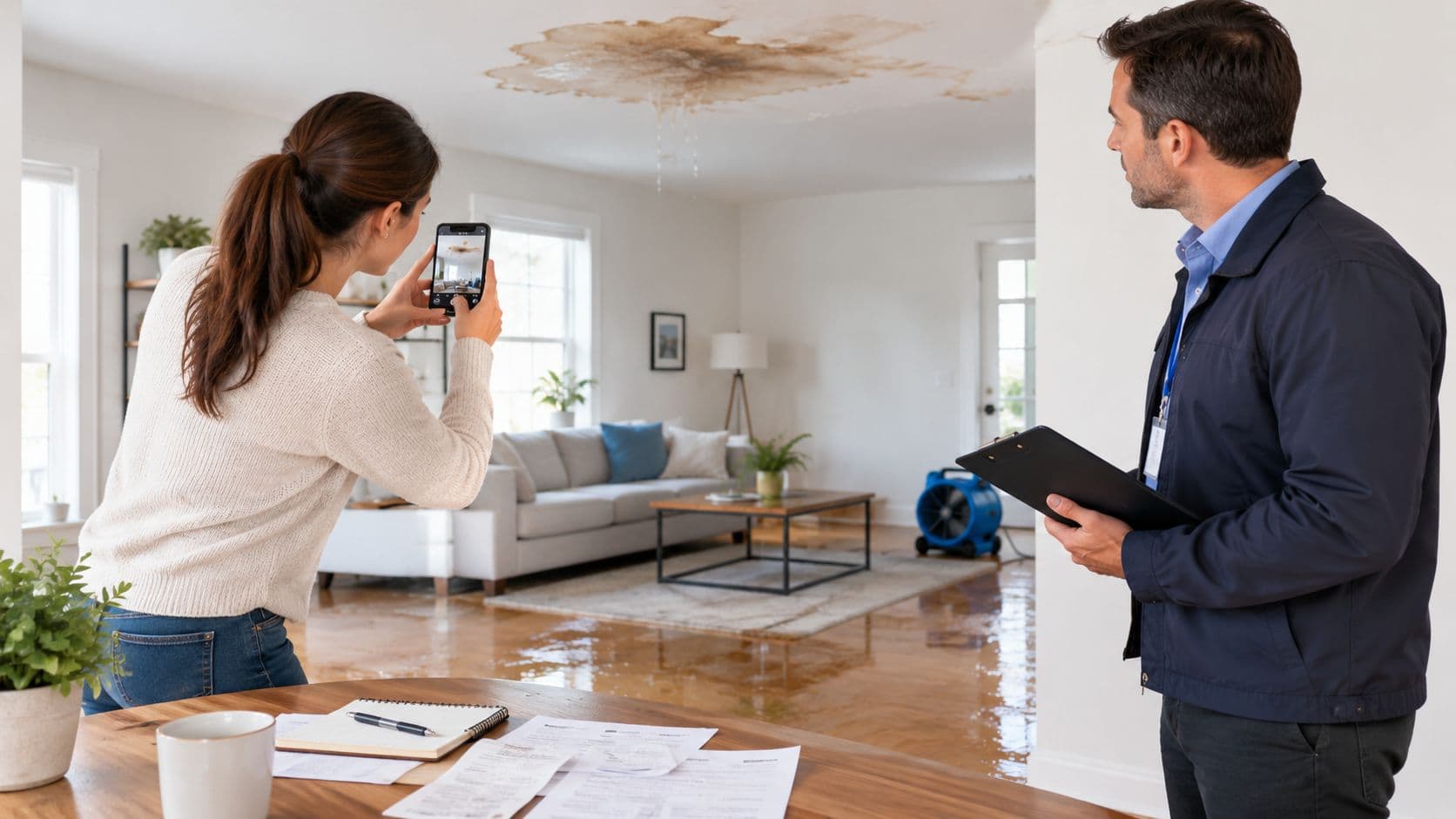
Bring a room-by-room damage map, moisture or drying logs, contractor invoices, temporary-living or extra-expense receipts, and the contents inventory. For a commercial loss, add equipment lists and a simple record of interrupted operations. A water damage inspection is more useful when those papers are already in the room, because the visit is a coverage-and-estimate meeting, not a tour of wet floors.
Ask which cause the adjuster is evaluating, which items are depreciated, which line items are omitted, and what still has to be submitted. Record the answers. Compare what is said on site with what arrives in writing later.
Do not sign these at the visit:
- A release or settlement paper. Covered damage and recoverable depreciation are often still open.
- A broad remediation contract. An unreviewed scope is hard to supplement after the debris is gone.
- Anything that treats the first estimate as final. The adjuster's number is a draft until the policyholder has compared it.
If demolition later reveals concealed damage, photograph it before removal and plan a supplemental request. Expanding the work without that photo makes the extra cost look optional.
When the Estimate Is Too Low or Denied
A low figure, a delay, or a denial is a different problem from a missing photo. The carrier's estimate is a draft scope. It is not the last word on what the loss cost.
J.D. Power's 2025 U.S. Property Claims Satisfaction Study surveyed 5,178 homeowners who had filed claims within the prior nine months and reported that price increases, extreme weather, and long repair-cycle times were straining satisfaction. That environment is why a line-by-line review is worth the effort. It is not a prediction of any one claim's result.
Read the paper against the building
Request the estimate. Compare measurements, quantities, labor, disposal, drying, testing, permits, code upgrades, and depreciation with the room map and the invoices. Ask for a written reason for every omitted or depreciated item. If concealed damage appears after walls or floors are opened, document it and submit a supplement with invoices or expert reports. Do not assume the first scope is closed.
Weak files tend to fail in familiar ways:
- Cause labeled as maintenance or seepage when the dated discovery notes and the failed part were never offered.
- Flood water filed only on a homeowners policy after the source was named too early.
- Missing inventories that leave contents as a round number.
- Emergency work with no invoice, so mitigation looks like an undocumented extra.
Read a denial or a partial payment against the policy language already collected, then answer it with the dated evidence file. Owners can identify omitted line items and submit supplements supported by invoices and expert reports. A licensed public adjuster may be useful when the loss is large, disputed, delayed, or involves complex commercial accounting. Hiring one does not promise a higher settlement.
Deadlines Proof of Loss and Repair Timing
Two clocks run at once, and they are not the same clock.
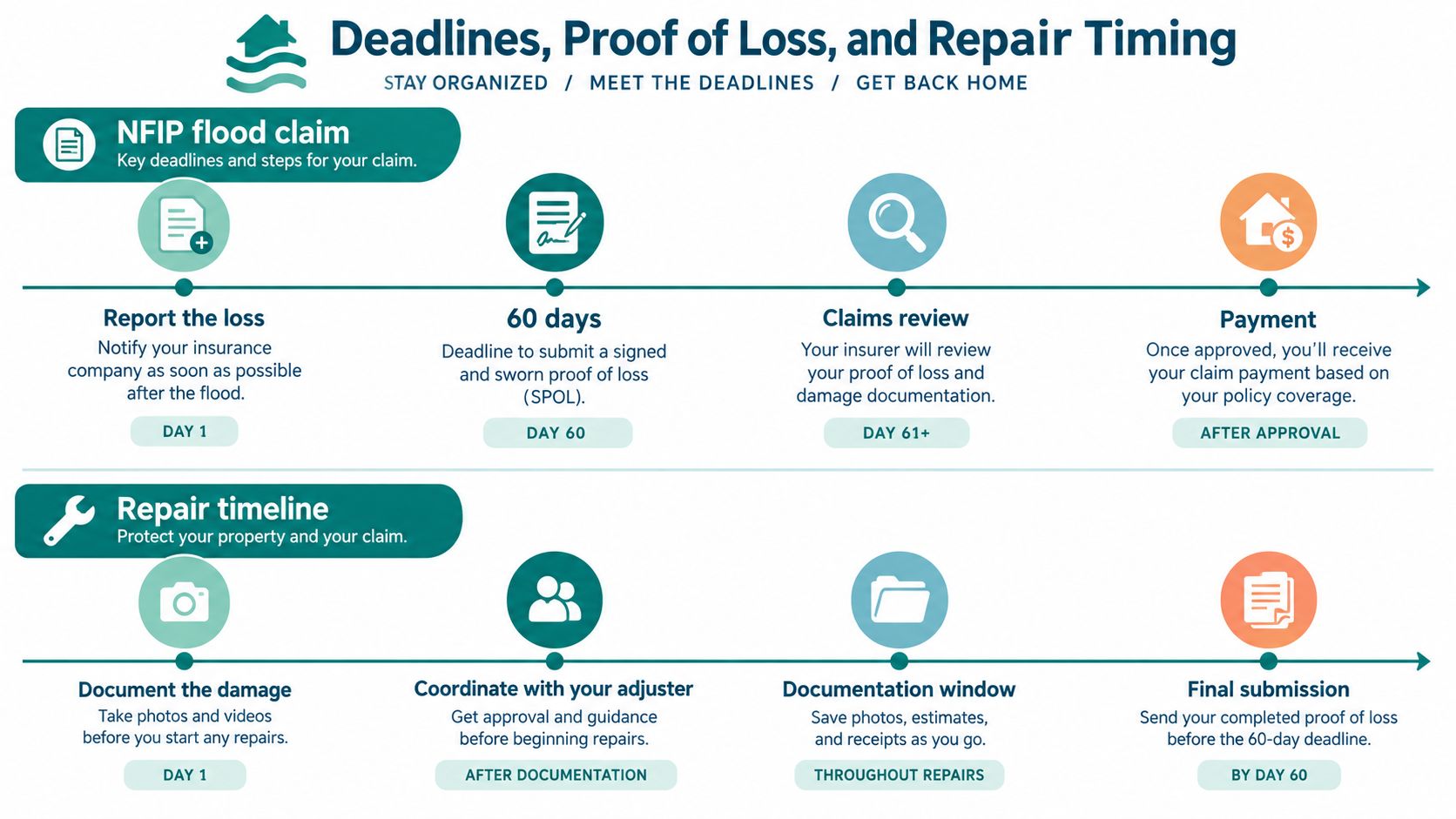
For an NFIP flood claim, FEMA guidance says the signed and sworn Proof of Loss, with supporting documentation, generally must be submitted within 60 days after the date of loss unless a written extension applies. A supplemental request generally needs another signed Proof of Loss within 60 days of that supplemental claim. Most homeowners and renters policies exclude flood, and NFIP coverage is built for physical damage from floodwater entering from the ground up, such as storm surge, heavy rainfall, or an overflowing river or lake.
Location does not answer the flood question by itself. FEMA reports that more than 20% of NFIP claims originate outside areas classified as having the highest flood risk. A property outside the highest-risk zone can still have a flood file, a homeowners file, or both.
The non-flood calendar is not a fixed number
Notice, proof-of-loss, appeal, and lawsuit deadlines on homeowners and commercial property policies vary by policy and jurisdiction. Confirm each one with the insurer and write it down. Calendar every notice date, proof date, and appeal date, and keep proof of delivery.
While those dates run, keep mitigating further damage and save the receipts. Water mitigation belongs in the file as emergency work with invoices, not as a silent rebuild. Avoid permanent repairs that destroy evidence before the carrier has had a fair chance to inspect.
Meeting a deadline does not guarantee payment. Missing one can close options the rest of the file was built to protect.
Leave recoverable depreciation, code items, and temporary living or extra expense open until they are understood. A short personal list is enough: claim number, every deadline, copies of what was submitted, and proof it was sent.
When a Licensed Public Adjuster Helps
A straightforward covered leak, a complete inventory, and an estimate that matches the damage may not need outside help. A large loss, a denial, a long delay, a settlement that ignores drying, contents, or code work, or a commercial claim with equipment, inventory, and business income is a different decision.
A company adjuster works for the insurer. A public adjuster represents the policyholder only as state law and the license allow, and may help with documentation, estimates, and negotiation. Hiring one is optional and is not right for every claim. Fees, availability, and services vary by location and provider.
One request, not a second insurer
PostDamage is an independent information and referral platform for residential and commercial property owners across the United States. It is not an insurance company, public adjusting firm, law firm, or restoration contractor, and it does not directly adjust, negotiate, or settle insurance claims. It educates owners about claim processes and documentation, and it offers a way to request professional assistance and connect qualified inquiries with relevant professionals where available.
The brand promise is "One request. Not five sales calls." A referral is not guaranteed, and neither is any particular claim result. Homeowners, condo owners, landlords, and HOA decision-makers can use it for a homeowners claim question. Business owners, property managers, and facility managers can use it when equipment, stock, or interrupted operations are part of the loss. The file built in the first days is what a licensed professional, if one is engaged, has to work with.
PostDamage gives property owners a single place to learn how a water damage claim is documented and, when the loss is large, disputed, or commercially complex, to request a connection with a licensed professional where one is available. It does not adjust or settle the claim, and no payout is promised. Owners who want that one request, rather than a string of sales calls, can start at PostDamage.