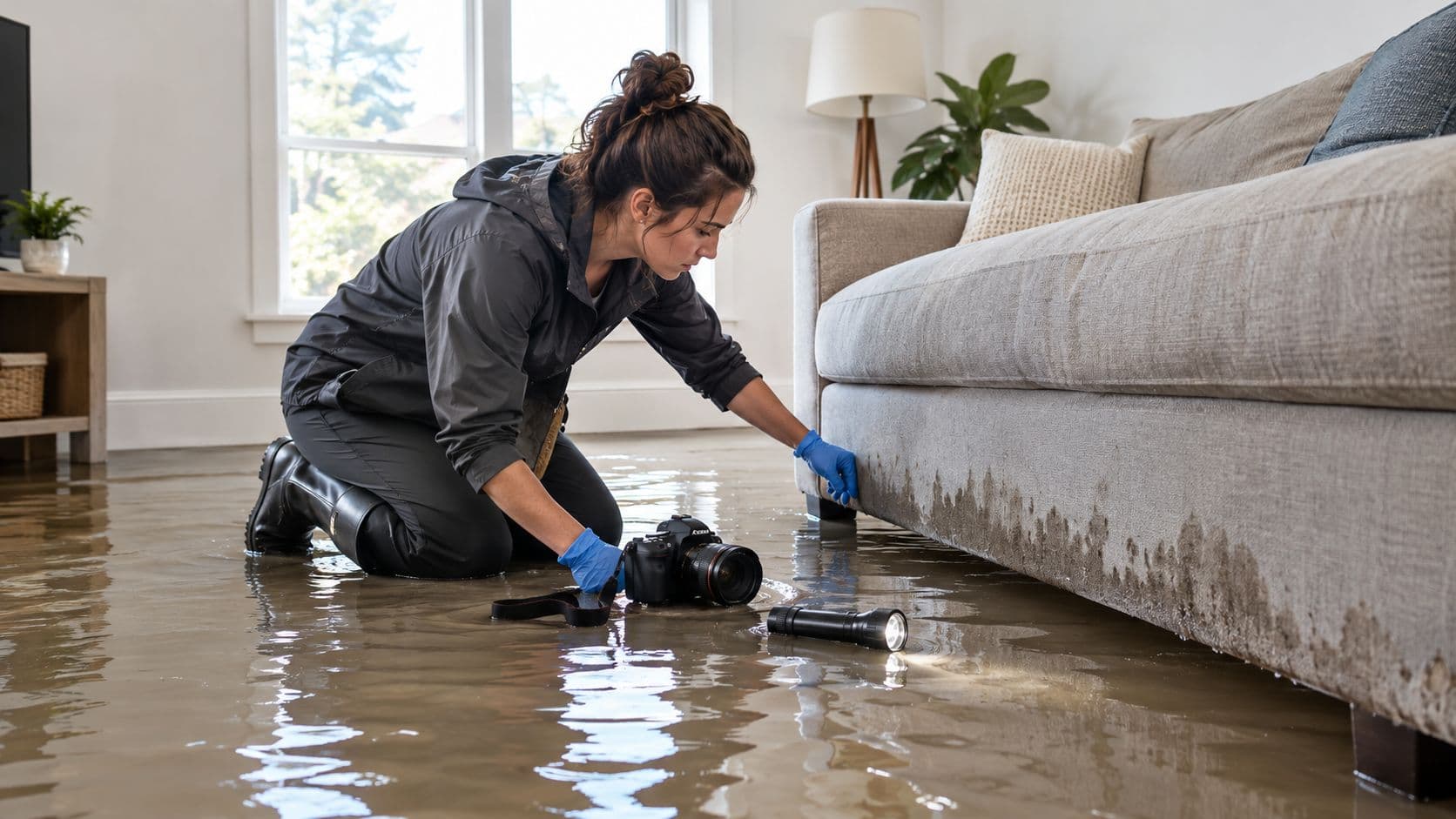
A homeowner wakes to find standing water spreading across the garage after a pipe bursts overnight. Another notices a brown ceiling stain that has slowly expanded beneath a roof leak. Both losses involve water, but the insurance answer can be completely different.
The practical question isn't just “does homeowners insurance cover water damage?” It's whether the water came from a covered source, entered through a covered mechanism, and caused damage that the policy agrees to pay for. Sudden interior failures are treated differently from gradual deterioration, outside flooding, sewer backup, and neglected maintenance. The policy's exclusions, endorsements, deductible, limits, and documentation will shape the result.
Understanding When Homeowners Insurance Handles Water Damage
Water damage claims are decided by cause, timing, and policy wording, not by how bad the room looks after cleanup starts. A burst interior pipe, ruptured water heater, or failed appliance hose often falls into the kind of sudden, accidental event that standard homeowners insurance may handle. In those cases, the policy commonly applies to resulting damage to drywall, ceilings, flooring, cabinets, and some personal property, subject to the contract terms and limits. Consumer guidance on homeowners water damage coverage explains that insurers look closely at where the water came from and how the loss happened.
One distinction drives a lot of claim disputes. Insurance may pay for damage the water caused inside the home, while leaving the worn-out part that failed as the homeowner's responsibility. If a corroded pipe bursts, the wet materials around it may be covered even if the pipe itself is not. Owners often miss that split until the estimate arrives.
The source matters more than the size of the loss
A washing-machine hose failure, toilet overflow, burst supply line, or roof opening tied to a covered event can all produce very different outcomes depending on the facts. I have seen smaller losses get approved faster than larger ones because the cause was clear, sudden, and well documented. I have also seen extensive staining, warped flooring, and damaged cabinetry denied because the carrier concluded the leak had been developing for too long.
Water entering from outside is a separate problem. Rising surface water, storm surge, overflowing rivers, and water pushed in through saturated ground are generally handled under flood insurance rather than a standard homeowners policy. FEMA's explanation of homeowners insurance and flooding makes that boundary clear.
What the policyholder should check
Start with the declarations page for deductibles and coverage limits, then read the exclusions and endorsements that deal with water. That is often where the answer sits for mold cleanup, sewer backup, basement contents, code-related repairs, and similar gray-area costs.
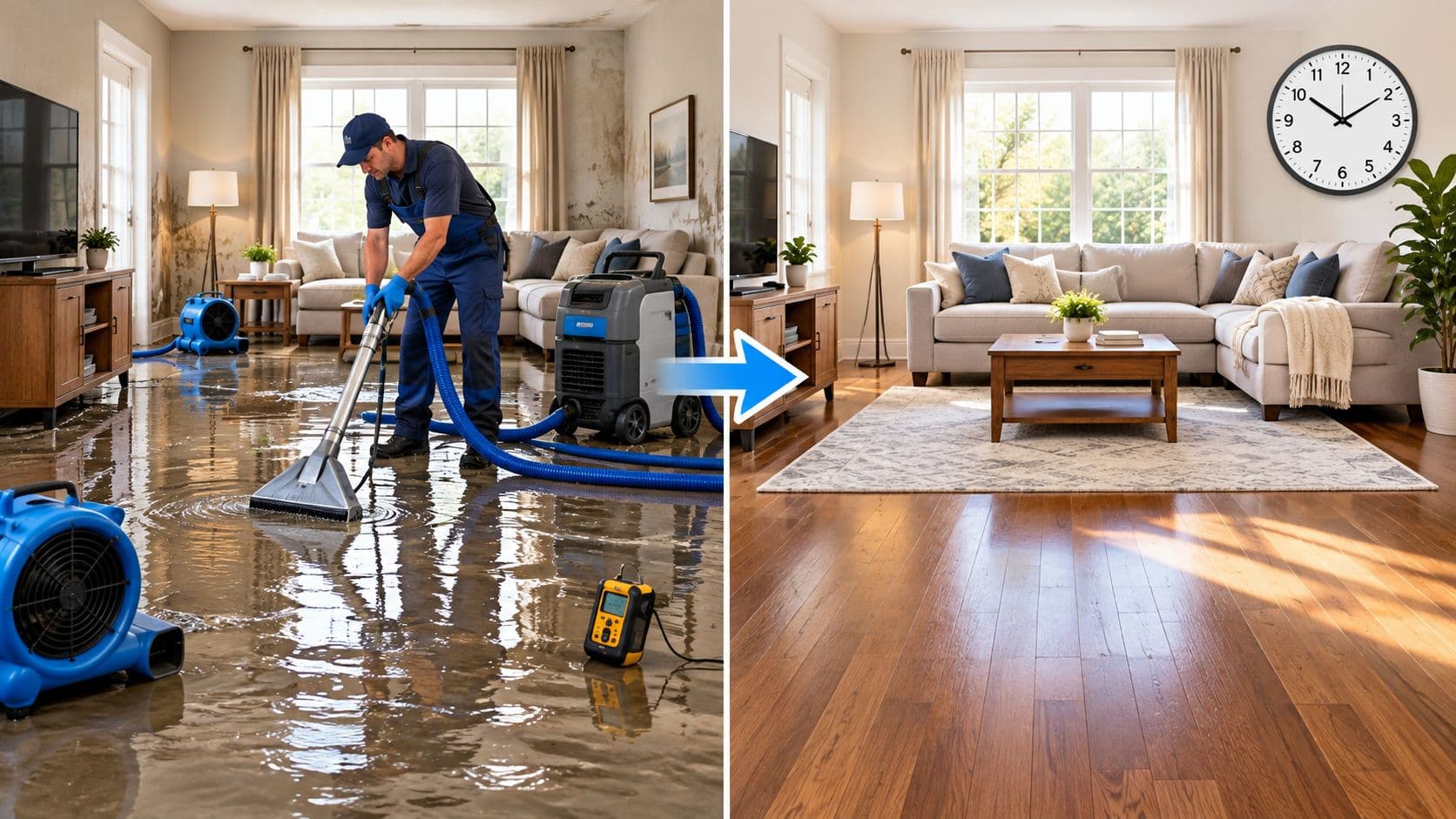
Documentation also affects the outcome. Good photos, a room-by-room inventory of damaged items, invoices, moisture-mitigation records, and a clear timeline make it easier to show what happened and what was done to limit further damage. For practical cleanup steps such as extraction, drying, and recordkeeping, review PostDamage's water-damage restoration guidance.
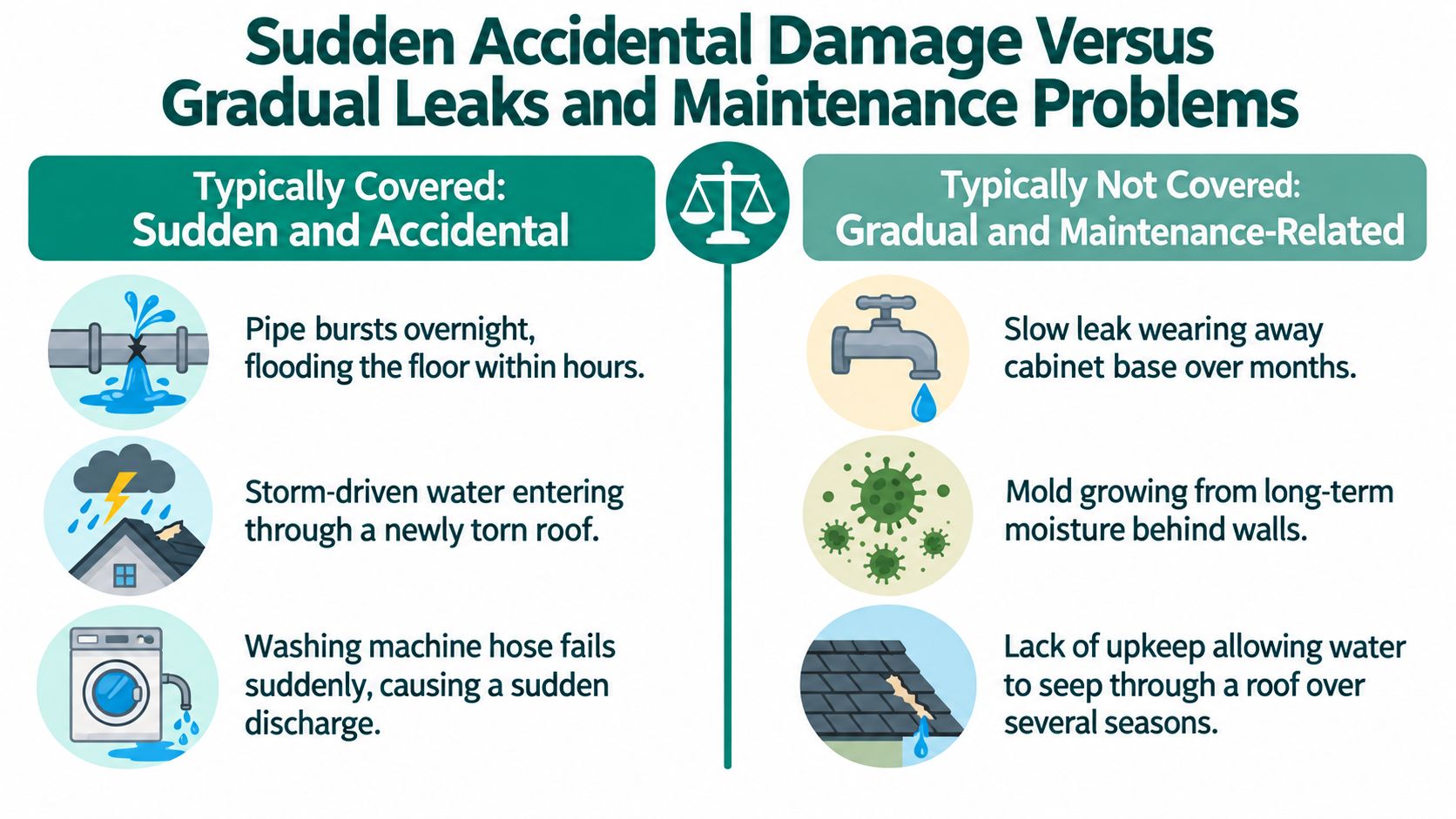
Sudden Accidental Damage Versus Gradual Leaks and Maintenance Problems
You walk into a kitchen and find water across the floor, the sink base swollen, and the drywall damp. The claim often turns on one question. Did this happen from a sudden event, or do the visible conditions show the leak had been active long before anyone reported it?
Homeowners policies usually treat sudden and accidental water loss very differently from ongoing seepage or neglected upkeep. If a supply line bursts, a washing-machine hose fails, or a water heater cracks and releases water quickly, the policy may respond to the resulting damage to drywall, insulation, subfloor, flooring, cabinets, ceilings, and personal property, depending on the wording. The failed part itself is often a separate issue. Many policies may pay for the water damage caused by the broken pipe, hose, or appliance, while excluding the cost to replace that part. NAIC homeowners insurance guidance explains that distinction and why exclusions and endorsements matter.
Why gradual damage creates trouble
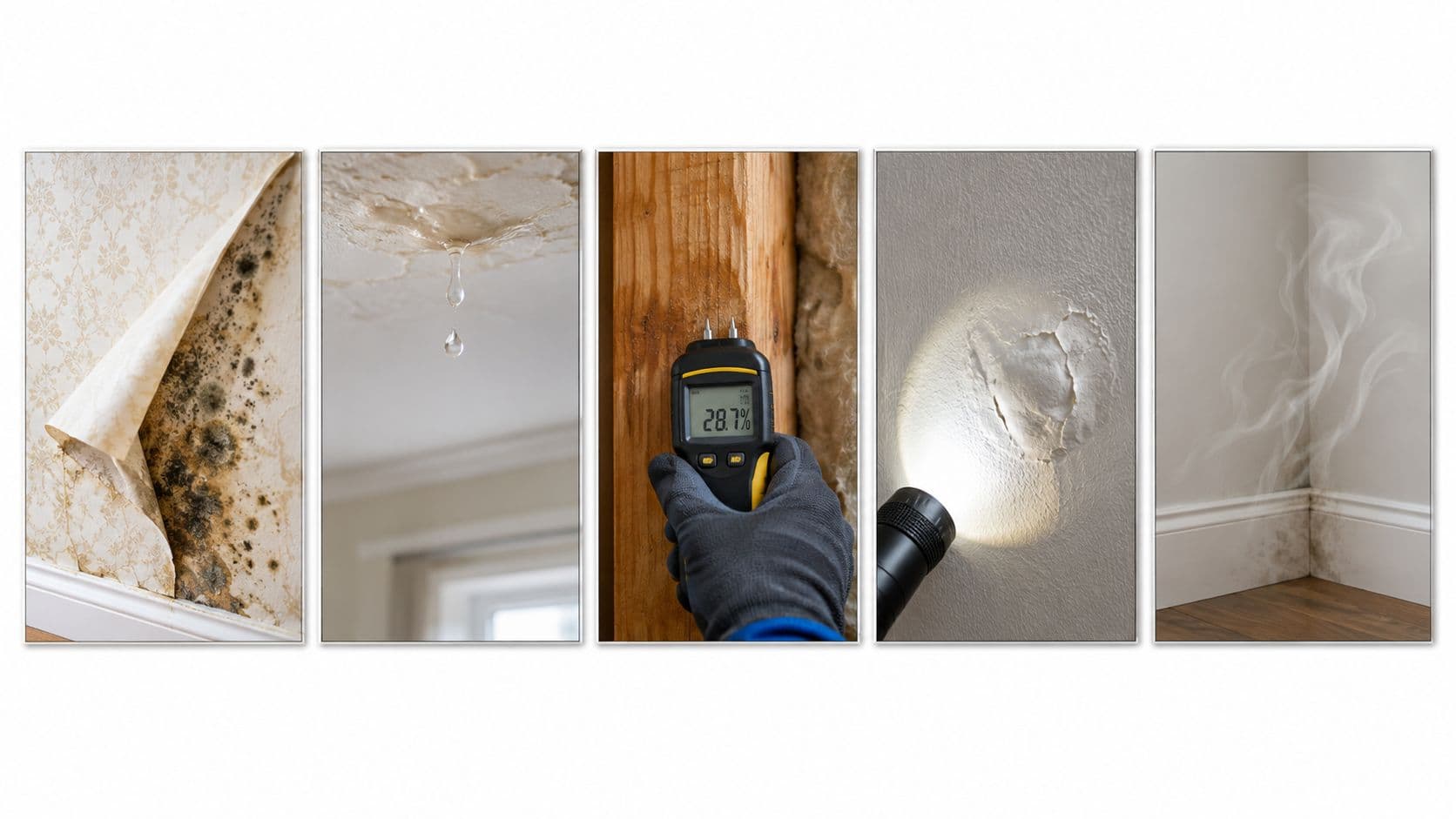
What changes the outcome is often the evidence left behind. Adjusters look for staining lines, swollen trim, rust, corrosion, microbial growth, softened wood, delaminated cabinets, and rot around the source area. Those signs do not always prove a long-term leak by themselves, but they do raise harder questions about when the damage started and whether it should have been caught earlier.
Timeline evidence matters as much as the wet materials. A claim is easier to support when the damage pattern matches a recent event, the shutoff happened quickly, and the failed component still shows a fresh break or split. It gets harder when there were prior drips, repeated patch jobs, old discoloration, or a history of the same area getting wet.
Documentation principle: Keep photos of the source in place, save the failed component, and build a clear timeline from discovery through mitigation and repair.
Do not throw away the broken hose, valve, connector, or appliance part until the carrier or adjuster has had a fair chance to inspect it. Photograph the source before cleanup when safe. Record emergency drying, extraction, demolition, and temporary repairs as they happen.
What generally works and what doesn't
Prompt reporting, reasonable mitigation, moisture documentation, and preserved evidence usually help. So does separating two decisions that owners often blur together. One is whether the policy covers the damage caused by escaping water. The other is whether it pays to replace the item that failed.
Claims weaken when water is left running, damaged materials are discarded without photos, or permanent repairs are completed before the cause is documented. Those are the gaps that turn a workable claim into a causation dispute.
Flood Coverage Versus Standard Homeowners Insurance and Backup Endorsements
A common claim mistake starts with the wrong assumption. Homeowners see water on the floor, call it one problem, and report it under one policy. Coverage often turns on a narrower question: which water path caused the damage, and does the policy cover the resulting loss, the failed system, or neither?
Flood coverage is usually separate, whether it is purchased through the National Flood Insurance Program or a private insurer. FEMA states that 99% of U.S. counties have experienced a flood since 1998, and more than 40% of flood-insurance claims originate outside officially designated high-risk areas. FEMA's flood insurance fact sheet is a useful starting point because it separates flood protection from the interior water-loss coverage many owners already have.
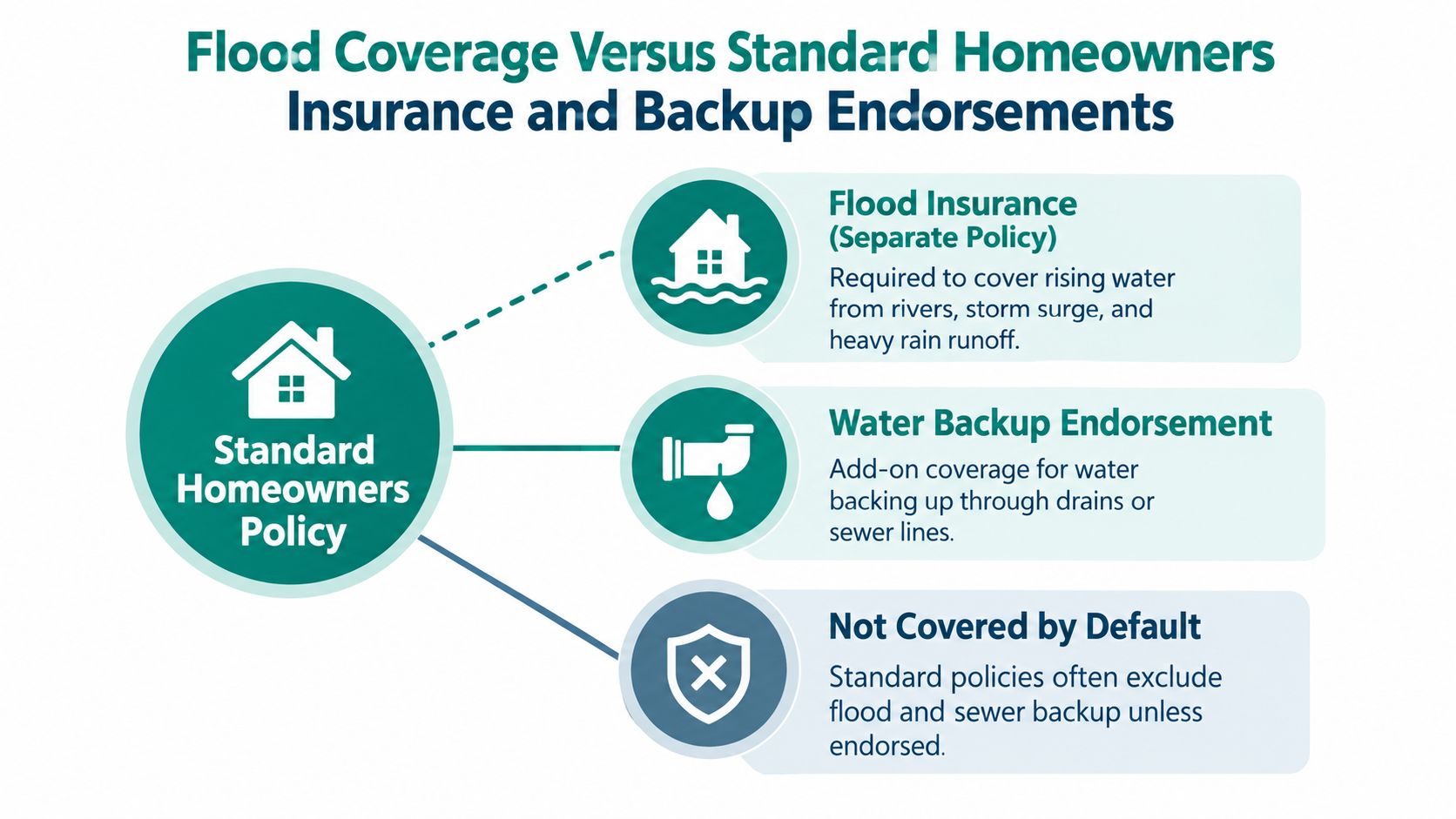
The three coverage paths
| Water pathway | Likely policy direction | Important limitation |
|---|---|---|
| Sudden interior plumbing or appliance failure | Standard homeowners policy may respond | The failed component may be excluded |
| Rising or flowing outside water | Separate flood policy | Definitions, limits, and waiting rules apply |
| Sewer or drain backup | Backup endorsement may respond | It isn't automatically included |
That last column is where claims often tighten.
Flood insurance has its own limits and categories. A separate flood policy may provide up to $250,000 for residential building coverage and $100,000 for contents coverage, subject to policy terms and eligibility. FEMA's flood insurance coverage explanation also makes clear that building and contents coverage are not the same thing. Owners should not assume personal property is protected just because the structure is insured, and renters should not assume a landlord's policy covers belongings.
Timing matters too. Flood insurance can involve waiting rules, so buying coverage after heavy rain is in the forecast may leave a gap when the loss occurs. FEMA also warns that one inch of floodwater can cause roughly $25,000 in property damage. FEMA's flood-risk guidance puts that number in the flood context, which is exactly why this gap deserves separate attention from ordinary leak claims.
Sewer and drain backup needs its own check. It is often added by endorsement, capped by a separate limit, and interpreted closely based on where the water came from and how it entered the home.
When causation is disputed, report every potentially applicable policy promptly and keep the facts consistent across each notice. A flood-damage attorney can help when the disagreement is over policy boundaries, source classification, or whether the carrier is treating a backup loss as an excluded flood event.
Deductibles, Policy Limits, and Valuation Methods That Change Actual Costs
An approved claim doesn't mean the insurer pays every invoice. The deductible comes off the covered amount, policy limits can restrict recovery, and valuation methods can change the payment for damaged materials and belongings.
A replacement-cost policy may pay the reasonable cost to replace eligible property, subject to its conditions. An actual-cash-value approach generally accounts for depreciation, so older carpet, cabinets, flooring, or furniture may produce a lower initial payment than the cost of new equivalents.
Material damage isn't valued uniformly
Drywall and insulation may require removal when they can't be dried effectively. Hardwood, laminate, carpet, subflooring, cabinets, baseboards, and ceilings each raise different questions about repairability, matching, depreciation, and underlying damage. A wet surface that looks acceptable can still require moisture testing before a repair decision is made.
Code-upgrade coverage can also matter. Rebuilding a damaged area may require work that wasn't part of the original installation, but payment for that additional work depends on ordinance-or-law coverage and the policy's conditions.
| Factor | How it affects payout |
|---|---|
| Deductible | The policyholder pays the covered amount up to the deductible before insurance contributes. |
| Policy limit | Payment cannot exceed the applicable limit, even when documented damage is higher. |
| Valuation method | Actual cash value can reduce payment for age and depreciation, while replacement-cost terms follow different conditions. |
| Contents limit | Furniture, electronics, clothing, and other belongings may have separate limits or category restrictions. |
| Basement or crawl-space wording | Below-grade areas and their contents may receive different treatment under the policy. |
| Code upgrades | Additional work required by current codes may need ordinance-or-law coverage. |
| Receipts and inventories | Records support ownership, condition, quantity, and replacement valuation. |
A policyholder should photograph serial numbers, retain purchase records where available, and separate building damage from personal-property damage. Replacement assumptions without evidence can create avoidable disputes, especially when several rooms and many belongings are affected.
Before choosing between temporary DIY work and professional mitigation, the policyholder should review the declarations page and ask how emergency services, drying, demolition, and storage will be handled. Coverage questions should be settled with the insurer, not inferred from a contractor's estimate.
Immediate Steps After Discovering Water Damage
The first decision is safety, not paperwork. If water is near outlets, electrical equipment, or a damaged ceiling, occupants should leave the affected area and avoid contact until it's safe to do so. Contaminated water and unstable materials require extra caution, and a professional should handle conditions beyond the occupant's ability.
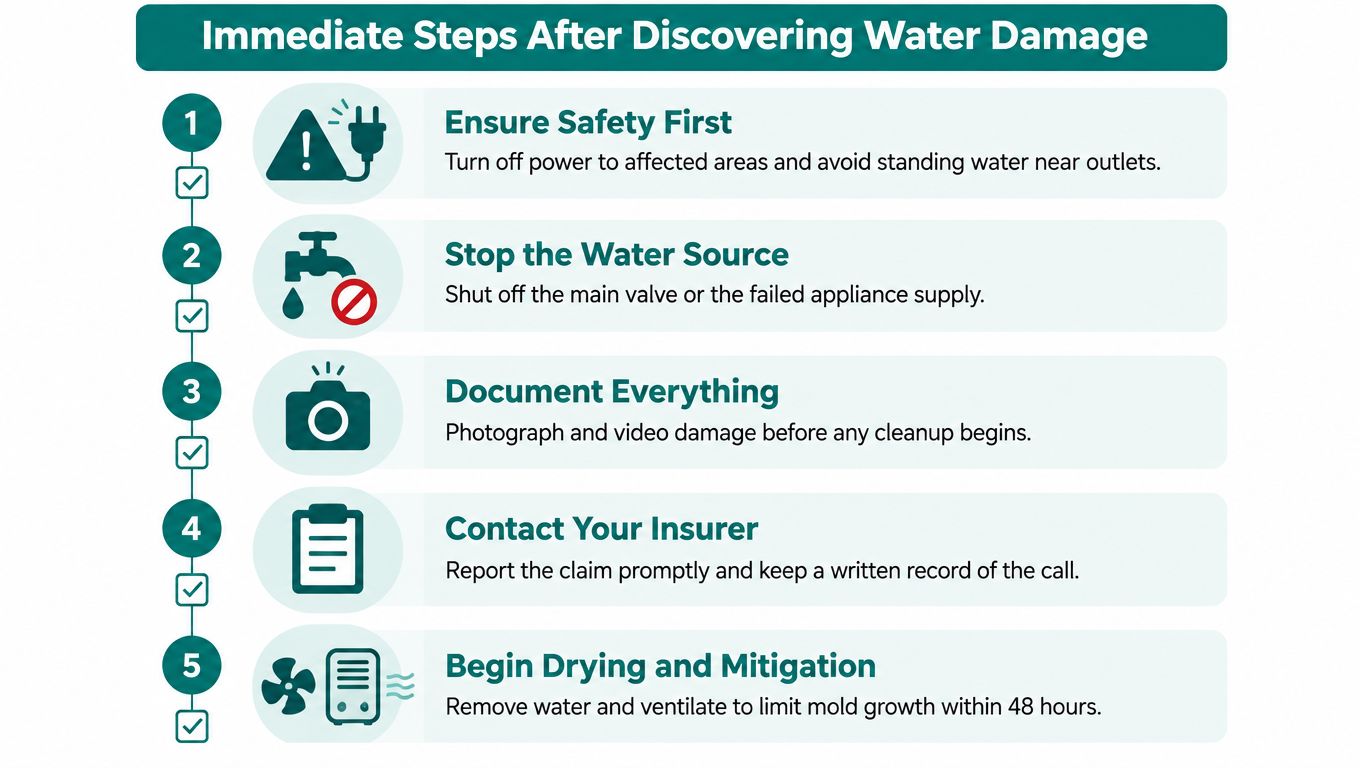
A practical sequence
Stop the source when reasonably safe. Shut off the relevant valve or main supply if accessible. Don't enter unsafe standing water to reach electrical or plumbing controls.
Record the scene before cleanup. Photograph the source, water level, entry path, affected rooms, damaged materials, and personal belongings. Video can show the spread and active discharge better than isolated images.
Notify the insurer promptly. Ask how the claim should be reported, whether emergency mitigation is authorized, what evidence is required, and whether an adjuster needs to inspect before removal.
Preserve evidence. Keep the failed pipe, hose, appliance part, damaged materials, and receipts unless safety requires disposal. Record dates, times, calls, names, estimates, and every mitigation expense.
Limit additional damage. Reasonable extraction, air movement, and drying may be necessary. Permanent demolition or reconstruction should wait until the insurer's process and evidence requirements are understood, unless urgent safety conditions require immediate action.
Prompt reporting matters because a continuing leak can enlarge the loss. It also gives the insurer a clearer opportunity to investigate the source and timeline. A damaged-item inventory should include descriptions, quantities, condition, and available purchase or ownership records.
A ceiling leak deserves particular care because water can travel inside assemblies before staining appears. Guidance on water leaking through a ceiling can help a homeowner recognize when a visible mark may signal concealed wet materials.
The phrase “remove water and ventilate to limit mold growth within 48 hours” appears in common emergency checklists, but homeowners shouldn't treat a rigid timeline as a substitute for professional assessment. The right response depends on water type, material, temperature, airflow, and how the assembly was affected.
Typical Water-Damage Scenarios and Likely Insurance Outcomes
At claim time, the scenario label matters less than the proof. I have seen two losses that look nearly identical in photos end very differently because one owner could show a sudden event and the other could not. The practical question is always the same: Where did the water begin, how did it enter, how quickly did the damage occur, and what evidence proves the timeline?
A burst supply line in a finished room is still one of the cleaner claims, but even there the split matters. Policies often respond to the resulting damage to drywall, flooring, insulation, and contents, while the failed pipe, hose, tank, or appliance part may stay with the homeowner. That distinction drives a lot of frustration because people hear “covered water damage” and assume every related cost is included.
The same logic applies across common household losses. A water heater rupture may support payment for wet materials and damaged belongings, yet not for the old heater itself. A washing-machine hose, refrigerator line, or dishwasher failure can follow the same pattern. With roof-related losses, the coverage decision often turns on what created the opening. A recent covered event is different from long-term wear, failed flashing, or neglected sealant. HVAC moisture claims also hinge on timing. Sudden drain failure presents differently from ongoing condensation that stained cabinets or framing over time.
The better way to assess these scenarios is to match each one to the evidence an adjuster will look for:
- Toilet or tub overflow: show whether it was abrupt or part of a known recurring blockage. Photos of water level, affected rooms, and cleanup timing help.
- Appliance or water-heater discharge: keep the failed part, photograph connections, rust, and the water path, and note when the area was last dry.
- Roof or ceiling leak: document weather, the entry point, ceiling stains, attic conditions, and whether there was prior patching or visible deterioration.
- HVAC or condensate issue: service invoices, maintenance history, and moisture readings can help separate sudden failure from a chronic moisture problem.
- Basement seepage: identify whether water came from an interior plumbing failure, rising groundwater, or surface water entering from outside.
- Sewer or drain backup: confirm whether the loss was a true backup, and whether the policy includes that endorsement.
A short checklist improves outcomes. Photograph the source before cleanup changes it. Save the failed component. Pull service records, prior repair invoices, and any messages showing when the problem was first noticed. If a neighbor, tenant, or contractor saw the area shortly before the loss, note that too.
Those details often decide whether a claim is treated as sudden accidental water damage, excluded wear and maintenance, backup requiring special coverage, or flood handled outside a standard homeowners policy.
Next Steps for Homeowners With Water Damage
Water-loss decisions become clearer when handled in a fixed order. First identify the source and entry path. Then stop further damage safely, photograph the conditions, preserve the failed component, notify every potentially relevant insurer, and ask before authorizing major permanent work.
A policy review should happen before the next incident, not during one. The declarations page should be checked for deductibles and limits, while endorsements should be reviewed for sewer backup, contents, basement areas, and code upgrades. Flood exposure also deserves attention outside officially designated high-risk areas, since external water can reach properties that homeowners don't consider vulnerable.
The financial distinction is straightforward. A covered cause can still leave the policyholder paying the deductible, absorbing excluded component replacement, or facing limits on belongings and below-grade property. Flood insurance also has defined boundaries. A newly purchased NFIP policy typically has a 30-day waiting period, with specific exceptions connected to mortgage transactions and revised flood maps. FEMA's waiting-period guidance also explains that a policy won't cover a loss already in progress.
Professional help becomes sensible when water has entered walls, ceilings, insulation, subfloors, or multiple rooms; when contaminated water is involved; or when the owner can't safely determine what can be dried. Water mitigation guidance can help clarify the difference between stopping additional damage and rebuilding finished surfaces.
PostDamage can help homeowners, landlords, and small businesses describe the incident, understand the next practical step, and connect with appropriate local water-damage professionals through a single request rather than managing multiple sales calls.
PostDamage helps people manage water-damage documentation, mitigation, restoration, and insurance questions, then connect with appropriate local professionals when the situation exceeds safe DIY work. Visit PostDamage to describe the water loss and find a practical next step.