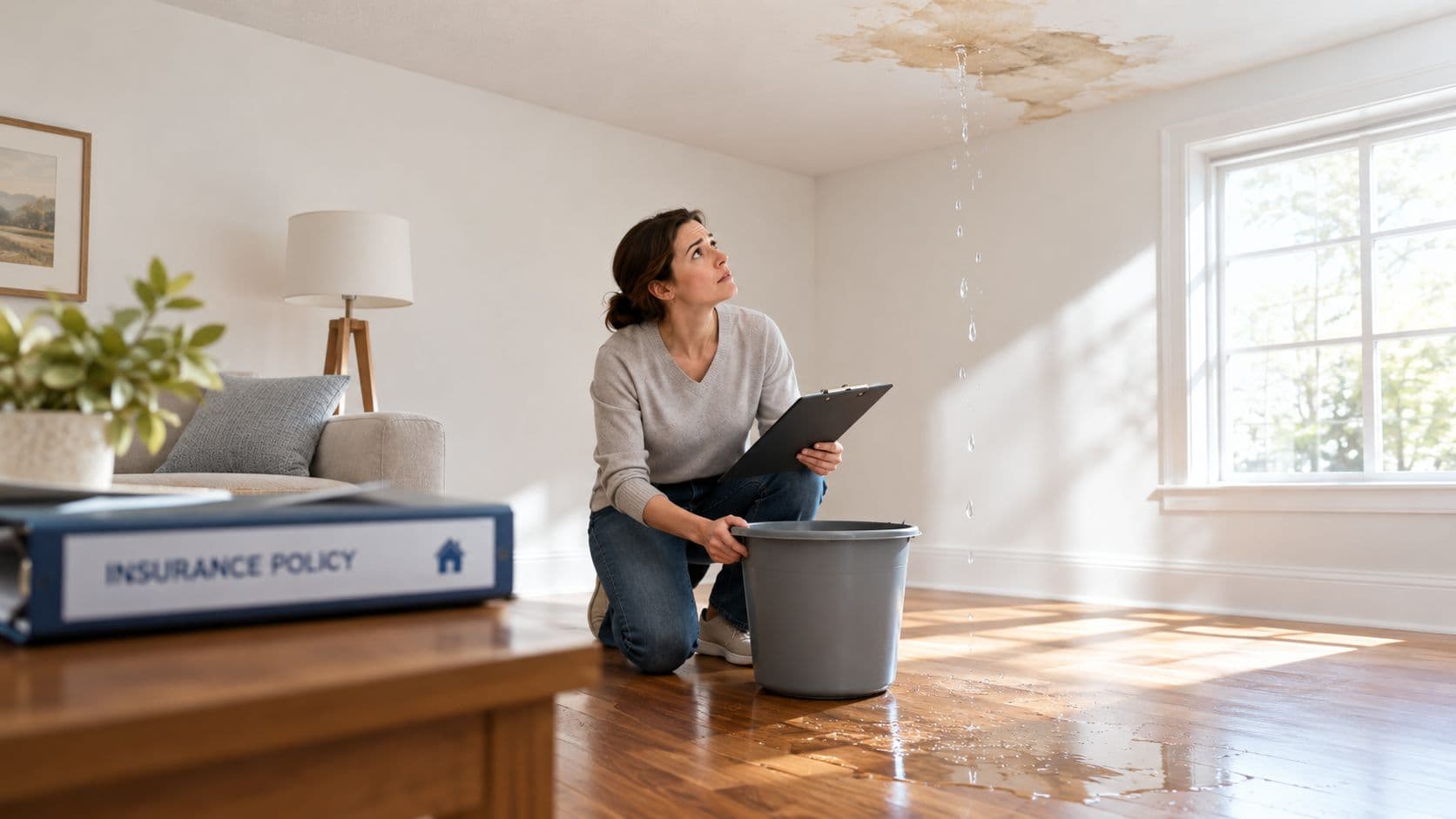
You wake to the sound of water running, find a ceiling stain spreading across the room, or step into a hallway that feels like a shallow pool. The first instinct is to save furniture and start cleaning. Resist that instinct until the property is safe and the water source is understood.
The right response to what to do when your house floods starts with three priorities: protect people, preserve evidence, and stop additional damage without creating new hazards. Floodwater, burst pipes, sewage backups, appliance leaks, and roof leaks can all damage the same walls and floors, but the cleanup and insurance decisions aren't identical.
Assessing Immediate Safety and Structural Hazards
Floodwater can hide energized outlets, damaged wiring, sewage, agricultural runoff, and industrial waste. A single burst pipe can create electrocution, structural, sewage, and indoor-air hazards, even when the incident doesn't look like a major disaster. Nobody should enter standing water if electrical equipment, outlets, or wiring may be energized.
Use a strict stop or go decision
Leave immediately and contact emergency services or the relevant utility if anyone smells gas, hears sparking, sees flames, notices structural movement, or finds a fallen power line. If gas is suspected, occupants should leave without turning lights on, operating switches, or using anything that could create a spark. Never touch fallen power lines, and don't use electrical tools while standing in water.
Reentry should wait until local authorities or a qualified building inspector determine that the structure is safe. A sagging ceiling, unstable floor, damaged utility connection, gas odor, or unusual structural noise is a reason to stay out, not a reason to inspect more closely.
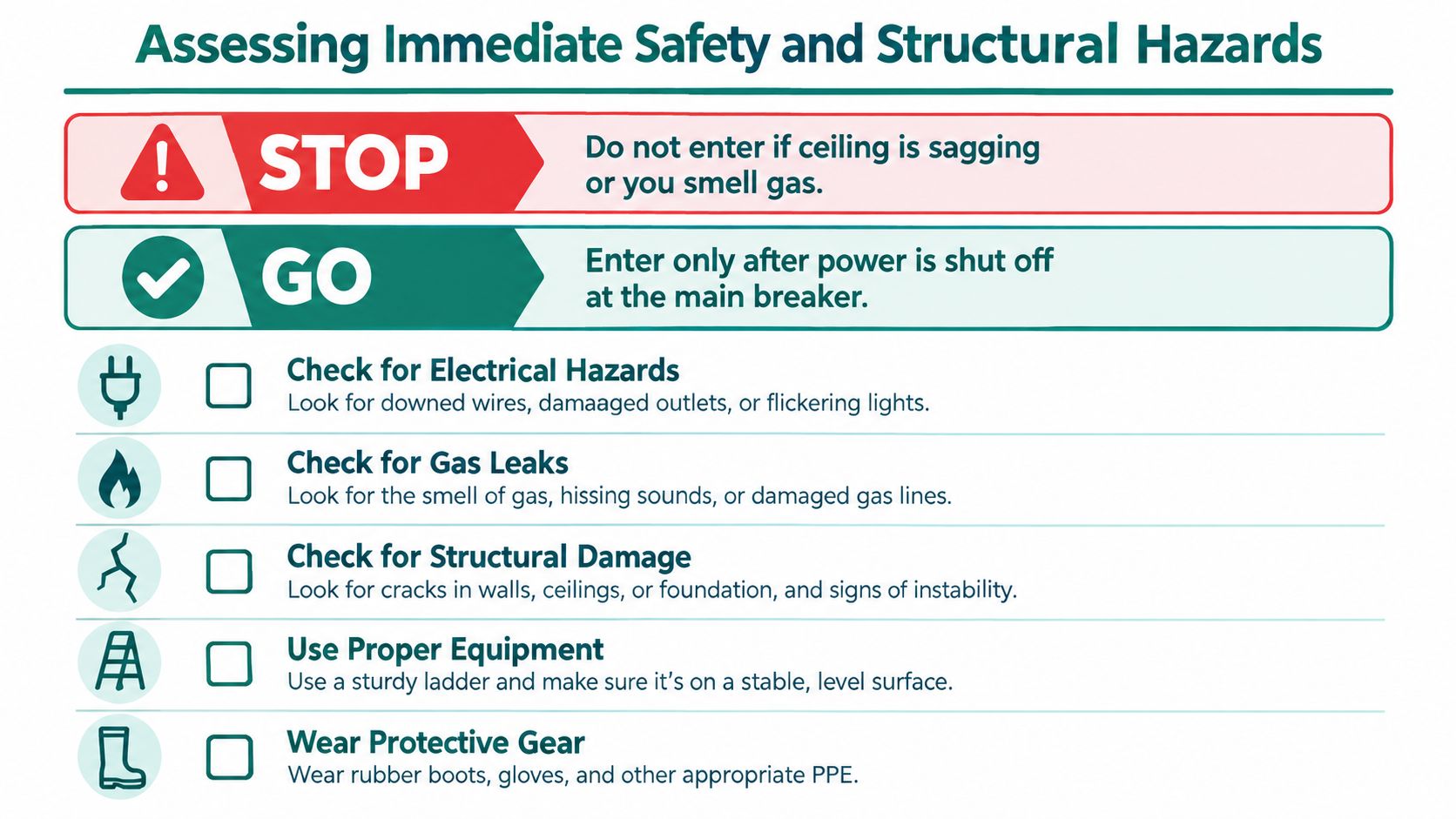
If the electrical panel can be reached without entering water, power and gas or propane systems should be shut off only when it can be done safely. If reaching the panel requires stepping into water, an electrician should shut off the main power. Nobody should operate switches, appliances, generators, or power tools while standing in water. Generators belong outdoors and at least 20 feet from buildings, as CDC generator safety guidance specifies.
Protect people before contents
Floodwater must be treated as contaminated. Keep children and people with asthma or weakened immune systems away from the site, cover open cuts, and avoid contact whenever possible. If limited entry has been authorized, protective equipment should include waterproof boots, gloves, eye protection, and an N95 respirator when conditions require it, consistent with CDC floodwater safety guidance.
Don't use potentially contaminated water for drinking, cooking, brushing teeth, washing dishes, or preparing infant formula. The first task isn't pumping water. It's confirming that people can enter safely and that the building won't injure them.
Practical rule: If the property has gas, electrical, structural, or sewage concerns, professional assessment comes before cleanup.
Identifying the Water Source for Insurance Purposes
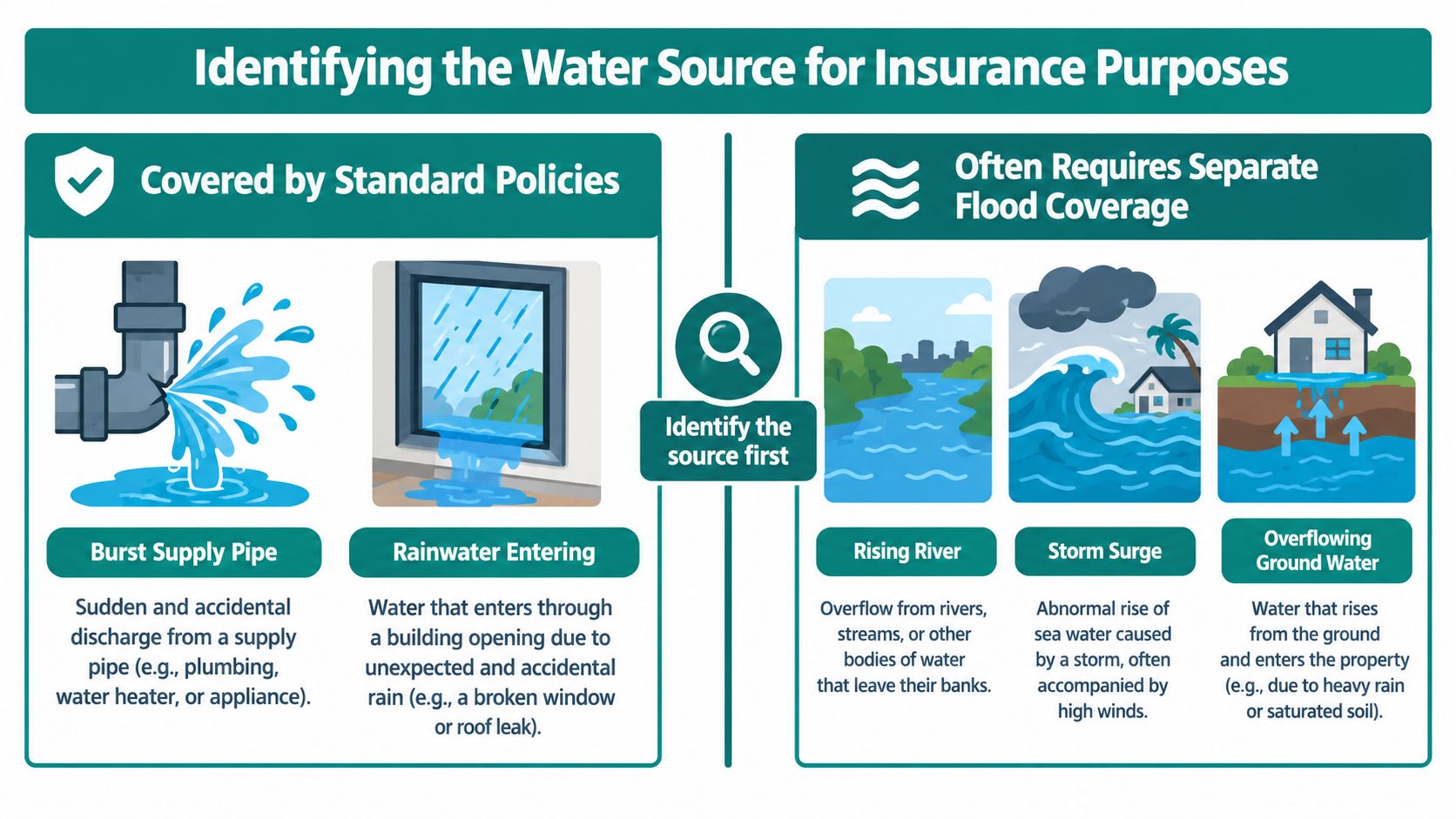
The word “flood” describes the homeowner's experience, but it may not describe the event under an insurance contract. Rising, storm, or surface water generally requires separate flood insurance, while an internally caused loss, such as a burst pipe or failed water heater, may fall under a standard homeowners policy. The source of the water should be documented before anyone makes a definitive statement about fault or coverage.
Separate external flooding from internal loss
External water may come from rising rivers, storm surge, or surface runoff. Internal water may originate from a burst supply line, failed water heater, overflowing toilet or bathtub, appliance leak, or plumbing failure inside the building. A roof leak can require a different coverage analysis from surface water entering across the property, so the evidence must show how the water reached the damaged area.
Only about 4% of U.S. homeowners carry flood insurance, despite flooding being involved in roughly 90% of natural disasters, according to the reporting summarized in this flood insurance coverage explainer. Those figures make the classification issue practical, not technical. A homeowner may need to contact homeowners insurance, a separate flood insurer, a landlord, or a property manager depending on the source and occupancy arrangement.
Build an evidence trail
Before cleanup changes the scene, record where the water began and how it moved. Photograph the broken pipe, failed appliance connection, water line, blocked drain, roof entry point, exterior drainage conditions, and every affected room. Record weather and drainage conditions when external water may be involved, but don't announce that a particular person, contractor, tenant, or maintenance decision caused the loss.
Notify the insurer promptly and ask whether an adjuster must inspect before damaged materials are discarded. A leaking ceiling may need a separate evidence trail from the originating roof or plumbing issue. For context on documenting water entering from above, homeowners can review guidance about water leaking through a ceiling.
NOAA reports that flooding causes more damage in the United States than any other severe-weather-related event, averaging about $5 billion annually, as noted in CDC natural disaster safety information. That broader figure doesn't determine an individual claim, but it reinforces why source classification and early documentation deserve immediate attention.
Documenting the Damage Before Moving Anything
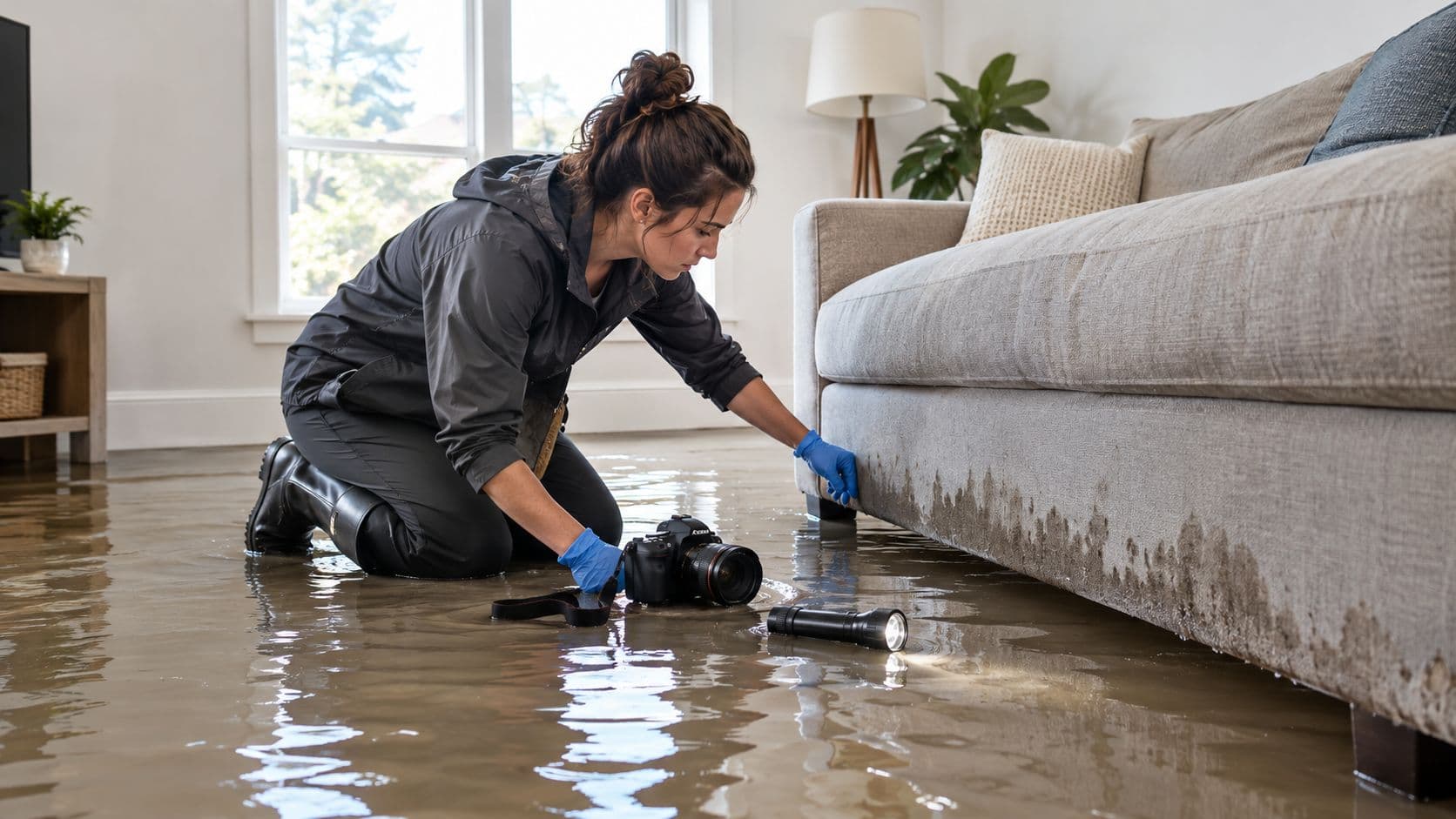
Insurance evidence disappears quickly once a ruined sofa goes to the curb, wet drywall is removed, or flooring is pulled up. Documentation should happen from a safe location before contents move, except where leaving an item in place creates an immediate danger.
Photograph the scene in a logical order
Start outside. Capture the building exterior, doors, windows, roof areas that can be viewed safely, drainage conditions, and any visible entry path. Then move room by room, taking wide images that establish location before close-ups of water lines, stains, damaged finishes, contents, and debris.
Use a consistent sequence:
- Establish each room. Photograph all four walls, the ceiling, floor, doorways, and nearby utility areas.
- Capture the water line. Include a ruler or another fixed reference when possible, while avoiding contact with contaminated water.
- Record individual belongings. Photograph furniture, electronics, flooring, cabinets, clothing, and other damaged contents before disposal.
- Identify equipment. Photograph appliance make, model, and serial numbers where they can be reached safely.
- Record hidden damage before removal. Photograph the face and back of removed baseboards, drywall sections, insulation, or flooring.
FEMA recommends photographing or recording the structure, standing-water levels, appliances, furniture, flooring, and other contents before moving or discarding them. The FEMA National Flood Insurance Program claim guidance also recommends keeping material samples or swatches where possible.
Create a claim file
Name photos by room and subject instead of leaving them in an unorganized camera roll. A simple inventory should identify the item, location, condition, approximate age if known, and whether it was cleaned, moved, stored, or discarded.
Keep the physical and financial record together:
- Preserve samples: Save flooring pieces, carpet sections, fabric swatches, and removed material labels when safe.
- List discarded property: Record what was discarded, why it couldn't be salvaged, and when it was removed.
- Save receipts: Keep cleanup invoices, emergency purchases, equipment rentals, temporary accommodation receipts, and disposal costs.
- Log communications: Record dates, claim numbers, adjuster contacts, contractor visits, and instructions received.
- Separate damaged and undamaged property: Store salvageable contents away from wet areas without concealing the original condition.
An adjuster may need to inspect before disposal, but unsafe materials shouldn't remain solely for evidence. Photographs, samples, inventories, and receipts allow the claim to continue while qualified professionals address immediate hazards.
Executing the 48-Hour Water Extraction and Drying Plan
Once reentry is authorized and the water source is controlled, drying needs to begin immediately. The practical target is 24 to 48 hours whenever conditions permit, because wet materials can support microbial growth during that period. CDC mold cleanup guidance recommends cleaning and drying the home within that window when possible.
Match the method to the material
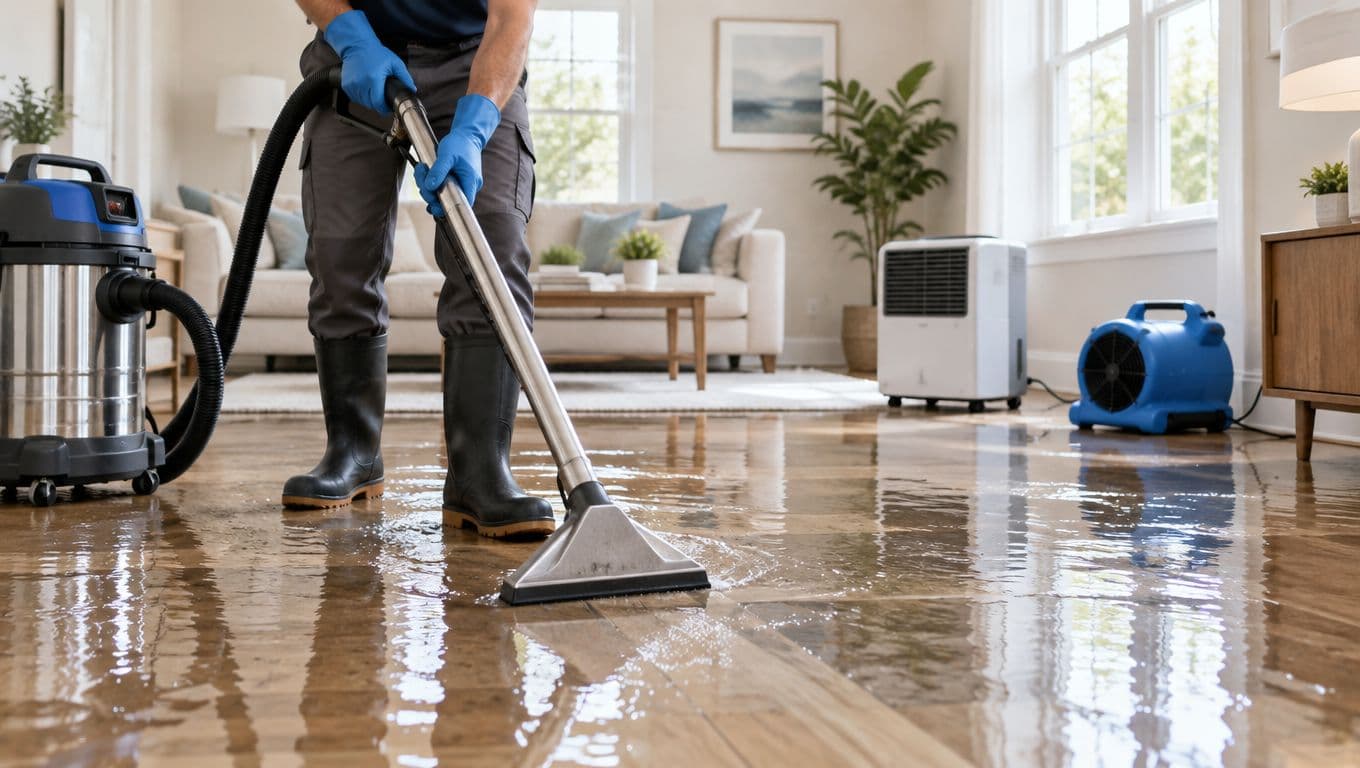
A wet vacuum can remove standing water only when electrical conditions are confirmed safe. Power should be safe before fans, dehumidifiers, extraction equipment, or other electrical devices are used. Open doors and windows when outdoor conditions allow, and direct fans so air moves outward through windows or doors rather than spreading contaminated air through the house.
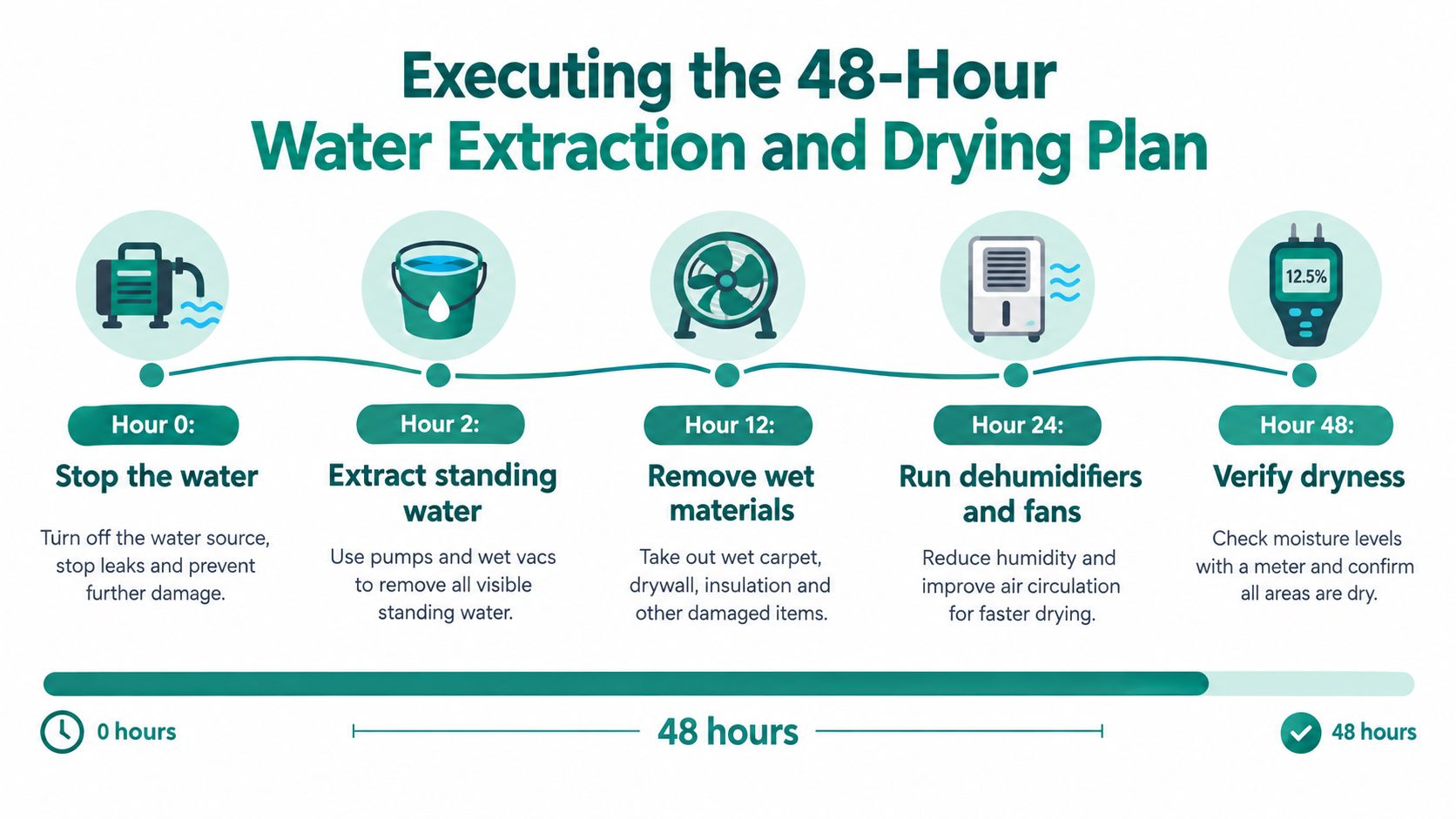
Hard, salvageable surfaces can generally be cleaned with detergent and water after the contamination and electrical risks have been addressed. Bleach must never be mixed with ammonia or other cleaners. Painting or caulking over visible contamination is not a repair, because it leaves the moisture source and affected material underneath.
Porous materials need a faster and more demanding decision. Mattresses, carpeting and padding, upholstered furniture, rugs, drywall, insulation, and many paper products often need to be discarded when they contacted sewage or floodwater or can't be cleaned and dried promptly.
Compare household drying with professional mitigation
Household fans may help with a small, clean plumbing leak confined to accessible hard surfaces. They aren't a complete solution for wall cavities, subfloors, insulation, cabinets, or flooring that holds moisture beneath the visible surface. The water mitigation guidance from PostDamage explains why extraction, drying, and moisture checks must be treated as separate tasks.
Indoor relative humidity should remain below 60%, ideally between 30% and 50%, according to EPA guidance on mold and moisture. If materials remain wet beyond the practical drying window, if water entered walls or floors, or if contamination is present, commercial extraction and structural drying are the sensible choice.
Don't point fans directly at suspected mold or visibly contaminated material. Airflow can disperse particles, so the area should be isolated and professionally assessed instead.
Recognizing When DIY Cleanup Is Not Enough
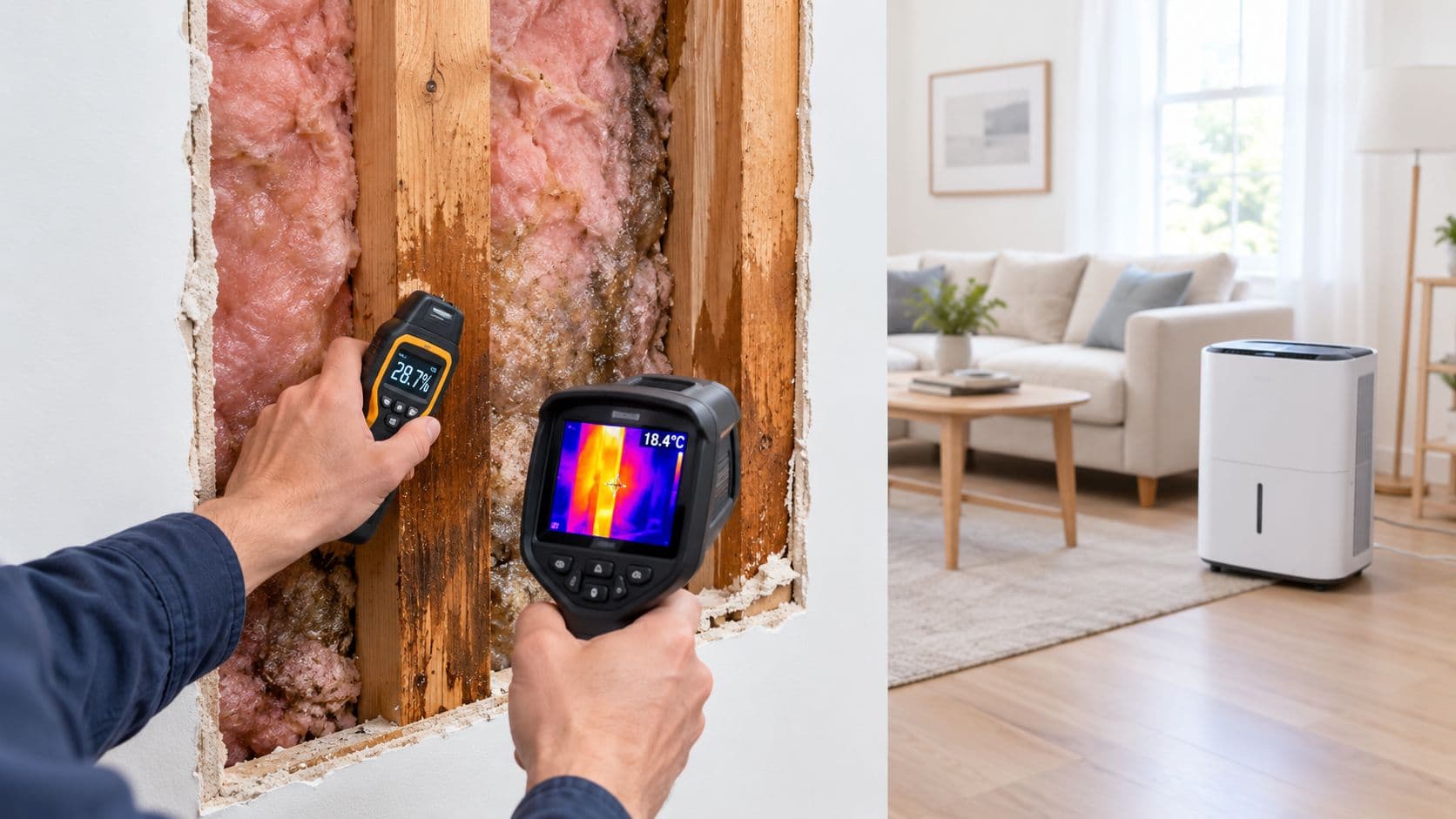
Mopping the visible water doesn't prove that the building is dry. Water can remain behind baseboards, inside wall insulation, below hardwood, beneath cabinets, and inside subfloors after the surface feels normal. A few household fans may improve air movement while leaving the most consequential moisture untouched.
Stop DIY work when the hazard exceeds the task
Professional help is warranted for extensive standing water, sewage contamination, concealed moisture, multi-story involvement, damaged electrical systems, unstable structures, or contaminated heating and cooling systems. Commercial restoration teams can combine extraction with structural drying and moisture detection rather than relying on surface appearance.
A homeowner shouldn't enter just because the water level has dropped. FEMA advises checking for structural damage, damaged power or gas lines, sagging ceilings, and unsafe floors, and not using gas appliances until they've been inspected. FEMA's flood cleanup safety guidance also advises discarding porous items such as mattresses, carpeting, stuffed animals, cushions, and pillows when they can't be safely cleaned and disinfected.
A dry-looking floor is not proof of a dry structure. Moisture behind a wall or beneath a floor can continue damaging materials after the room appears acceptable.
DIY work is limited to clearly nonhazardous tasks after authorization, such as photographing damage, moving dry contents away from the affected area, opening ventilation paths, and removing items that a qualified professional has identified as safe to handle. It shouldn't include entering energized water, opening damaged walls without a plan, or operating equipment in contaminated conditions.
Decide based on access, contamination, and concealment
A small, clean leak stopped at the source may be manageable when all wet materials are exposed and can be dried quickly. A burst pipe behind a wall is different from a wet towel on a tile floor. Sewage, floodwater, hidden cavities, saturated insulation, and water under hardwood all raise the risk that superficial cleanup will leave the property wet.
Professional assessment also helps distinguish material categories. Some hard surfaces can be cleaned and dried, while drywall, insulation, carpet padding, mattresses, and upholstered items may need removal. The decision should follow the material's exposure, porosity, contamination, and ability to dry thoroughly, not its replacement cost alone.
Connecting with Vetted Restoration Professionals
Choose a restoration company the same way you would choose a surgeon after an accident. You need a team that can make the property safer, protect claim evidence, and dry what you cannot see, not just pump out standing water and tear out wet materials.
That matters even more after a loss where the insurance question is still unsettled. If there is any chance the damage involves rising water versus a plumbing or appliance failure, hire a provider that documents the source conditions clearly and keeps mitigation separate from repair decisions. Sloppy early work can blur the cause of loss and create problems with your claim.
Ask for a process, not a promise
Before you sign anything, ask the contractor to walk you through the job in plain English:
- Safety first: How will the crew confirm that electrical, gas, structural, and contamination hazards are controlled before work starts?
- Water classification: How will the source and contamination level affect extraction, cleaning, and material removal?
- Drying plan: Which rooms, cavities, floors, and contents will be measured, dried, and rechecked before anything is closed up?
- Documentation: Will the team photograph conditions, removed materials, and moisture readings for the insurer?
- Scope clarity: Which items are emergency mitigation now, and which are repairs or rebuild work later?
- Insurance coordination: What should stay in place for inspection, and what must be removed immediately for safety?
If a contractor pushes for a broad authorization before explaining the scope, slow down. Notify your insurer promptly. If claim evidence could be affected, speak with the adjuster or insurer before approving demolition that goes beyond what is needed to protect the property.
Good help reduces confusion. It does not create more of it.
A guidance-first service can help you describe what happened, sort out whether professional extraction is the right next step, and reach the right category of local help without wasting time. PostDamage provides situation-specific property-damage guidance and can connect homeowners, landlords, property managers, and small businesses with local water damage restoration professionals. Its model is built around one request, not five sales calls, which gives the homeowner a cleaner handoff during a stressful claim.
You still need to confirm licensing, scope, pricing, insurance coordination, and emergency procedures with the company you hire. Guidance does not replace an electrician, building inspector, insurer, or restoration contractor. It helps you choose in the right order, so safety mistakes, bad authorizations, and missing documentation do not make a hard situation worse.
PostDamage helps homeowners describe leaks, burst pipes, and flooding, understand the next safe step, and connect with appropriate local water damage restoration professionals. Visit PostDamage to request guidance for the specific water damage affecting the property and move from emergency confusion to an organized recovery plan.