Water damage restoration has three timelines: moisture removal, building repairs, and the insurance claim. Each answers a different question about when a property can return to normal.
Drying can finish while flooring or cabinets still need replacement, inspections remain, or the repair estimate is unresolved. Treating these as separate schedules gives homeowners and businesses a clearer way to plan the full recovery.
Typical Water Damage Restoration Timelines at a Glance
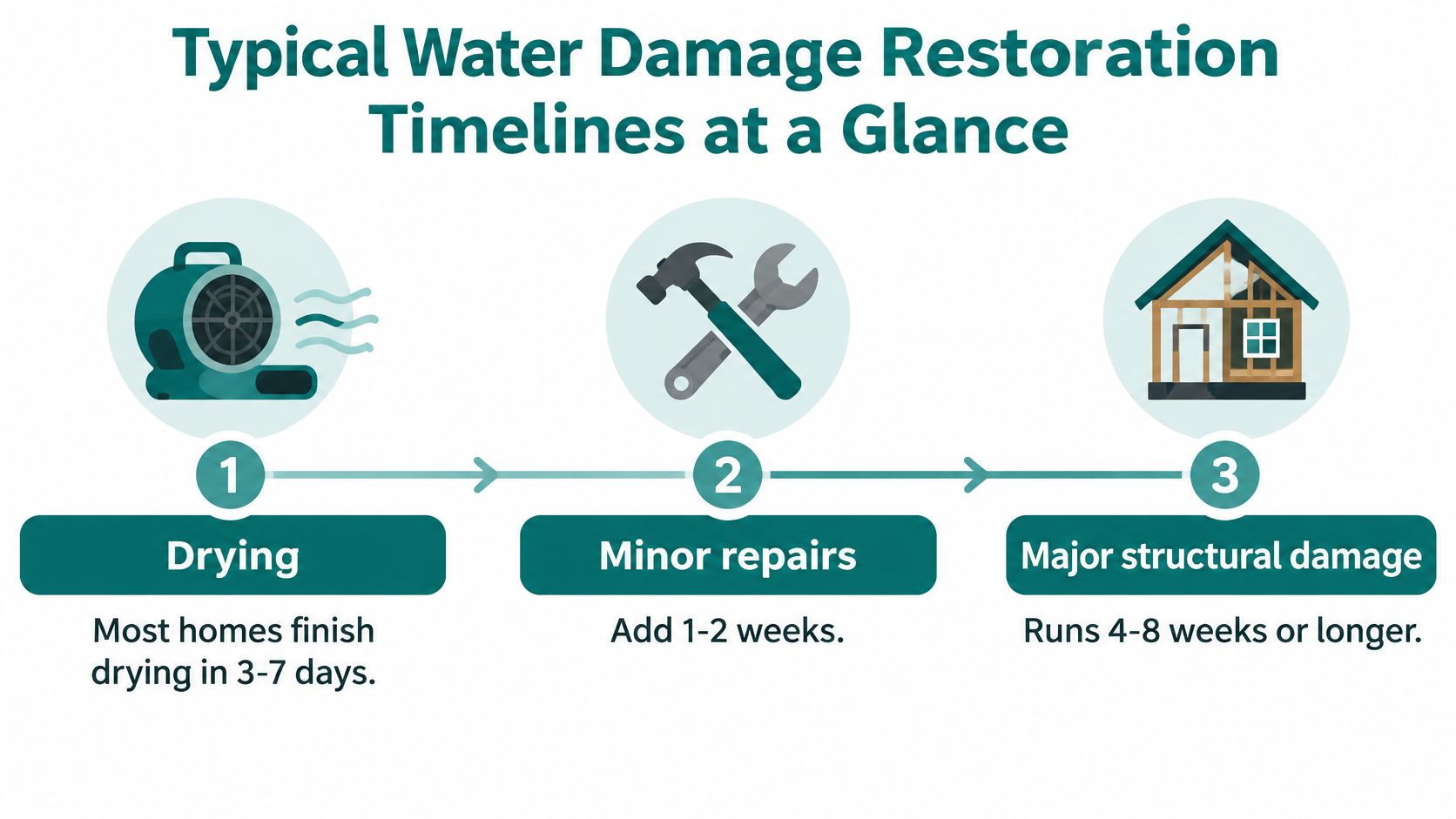
The same water loss can involve three schedules: drying, building repairs, and the insurance claim. For planning, ATI Restoration reports that most homes dry within 3-7 days, minor repairs take 1-2 weeks, and properties with major structural damage take 4-8 weeks or longer, according to its water damage restoration process guide. These are typical ranges, not guaranteed deadlines for a particular property.
The stages overlap like parts of a relay: while drying continues, estimates may be prepared or materials ordered. Installation, however, may have to wait until affected materials reach acceptable moisture conditions.
Typical duration by restoration stage
| Stage | Typical duration | Source basis |
|---|---|---|
| Emergency response and extraction | Start immediately; prompt drying is advised within 24-48 hours to reduce mold risk | EPA mold cleanup guidance |
| Structural drying of accessible materials | Most homes dry within 3-7 days | ATI Restoration process guide |
| Minor repairs after drying | 1-2 weeks | ATI Restoration process guide |
| Major structural damage, full rebuild | 4-8 weeks or longer | ATI Restoration process guide |
| Delayed pipe-loss claim | May add 1-3 weeks | WrightWay (2024) |
The EPA's 24-48-hour guidance concerns prompt drying to reduce mold risk; it is not a reconstruction deadline. The delayed-claim estimate describes a possible extension, while actual timing depends on the circumstances of the property and claim.
How stages fit together
A small kitchen leak may follow a shorter path if water reaches an accessible floor and nearby cabinets and concealed layers remain unaffected. After extraction and verified drying, repairs to trim or finishes can proceed without rebuilding the room.
A flooded ground floor can take longer. Water may reach subfloors, cabinet bases, insulation, and adjoining rooms, requiring material removal before drying is complete. Replacement flooring and cabinetry add ordering and installation time.
Use the table to identify a relevant planning range, then compare it with the contractor's written schedule. Confirm which milestone a proposed completion date covers: drying, repairs, or the full rebuild.
The First 48 Hours and the Day-by-Day Sequence
The first 24 to 48 hours are a key window for drying water-damaged areas and belongings. The EPA's mold cleanup guidance recommends drying them within that period because prompt drying prevents mold growth in most cases. This is a drying target, not a deadline for finishing repairs.
Visible water can disappear while moisture remains beneath carpet or behind a wall. If materials stay wet or mold is visible, they need evaluation and appropriate remediation. Focus on removing moisture promptly, then use readings and an assessment to guide the next steps.
Emergency response and initial setup
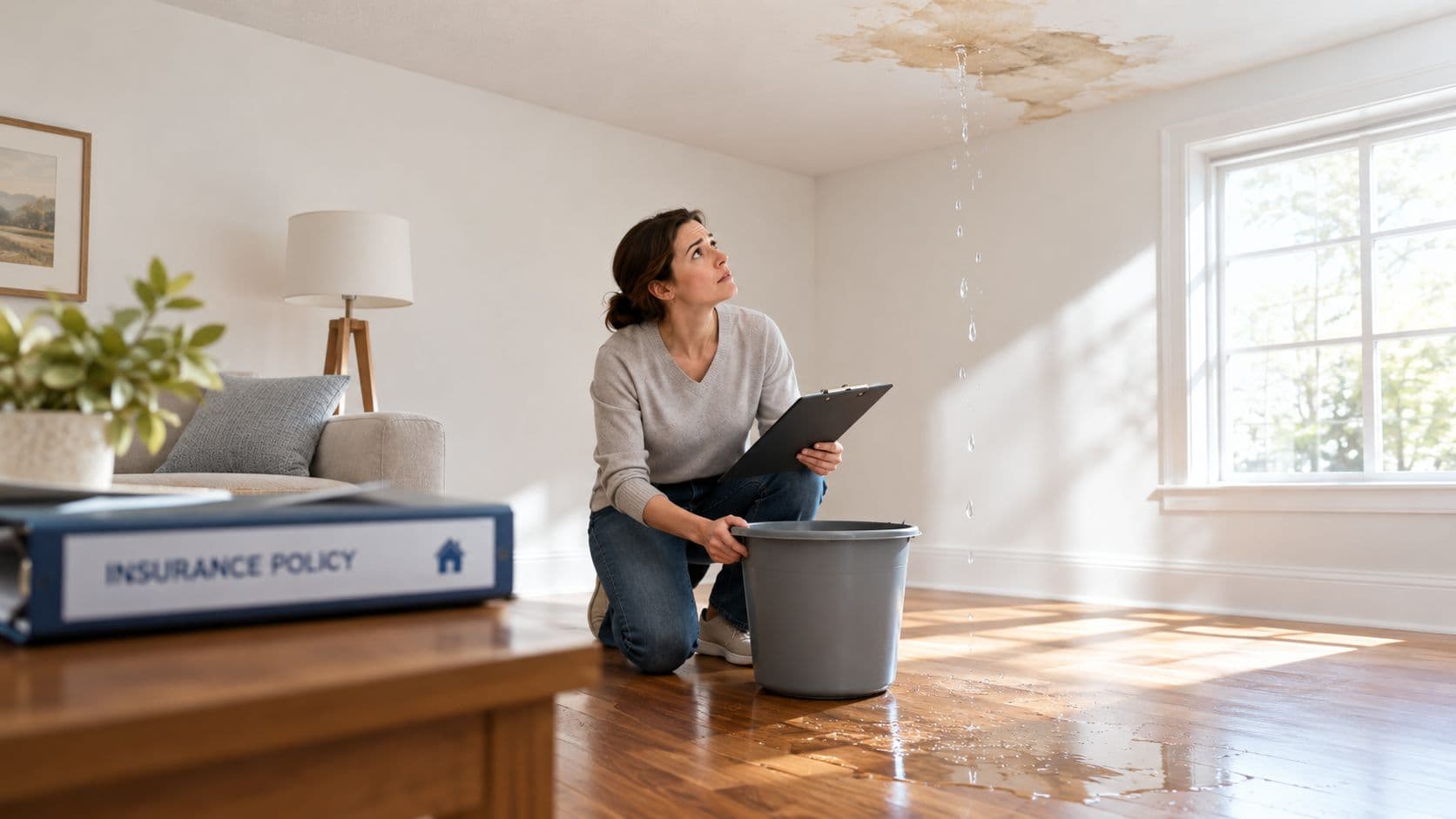
- Discovery and immediate safety. Leave unsafe areas before documenting damage. Never enter standing water or an unstable structure. For fire, gas, electrical, structural, or other immediate hazards, call 911 or the appropriate utility. Stop a leak only if it is safe to do so.
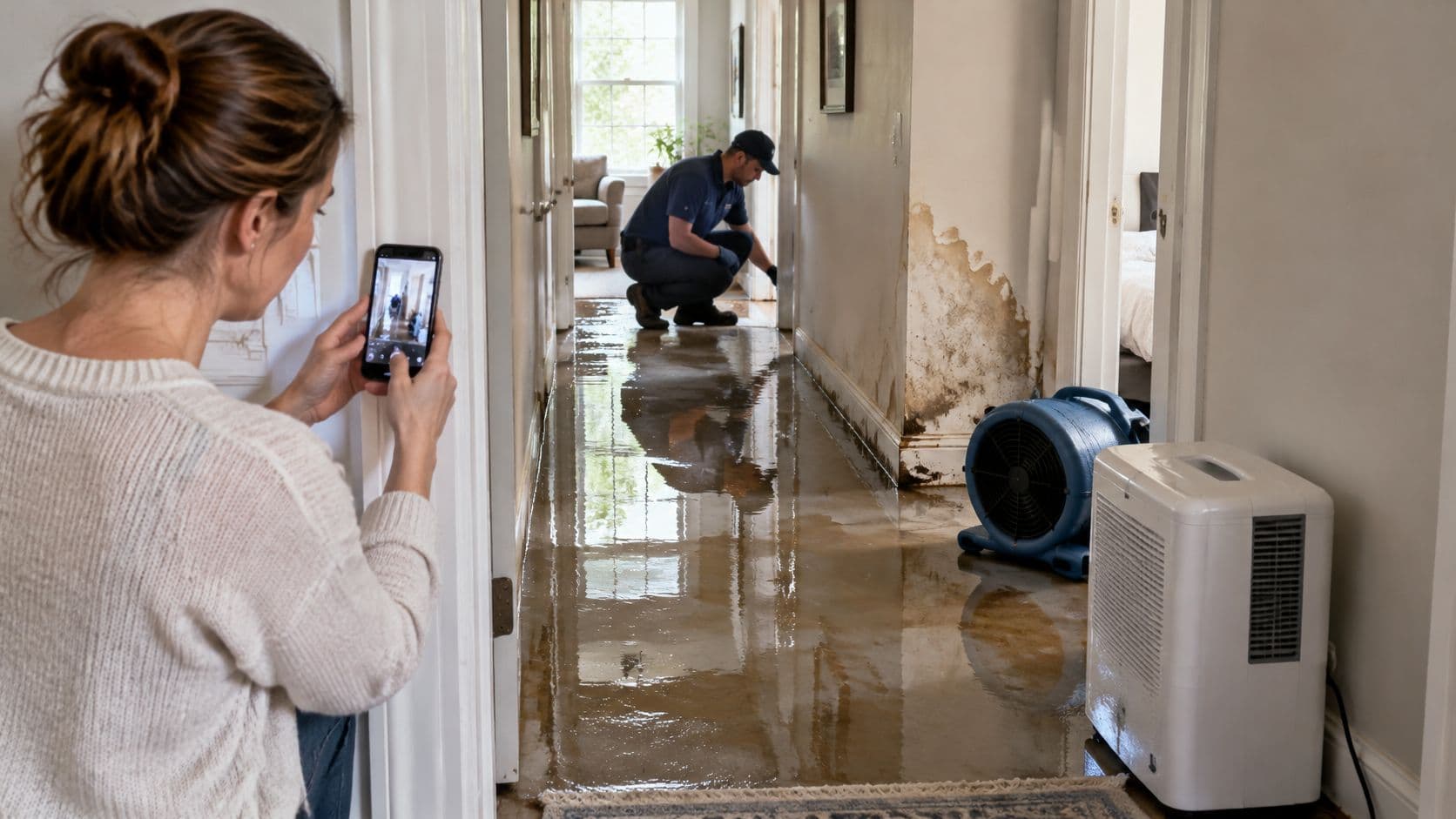
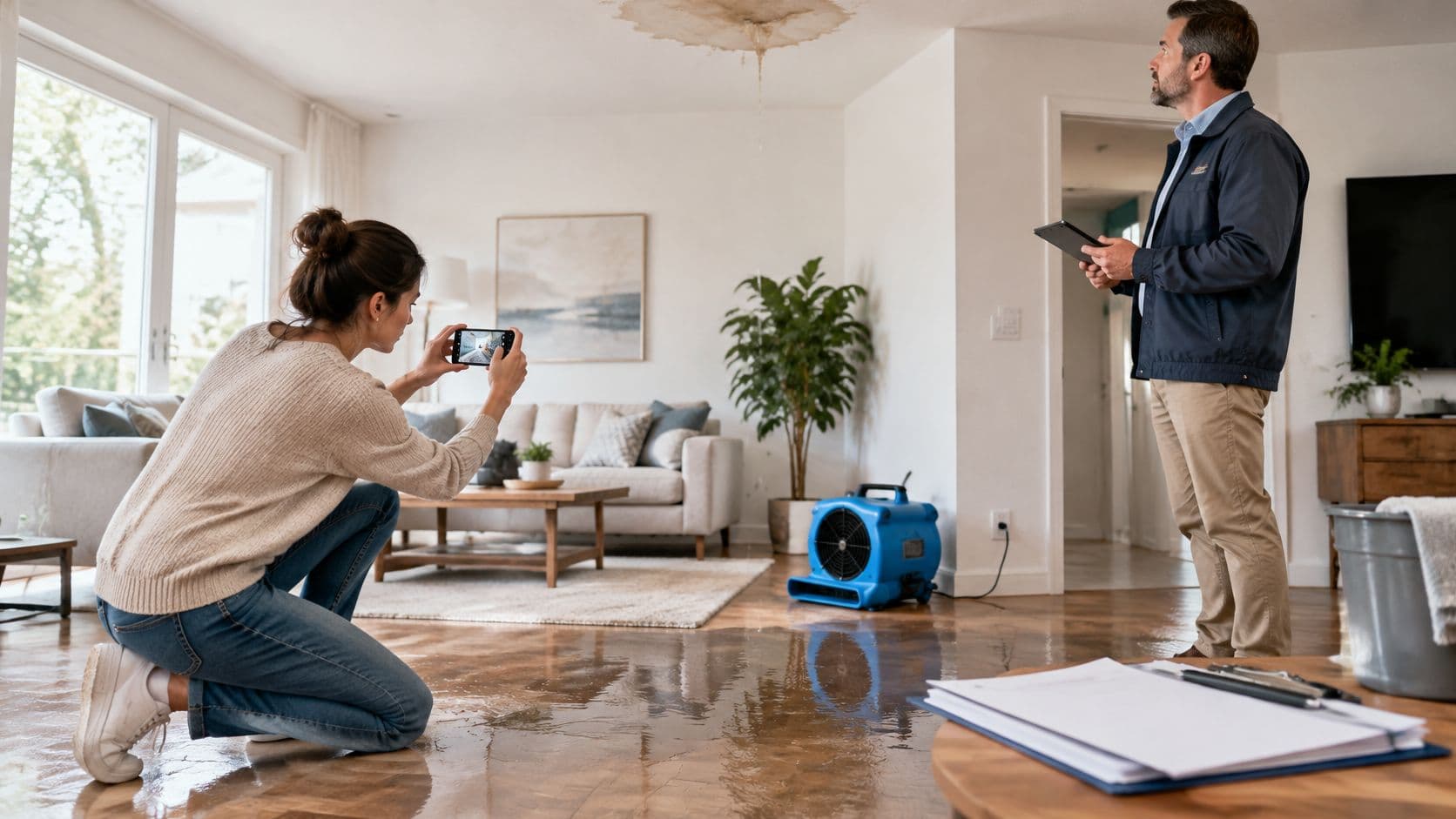
From a safe location, photograph the source, affected rooms, water lines, and damaged belongings. Documentation should not delay necessary emergency work. These steps for responding to a flooded home explain how to prioritize safety and document what you can safely observe.
- Extraction and assessment. A restoration crew removes standing water with pumps or extraction equipment and checks how far moisture has traveled. Water may reach wall bases, areas beneath flooring, or adjacent rooms beyond the visible puddle.
Hoses, extraction tools, moved furniture, and marked inspection locations may be part of this stage. Ask which materials appear salvageable and where further investigation is needed.
- Drying equipment and baseline readings. Technicians position air movers and dehumidifiers according to the drying plan, then record initial moisture readings. These readings provide a starting point for comparing conditions during later checks.
Keep equipment in place and operating as directed. Ask the crew before switching off or moving machines, or changing room conditions.
Monitoring and decisions during drying
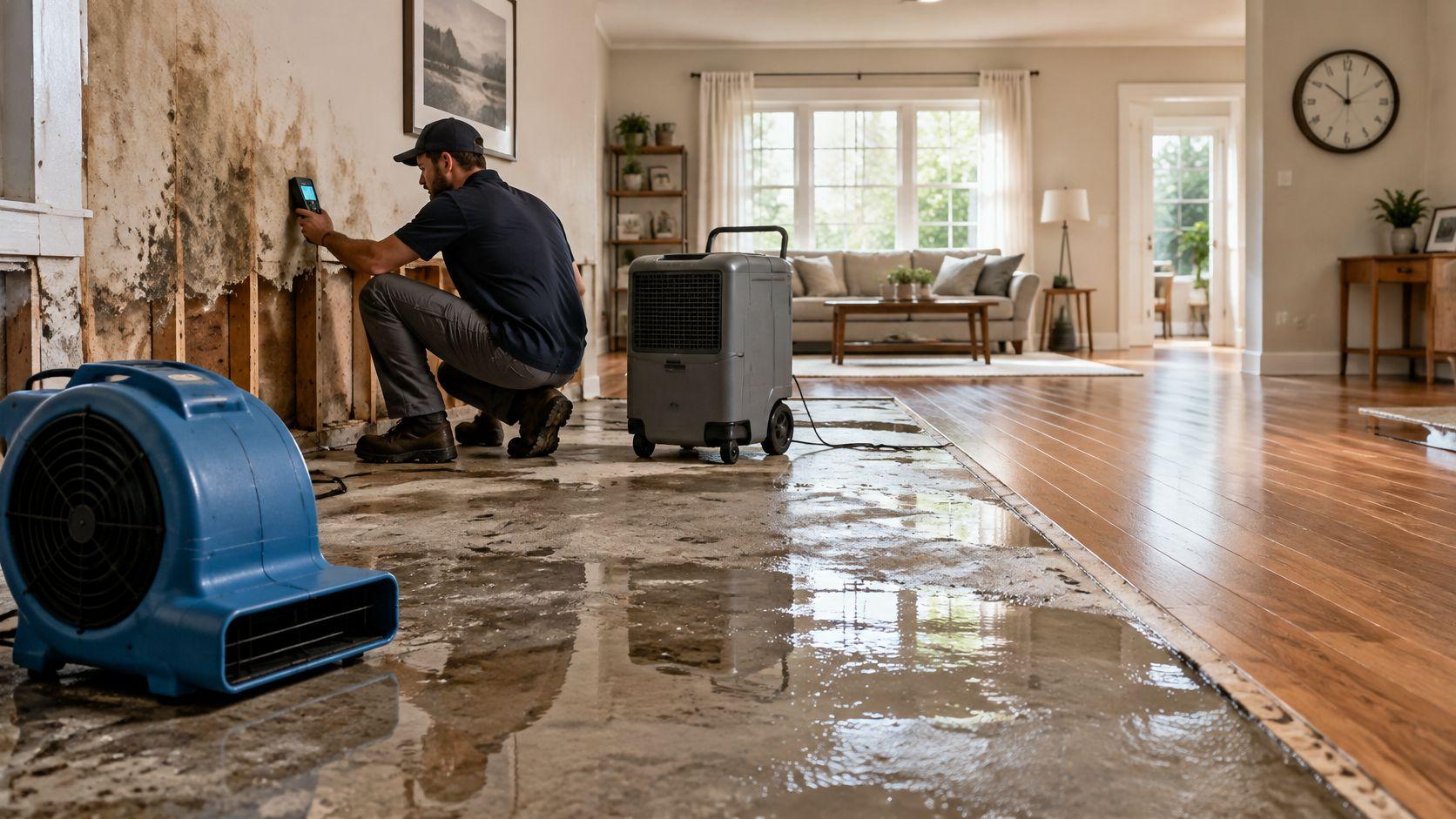
- Progress checks. Technicians repeat readings at identified locations, review humidity conditions, and adjust equipment as needed. Owners should expect the technician to explain the moisture trend with the numbers.
Running fans show that equipment is operating. Falling moisture readings show whether materials are progressing toward the drying goal. If measurements stall, the contractor should investigate equipment placement, concealed moisture, or materials that are not responding.
- Opening concealed areas when necessary. Persistent readings may lead to lifting flooring, opening a wall, or inspecting beneath cabinets. This investigation can happen before all accessible surfaces have dried.
For example, the kitchen floor may read acceptably near the doorway while the cabinet toe-kick area remains wet. The next step may be selective access beneath the cabinets. Photographs and revised scope notes should record what the crew finds.
- Removal, sanitation, and cleaning. Materials that cannot be restored may need removal. Salvageable surfaces and contents need appropriate cleaning. Contamination or mold may require different procedures, including containment and specialist work.
Owners may see temporary barriers, bagged debris, separated contents, and restricted access. Deodorizing does not show whether moisture or contamination has been addressed.
Drying confirmation and repair handover
- Documented drying completion. Equipment should be removed after the contractor verifies appropriate conditions for the affected materials. The final record should identify measurement locations and explain the basis for accepting the readings.
A dated record is more useful than an unexplained statement that everything is dry. It should show how the contractor assessed the affected areas.
- Reconstruction and finishing. Once areas are ready, repair crews replace removed materials and restore finishes. Depending on the scope, this may involve insulation, drywall, flooring, cabinetry, painting, or structural work.
Ask for drying logs, final readings, removal photographs, equipment records, and a written repair scope. Together, these records document the handover from emergency mitigation to remaining repairs and help explain why the project continues after water extraction is complete.
How Materials Change the Drying Timeline
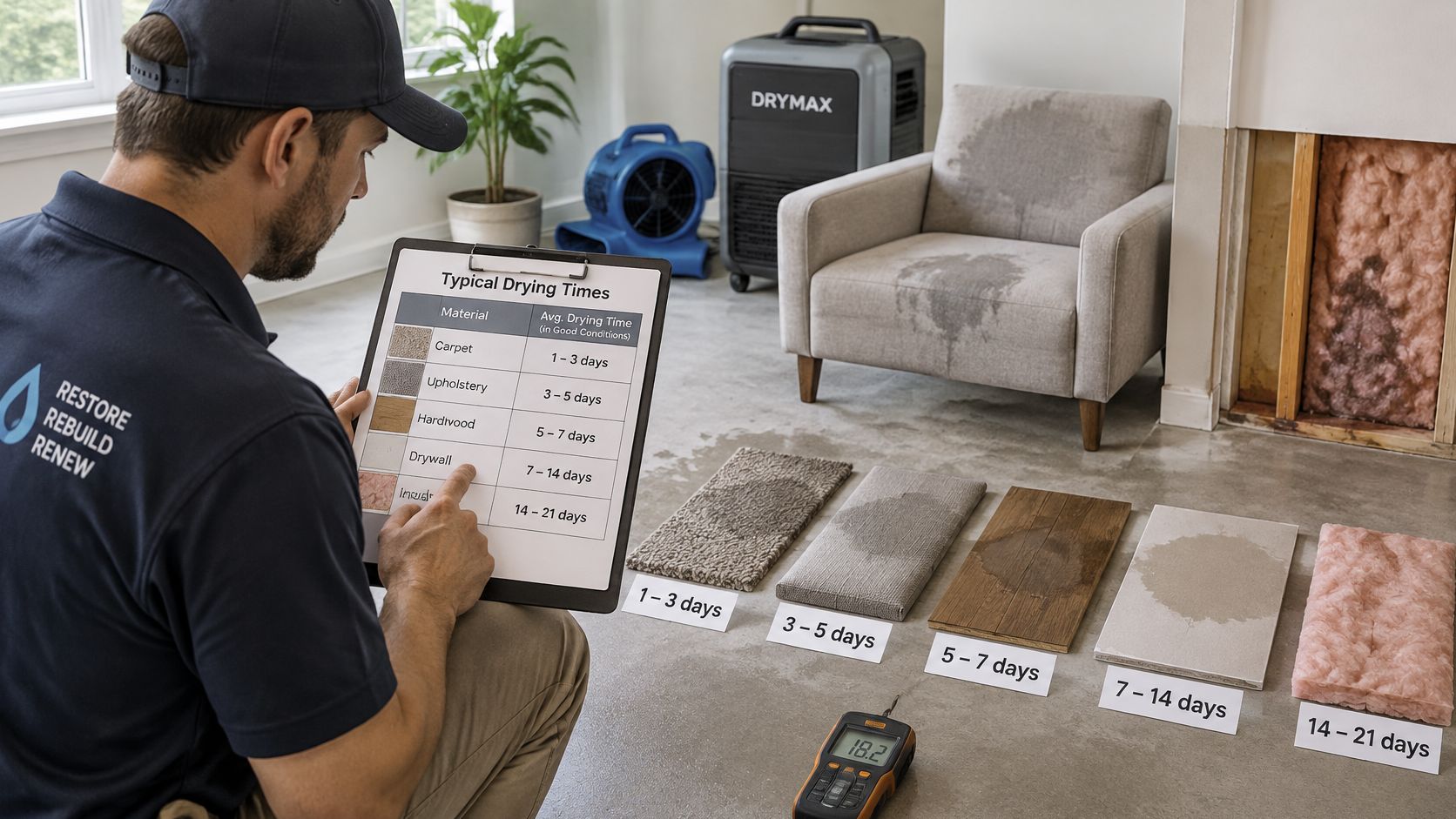
Material-specific readings provide a better estimate than room appearance. The EPA's water-damage response guidance targets carpet and backing for drying within 24-48 hours, notes that upholstery can be difficult to dry within that window, and recommends immediate moisture removal followed by dehumidification, gentle heat, and air movement for wood.
The comparison below distinguishes an actual drying target from materials for which there isn't a universal published duration. An unknown duration isn't permission to guess. It means the contractor needs to assess that assembly and explain its progress.
Drying expectations by material
| Material | Drying expectation | What drives the time |
|---|---|---|
| Carpet and carpet backing | Target within 24-48 hours | Extraction, fans, and dehumidifiers |
| Upholstered furniture | Often difficult to dry within 24-48 hours | Air movement, dehumidification, possible removal |
| Hardwood and structural wood | Immediate moisture removal; drying measured over days | Dehumidifiers, gentle heat, air movement |
| Subfloor beneath flooring | Duration unknown until assessed; the visible surface can dry first | Moisture checks before closing up |
| Drywall and wall cavities | No universal duration established | Moisture mapping and opening up when readings stay high |
| Insulation | Duration unknown until concealed conditions are assessed | How far water traveled out of sight |
| Materials wet over 48 hours or with mold | Mold-remediation procedures apply | Containment, cleaning, and possible removal of porous materials |
Accessible surfaces versus concealed layers
Carpet can allow direct extraction, but the backing and underlying floor still need attention. Upholstery presents a different problem because cushions, padding, and internal layers can retain moisture even when the outside feels better. The decision may be whether restoration is practical, not merely how long another drying cycle might take.
Wood requires controlled treatment. Gentle heat can support drying, but more heat isn't automatically better, particularly when the contractor is trying to avoid damaging finishes or the material itself.
The subfloor is a consequential concealed layer. A finished surface may hide moisture below it, so the contractor needs a way to verify the underlying condition. PostDamage's explanation of water under laminate flooring addresses why the visible finish doesn't tell the whole story.
Wall cavities and insulation introduce similar uncertainty. Water can travel beyond the original entry point, and access may be necessary to determine whether materials can remain.
When drying alone isn't the right plan
Mold or prolonged wetting can require assessment, containment, cleaning, and removal rather than continued ordinary drying. Sewage or water containing chemical or biological pollutants also requires protective controls, not the same approach used for a clean supply-line leak.
Owners should request readings identified by material and location. A general room reading can't explain whether the carpet backing, subfloor, wall cavity, and structural wood are all ready for the next stage.
Factors That Stretch the Timeline Beyond Typical
A delay can affect one stage without stopping the whole project. For example, repairs may pause while an inspection or replacement material is pending, even if drying is complete. A useful schedule names what changed, which work depends on it, and what must happen before that work can resume.
Conditions that expand the work
Delayed extraction. Water left in place can spread into adjoining areas, increasing the amount of work required before repairs begin. The schedule may need to account for newly affected rooms or materials.
Multiple units or shared systems. In multifamily and commercial properties, access to neighboring spaces and coordination around shared plumbing or electrical systems can add steps. Work in one area may depend on permission or timing in another.
Conditions that delay completion
Building age and assemblies. Older construction, enclosed chases, and previous renovations can make investigation or repairs more involved. If the work uncovers unexpected construction, the removal or repair plan may need to change.
Humidity and weather. Indoor conditions influence how quickly materials dry. Changes in humidity or weather can affect the drying schedule, so the plan may need adjustment.
Contents handling. Inventory, pack-out, cleaning, and storage can affect when crews can work in a room. The schedule should account for belongings that need to be documented or moved before repairs proceed.
Permits, inspections, and supplies. Reconstruction can pause while approvals, trades, or replacement materials are arranged. A schedule is easier to understand when it names these dependencies and shows which repair tasks are waiting on them.
A revised completion date is useful when it is tied to a specific task or dependency. Ask what work remains, what is holding it up, and what will mark its completion. That makes it easier to distinguish drying time from repair time, even before the insurance claim is resolved.
How Insurance Claims Extend the Timeline
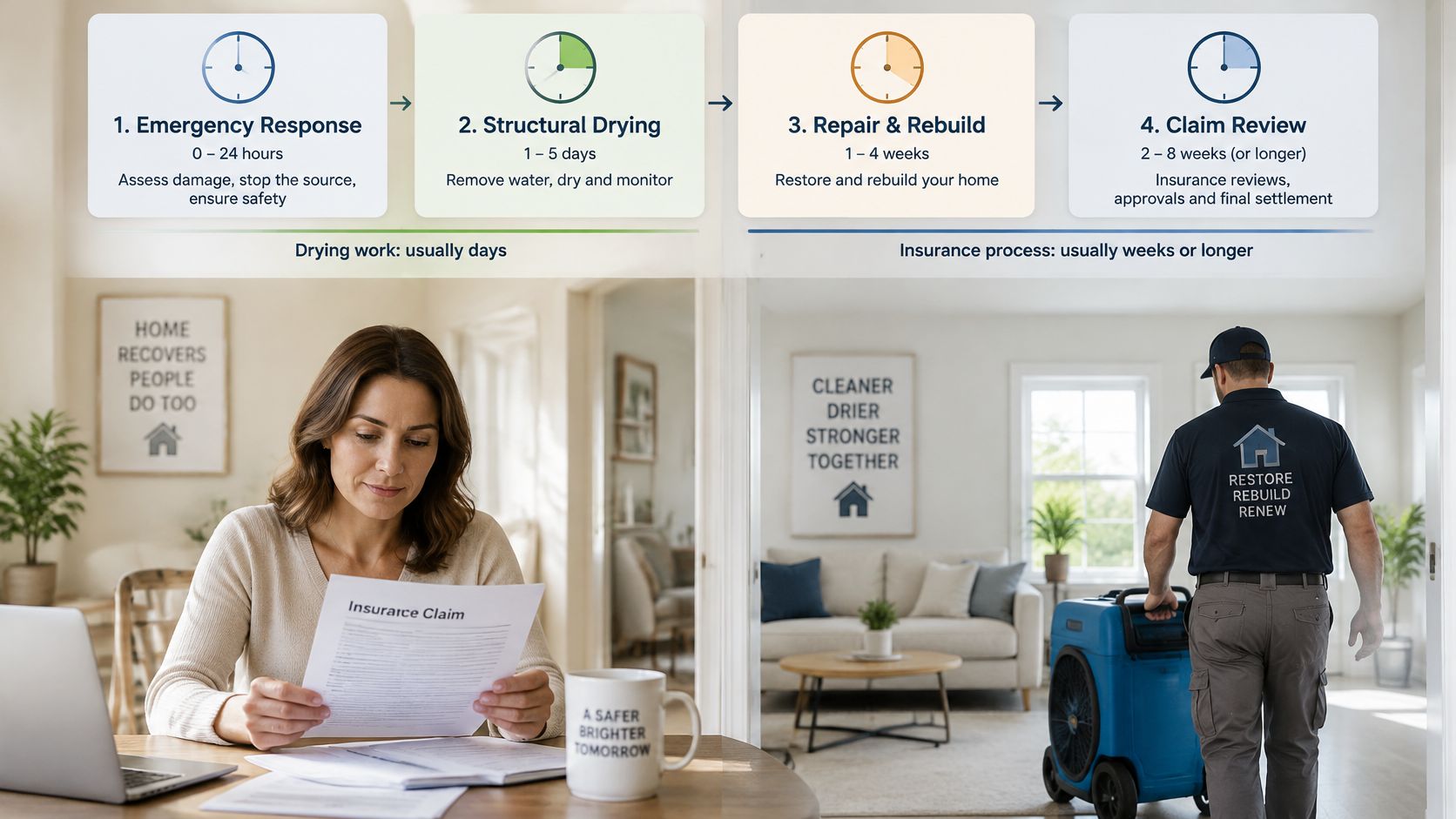
Equipment removal doesn't close an insurance claim. In 2024, WrightWay's restoration timeline guide reported that delayed pipe-loss claims can add 1-3 weeks, illustrating why an owner shouldn't equate physical progress with claim resolution.
Insurance work often proceeds alongside mitigation and continues after drying. The insurer may still be evaluating the repair scope, contents, supporting invoices, or newly discovered damage.
Separate schedules prevent false expectations
| Project schedule | What it establishes | What it doesn't establish |
|---|---|---|
| Emergency response | Immediate hazards and water intrusion are being addressed | Final repair cost |
| Structural drying | Affected materials have reached documented drying goals | Full covered loss |
| Repair and rebuild | Physical reinstatement is progressing or complete | Final insurance payment |
| Claim resolution | Coverage, valuation, and payment issues have been addressed | A universal reopening date |
The EPA's commercial remediation guidance distinguishes initial water response from subsequent remediation decisions. For property owners, that distinction reinforces why a drying log or clearance report doesn't automatically establish the complete covered repair scope.
Consider a kitchen leak discovered promptly versus a concealed leak discovered only after the wall becomes visibly damaged. The latter may require additional investigation, removal, and revised estimating. If concealed damage is found during work, the owner should preserve evidence before repairs hide it again.
Records that support the remaining claim
A useful claim file includes:
- Condition records. Before-and-after photographs, source information, and damaged-item inventories.
- Technical records. Moisture logs, equipment records, removal notes, and final readings.
- Financial records. Estimates, invoices, receipts, and relevant insurer correspondence.
- Business records. Lost-income documentation, temporary relocation expenses, extra expenses, and reopening milestones where relevant.
Newly discovered damage may support a supplemental claim when the policy and applicable law allow it. PostDamage's guide to filing a water damage insurance claim explains the documentation process.
For businesses, reopening and claim settlement should remain separate milestones. Operations may resume while valuation issues remain unresolved, or physical repairs may finish before equipment and inventory are ready.
There isn't a supported universal claim-resolution duration. Timing follows the insurer's review, the policy, required documentation, and applicable law. Coverage isn't guaranteed, and this is general information, not legal advice.
Confirm Your Timeline and Choose a Next Step
Before making plans, ask what remains before the property can be used again. Drying, repairs, and insurance decisions are separate milestones, so one completion date may not tell the whole story. A clear schedule helps owners coordinate housing, tenants, or business operations.
A practical owner checklist
- Compare the scope. Match the proposed schedule to the damage and work required, rather than assuming every loss fits the shortest published range.
- Request written milestones. Ask the schedule to distinguish drying, opening concealed areas, repairs, and return to use.
- Check material-specific records. Moisture readings should identify locations and the drying goals being used.
- Keep one claim folder. Store photographs, logs, invoices, estimates, and correspondence together.
- Confirm insurer requirements. Ask in writing which documents remain outstanding and what happens next.
Stalled drying without an explanation, readings above normal levels after equipment removal, or repairs proposed before conditions are verified are reasons to ask for clarification. An insurer's review may also need a written explanation of what remains outstanding. These concerns do not by themselves prove improper work or claim handling.
A licensed public adjuster may be appropriate when a claim is delayed, denied, or paid less than expected. PostDamage helps property owners understand when that assistance may be appropriate and connects homeowners, landlords, and commercial property owners with licensed public adjusters. It is an independent information and referral platform, not a restoration contractor or public adjusting firm.
Need help with a homeowners insurance claim? PostDamage can help connect you with a licensed professional.
Need help with a commercial property insurance claim? PostDamage can help connect your business with a licensed professional.