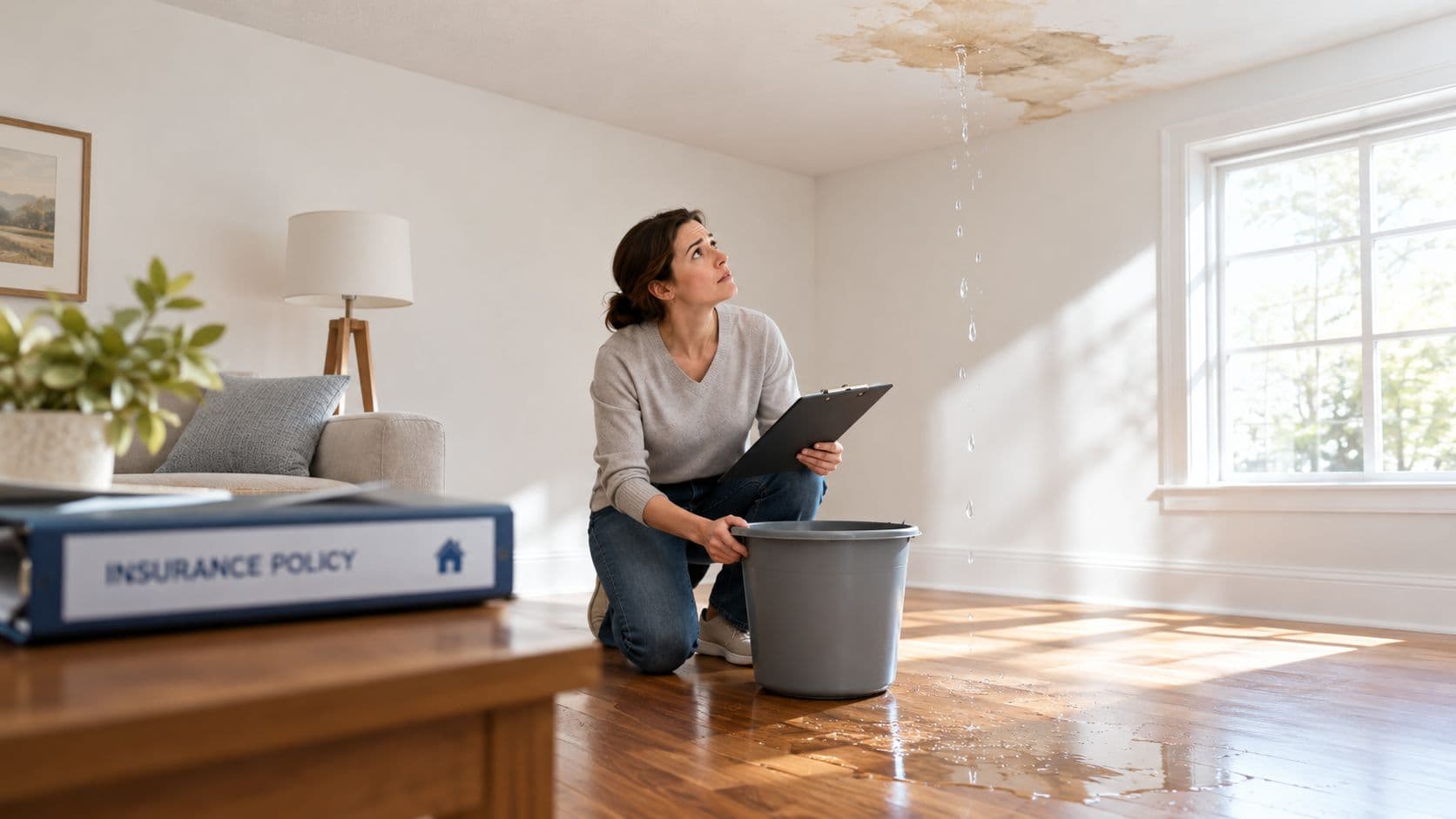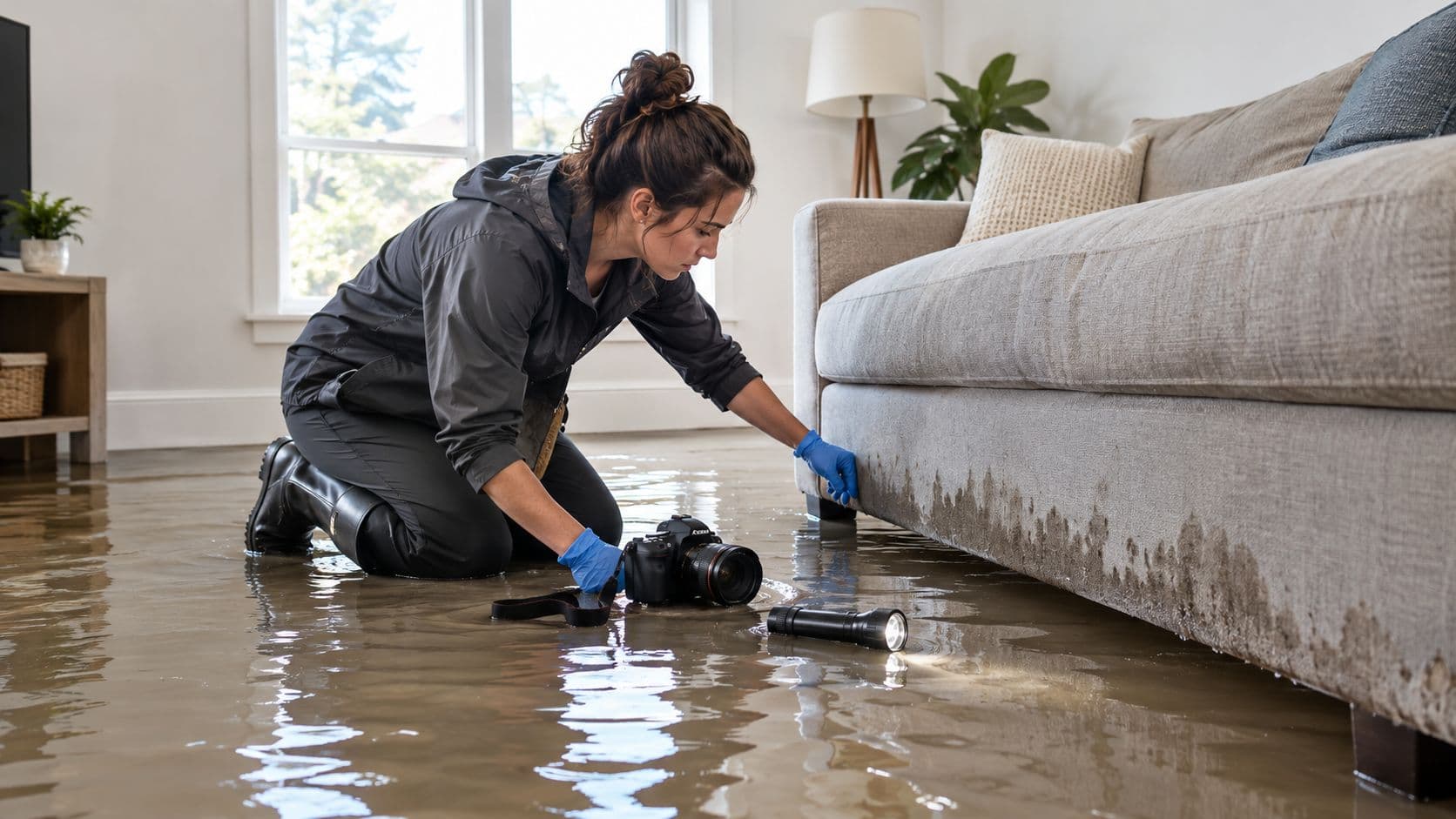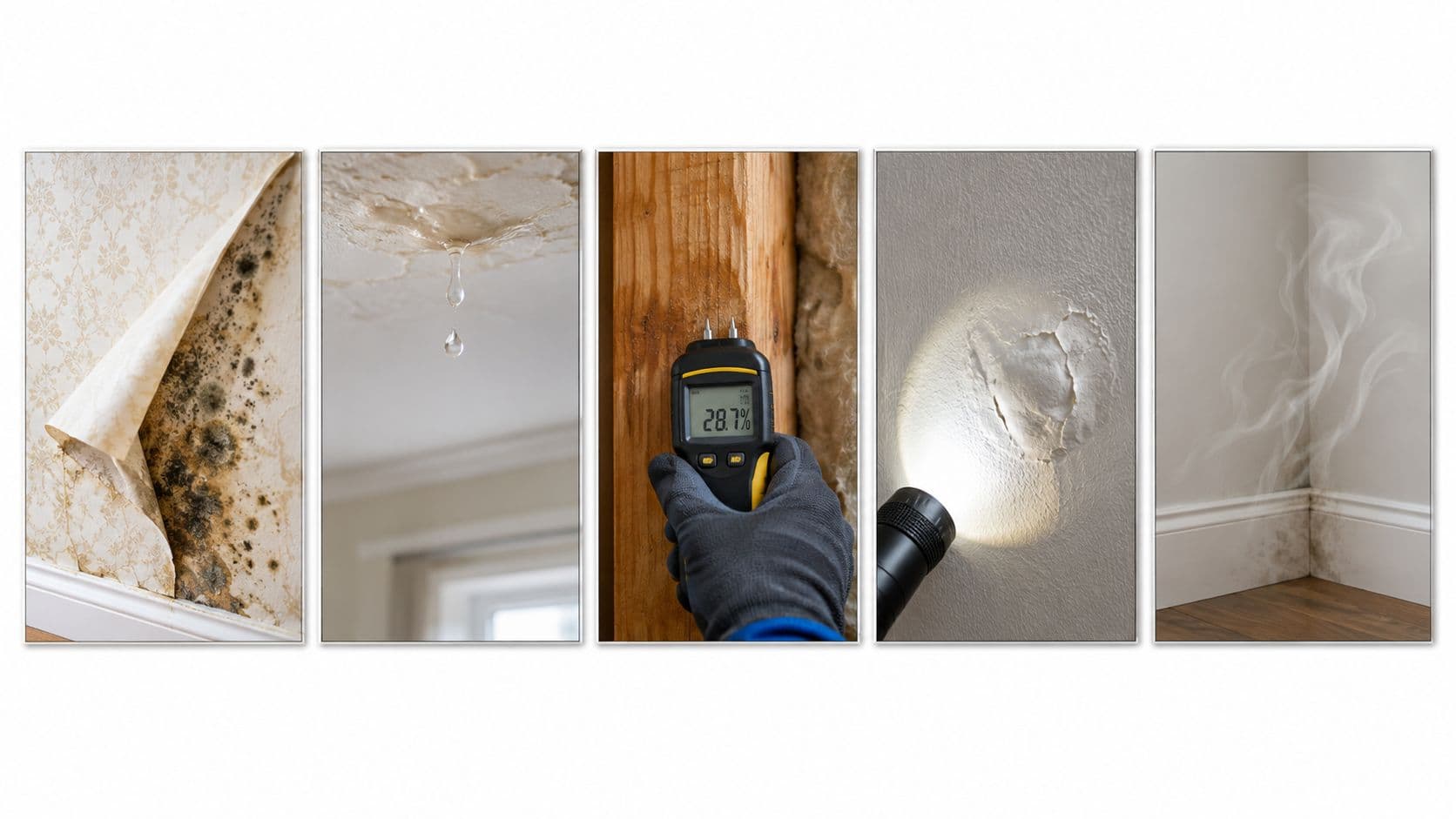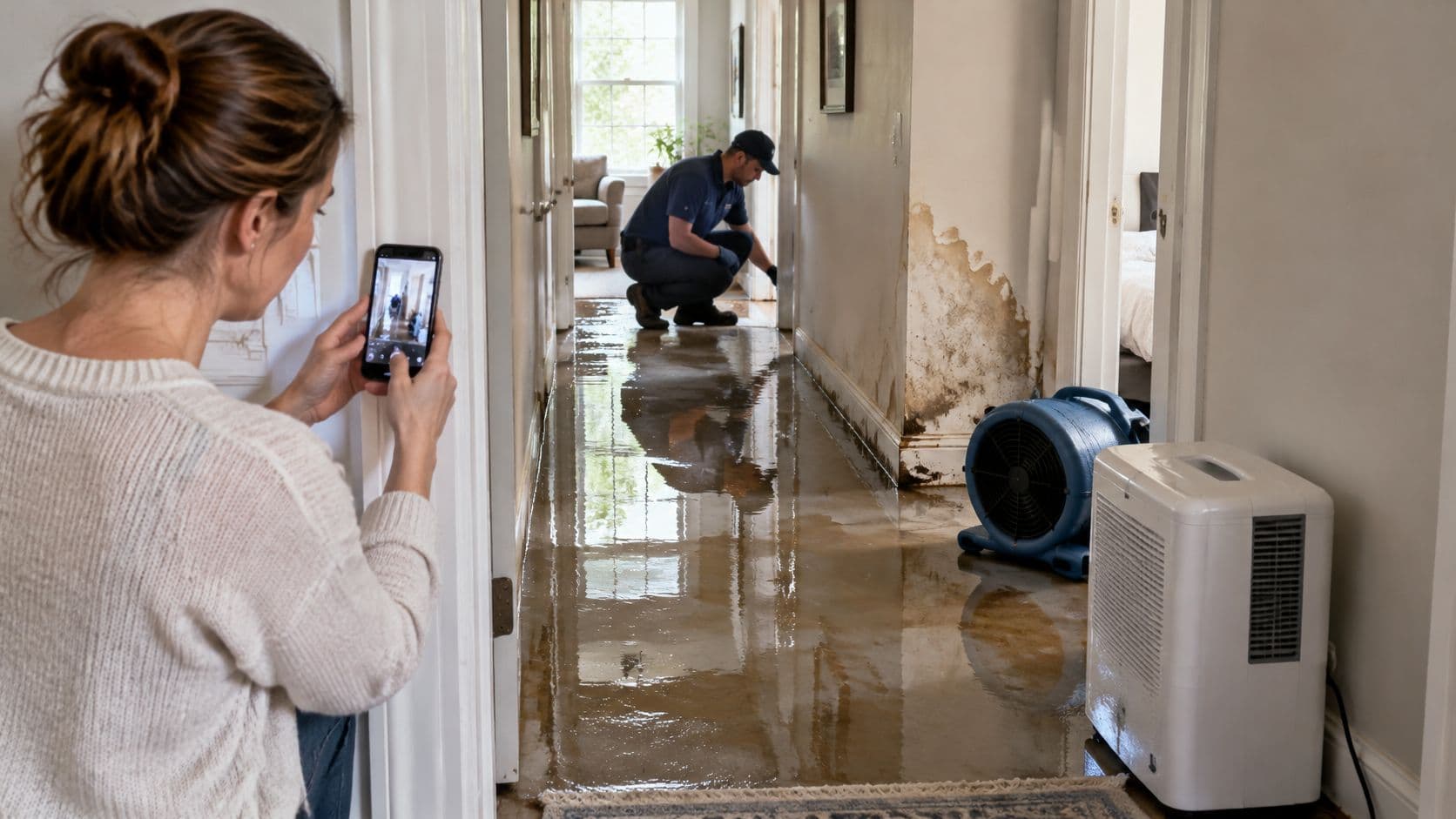
There's an inch of water in the hallway from a failed water heater, the baseboards are already swelling, and the first reflex is to grab a mop and start moving furniture. That reflex is understandable, but it's the wrong order. Knowing what to do after water damage means working safety first, stopping the source second, and only then documenting and drying, because the choices made in the first hours shape both the health risk and the evidence an insurer will later ask for.
The First 48 Hours in Order and the Mold Window
You come home to water spreading from the utility closet across the hall carpet. Before touching anything, check for fire or smoke, a gas smell, damaged wiring, or a sagging ceiling. PostDamage advises users to leave unsafe areas before documenting damage and to call 911 or the appropriate utility for fire, gas, electrical, structural, or other immediate hazards, and never to enter standing water or an unstable structure.
Safety Before Cleanup
Floodwater and standing water can expose occupants to infectious diseases, chemical contamination, structural hazards, and electrical shock. The CDC floodwater safety guidance advises turning off electricity and gas before entering or cleaning a water-damaged property when it's safe to do so, never using electrical tools while standing in water, avoiding fallen power lines, and staying out of damaged buildings until they've been inspected and declared safe by an appropriate authority. Appliances should also be unplugged to reduce shock risk when power is restored.
Once the area is safe, shut off the water source at the fixture valve or the main. Documentation matters, but it should never delay shut-off or extraction. Photograph visible damage from a safe position, note the date and suspected source, and keep occupants, tenants, and employees out of energized or unstable areas.
| Time window | Priority action | Why it matters |
|---|---|---|
| Immediately | Leave unsafe areas and call 911, the fire department or the utility for fire, gas, electrical or structural hazards | Floodwater can carry infectious and chemical contamination and electrical shock risk |
| Immediately | Shut off the water source | Stops the flow so damage does not keep spreading |
| As soon as it is safe to enter | Turn off electricity and gas, unplug appliances, avoid energized areas | Reduces shock risk before anyone walks through wet rooms |
| Within 24 hours | Begin water extraction, then fans and dehumidifiers when electricity is safe | Early drying is the main lever on secondary damage |
| 24 to 48 hours | Finish drying walls, flooring, furnishings and contents, and check the subfloor | Main mold-prevention benchmark; a guideline, not a guarantee |
| After 48 hours or at any sign of mold | Assess materials still wet or any visible mold or musty odor before closing anything | Porous materials that stay wet may need removal, and visible mold calls for a professional assessment |
Drying Against the Clock
The EPA mold guidance identifies a critical 24-to-48-hour drying window after a leak, spill, or other water event, and states that in most cases, materials dried within that period will not develop mold, although the timing is a guideline rather than a guarantee. Treat it as a target. Temperature, humidity, material, and contamination can shift the outcome either way.
Start with extraction to remove standing water, then add air movement and dehumidifiers once electricity is safe. Dry flooring, walls, furnishings, and contents completely, and check whether the subfloor beneath carpet or other flooring is also dry. Don't paint, caulk, or cover damp materials to make a room look finished.
Practical rule: Extraction first, then air movement and dehumidification. Fans blowing over standing water waste the best drying hours.
Keep a daily log with moisture readings by room and material, equipment used and where it sat, dates and duration of drying, affected rooms, and items removed. Hold indoor humidity low enough to support drying, and note any spot that isn't improving. Those records double as claim evidence, alongside photographs taken before demolition and itemized emergency invoices.
If materials remain wet for more than 48 hours, or visible mold or a persistent musty odor appears, the job changes. Porous materials such as moldy ceiling tiles and carpet may need replacement rather than surface cleaning. Owners facing that turn should review mold remediation guidance and get a formal assessment before closing walls or reinstalling finishes. Fast mitigation can reduce secondary damage, but it doesn't determine coverage or guarantee payment, since coverage depends on the policy, the water source, exclusions, deductibles, and applicable law.
Documenting Damage Before Cleanup Begins
A wet room creates a timing problem: cleanup cannot wait for a perfect claim file, but throwing everything out can erase evidence. Use the photo and date steps from the first hour, then keep records of what changes during cleanup.
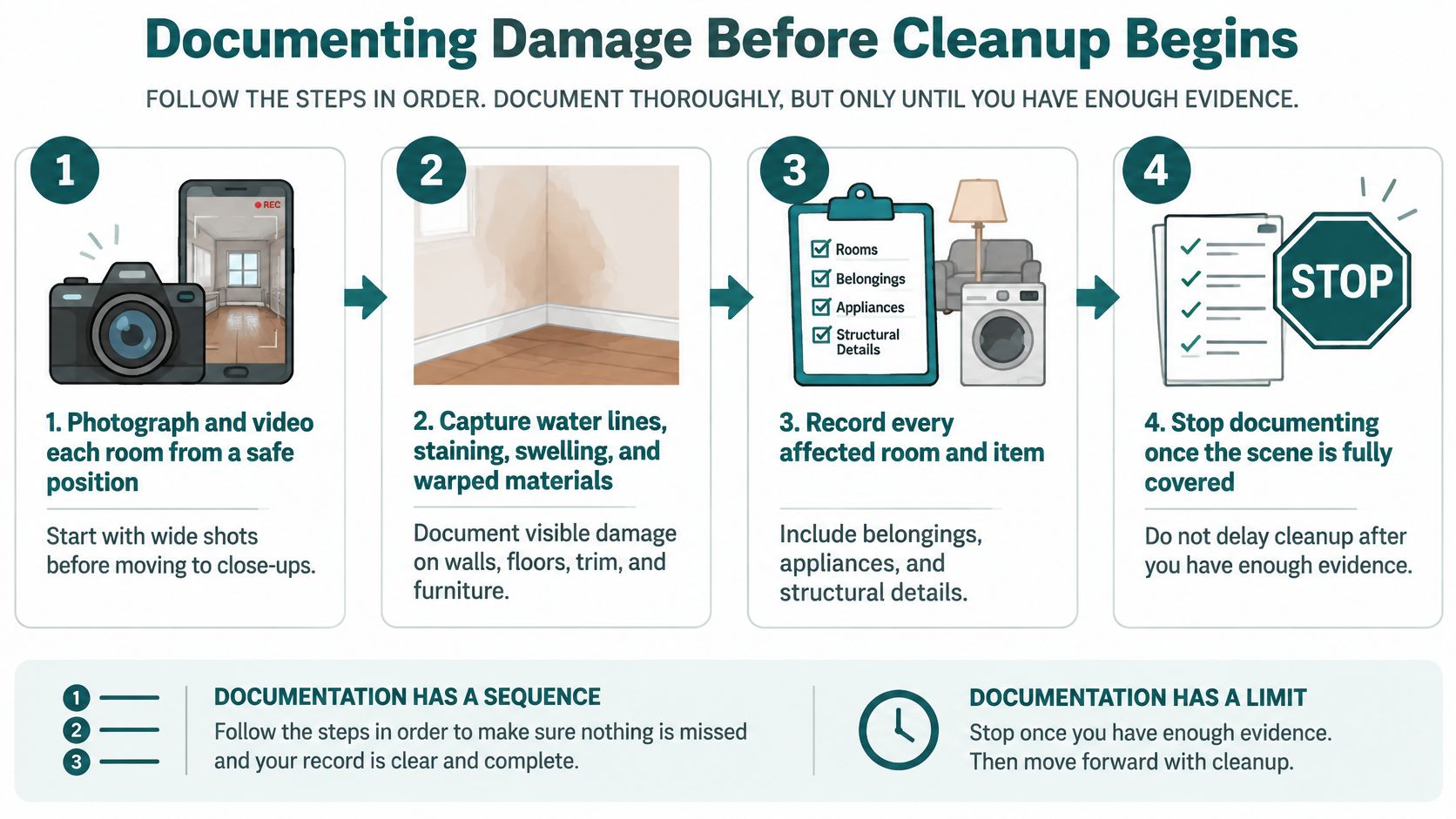
The Six Steps in Order
- List damaged items. Record each item's measurements, brand, model, serial number, approximate age, and condition. Attach receipts or order history when available.
- Keep representative samples where safe. Save pieces of carpet, flooring, curtains, or drywall so material type and quality can still be identified after removal.
- Save cost records. Keep emergency invoices, temporary repair receipts, and messages with contractors and insurers together.
- Pause before disposal when practical. Ask the insurer whether it wants to inspect first, and request written authorization when feasible. Record the reason, date, and disposal method for items you discard.
The FEMA guidance on documenting damages after severe weather events recommends recording affected interiors and exteriors, closets, cabinets, serial numbers, receipts, and material samples before discarding items. It also advises owners to begin cleanup promptly and use protective equipment. If an item poses a health risk, document it first if safe, then remove it rather than delaying necessary sanitation.
Cleanup Is Not Reconstruction
Premature disposal can weaken valuation evidence; delayed removal can worsen contamination and disrupt living or business operations. Mitigate promptly, but avoid irreversible repairs before the insurer has an opportunity to inspect unless safety requires immediate action. Removing sodden carpet after documenting it and saving a sample is mitigation. Installing new drywall over an uninspected cavity is reconstruction that can conceal both moisture and evidence.
Check the policy wording for mold coverage, especially when a flood policy may be involved. Ask the insurer in writing how it wants damaged materials preserved or inspected. That gives homeowners, landlords, HOAs, and commercial operators a record of the instructions they received.
Checking Dryness Before You Close Anything
A dry-looking surface is the most common false finish in water losses. Paint feels dry, carpet feels dry, and the room smells better, yet the pad, insulation, and wall cavity underneath are still wet. Closing over that moisture traps the problem where nobody can see it until odor or damage returns.
How to Verify, Not Guess
Use a properly calibrated moisture meter suitable for the material being tested, and compare readings across affected and unaffected areas of the same building. The EPA tribal indoor air quality resource directory on mold and moisture states that a technically defensible closeout requires inspecting concealed spaces, carpet backing, insulation, wall cavities, cabinets, and subflooring, and maintaining indoor relative humidity below 60%, with approximately 30–50% identified as an ideal range for mold control.
| Area or material | Dryness check | If still wet |
|---|---|---|
| Carpet and pad | Lift and check the backing, pad and subfloor beneath | Porous carpet may need replacement if it stayed wet beyond 48 hours |
| Subfloor under flooring | Compare moisture readings with unaffected rooms | Keep drying; do not close or cover until readings match |
| Wall cavities and insulation | Inspect concealed spaces and take readings by material | Assess for remediation before closing walls |
| Cabinets and built-ins | Check backs, bases and toe kicks | Dry in place or remove, based on the assessment |
| Indoor air | Relative humidity below 60 percent; roughly 30 to 50 percent is ideal | Run a dehumidifier until readings are within range |
Carpet, upholstered furniture, wood assemblies, and other porous components can be difficult to dry completely within 48 hours. For anything that stays saturated, owners need a documented decision to dry, clean, or remove it, not a verbal assurance. Materials wet longer than that window may require additional remediation assessment.
No walls close and no final invoice gets accepted until checked areas match their dry comparison readings. The daily moisture log should show when each area reached target.
That log belongs in a claim file with the incident timeline, mitigation invoices, equipment logs, contractor scopes, moisture maps, inventory, receipts, temporary-repair costs, and correspondence. Preserving damaged components until the carrier has had a reasonable opportunity to inspect, or retaining samples and detailed photographs when disposal is unavoidable for safety or sanitation, protects the record. Dry readings prove the building work, though they don't by themselves determine payment, since coverage depends on the policy, exclusions, causation, and applicable law.
When Cleanup Needs a Licensed Professional
A small clean-water leak caught early is the one case an owner can often handle alone. Say a supply line drips onto tile, the water is shut off within the hour, and everything dries within 24 to 48 hours with extraction, fans, and careful documentation. That job usually stays manageable.
Most other situations don't. The decision turns on the water type, the size of the affected area, the materials involved, and whether readings keep moving toward dry.
| Situation | Safe to handle yourself? | Bring in a professional when |
|---|---|---|
| Small clean-water leak dried within 24 to 48 hours | Usually yes, with documentation | Drying stalls or readings stay high |
| Standing or flood water | No | Always, for extraction and contamination checks |
| Sewage or possibly contaminated water | No | Always |
| Visible mold or persistent musty odor | Limited cleanup only | Any visible growth needs an assessment before cleaning |
| Electrical, gas or structural concern | No | Before power is restored or anyone re-enters the building |
| Materials still wet beyond 48 hours | Assess, do not assume | Porous materials remain wet or mold appears |
Where the Line Sits
Contaminated water always goes to professionals. Standing floodwater and sewage carry infectious and chemical hazards that ordinary household cleanup can't control, and owners should presume contamination when floodwater or sewage has entered the property. The same applies to buildings with multiple occupants or employees, where hidden contamination affects more people than the owner.
Electrical and structural concerns sit outside cleanup entirely. A qualified electrician, the utility, or an inspector should assess hazards before anyone restores power, and a damaged building should stay closed until an appropriate authority declares it safe. No drying schedule justifies re-energizing wet wiring.
Stalled readings are a professional trigger too. If fans and dehumidifiers run for days and moisture numbers barely move, adding more of the same equipment rarely fixes it. The cause is often moisture trapped in an assembly that surface drying can't reach, and that needs targeted assessment. Visible mold or a musty odor that persists after drying calls for the same response, a formal assessment rather than a quick surface clean.
There's a paperwork reason as well. A professional's written scope, with moisture maps and material-by-material decisions, is what an insurer will compare against its own estimate. On larger or contested losses, that document often matters as much as the physical work.
How Restoration Phases Shape Your Claim
Each restoration phase should leave a record that supports the claim. Ask for documents as work proceeds, while the details are easy to confirm. The guide to filing a water damage insurance claim explains the claim process alongside the physical restoration.
| Phase | What typically happens | Get in writing |
|---|---|---|
| Mitigation | Water extraction and drying equipment set up | Equipment list, daily logs and invoices |
| Assessment | Moisture mapping and a scope of damage | Moisture map and written scope |
| Demolition | Affected materials removed | Photos before removal and disposal records |
| Drying verification | Readings compared with unaffected areas | Final readings by room and material |
| Reconstruction | Permanent repairs begin | Estimate matched to the documented scope |
Mitigation stabilizes the building through extraction and drying equipment. Assessment maps moisture and defines the affected areas. Before demolition, keep photographs of materials slated for removal; retain disposal records as well. Drying verification should confirm that the structure is ready before reconstruction begins. Sealing wet cavities behind new finishes can create problems that are harder to find and document later.
Ask the insurer for its coverage position in writing, then compare its estimate line by line with the documented scope. Concealed moisture, contents, and code-related work can account for differences between the two documents. Moisture maps and drying logs help show what was found and addressed.
The Separate Commercial Track
Water is the second-ranking cause of business-interruption claims worldwide, according to Allianz Commercial's analysis of 7,888 claims worth approximately €6.74 billion from 2021–2025. A business closure can outlast the physical repairs.
Start a daily loss log. Record closure dates, affected locations, cancelled orders, downtime by department, payroll and fixed costs, temporary premises, equipment, storage, shipping and overtime expenses, inventory losses, and the timeline for partial reopening. Keep relevant pre-loss financial records, sales by comparable period, purchase orders, reservations, production schedules, and communications with customers and vendors.
Reopening may not end the loss. Reduced capacity, delayed orders, temporary relocation costs, and continuing extra expenses may still matter, depending on policy wording, limits, waiting periods, exclusions, and applicable law. Check whether flood or water sublimits apply separately to physical damage and business income.
What Restoration Costs and How Long It Takes
A price or completion date only means something when it matches the work being proposed. Before comparing estimates, check that each written scope identifies the affected areas, materials to be removed or dried in place, equipment and labor, contents handling, and any reconstruction included. The overview of water damage restoration timelines explains why the schedule depends on conditions at the property rather than a fixed deadline.
What Drives the Bill
- Size and spread: The affected area, number of rooms, and number of floors shape the scale of equipment and labor.
- Water category: Clean water, contaminated water, and floodwater require different controls, protective measures, and disposal handling.
- Remove versus dry: Removing materials adds disposal and reconstruction work. Drying materials in place may reduce that work when their condition allows it.
- Hidden moisture and mold: Wet cavities and mold remediation expand the scope and the checks needed before repairs.
- Contents and emergency work: Cleaning, packing, storing contents, and after-hours response add line items.
For context, the average payment for all U.S. National Flood Insurance Program claims from 2020–2024 was $82,614, according to FEMA's FloodSmart program. This reflects flood losses of many sizes across the program. It is not a typical homeowner estimate and should not set expectations for a burst pipe in one bathroom.
What Drives the Calendar
The section 5 table outlines the restoration phases. The actual schedule depends on how quickly extraction begins, when moisture readings reach target, and whether inspections, estimates, permits, or code requirements delay the next work.
Compare at least two itemized written scopes. Check that each specifies the areas affected, materials to remove or dry in place, drying and reconstruction work, and assumptions behind the price. If one scope excludes work included in another, the lower total reflects a different scope, not a like-for-like saving.
Ask what readings, inspections, or approvals must be completed before work can proceed on your property. That answer is more useful than a general completion estimate.
Deciding Whether to Bring In a Public Adjuster
The cleanup can be finished while the insurance claim remains unresolved. If the insurer's estimate leaves out concealed moisture, damaged contents, or business interruption losses, or the claim is delayed or denied, a public adjuster may be worth considering. Large losses and disputed scopes can make a professional review more useful. A small, documented loss with an estimate that matches the work may not need one.
A public adjuster can document and present a claim, but cannot change the policy. Coverage depends on policy terms, the water source, exclusions, and applicable law. Floodwater may be treated differently from a burst pipe or appliance leak, so review the insurer's written position before deciding what help you need.
What to Gather Before Any Call
Before contacting a professional, have these claim details ready:
- Claim status: The date you reported the damage and any written coverage position or estimate from the insurer.
- Work and costs: Restoration invoices and receipts for temporary repairs.
- Commercial losses: Pre-loss financial records, including sales for comparable periods.
For the photos, moisture records, and incident timeline, use the documentation you assembled during the earlier steps. You do not need to recreate it for this call.
The decision comes down to whether the insurer's estimate matches the documented scope and whether the claim is progressing. If the numbers differ or communication has stalled, a licensed professional can review the file and explain available options. Results are not guaranteed.
PostDamage is an independent property damage information and referral platform. It helps homeowners, landlords, and commercial property owners understand insurance claims and connect with appropriate licensed professionals. To request help, share the damage type, ZIP code, name, phone number, email, and what you can safely observe. If the area is unsafe, leave before documenting anything.
If a water damage claim is delayed, denied, or paid less than expected, visit PostDamage to request help with your claim.