Burst pipe water damage accounts for roughly 22% of homeowners insurance claims, and the average claim was about $5,531 in the cited baseline data. That's why the first hour matters so much, because fast shutoff, documentation, and drying can change whether the loss stays contained or spreads through walls, floors, and contents.
The sound usually comes first, then the shock of seeing water where it should never be. What happens next is less about panic and more about sequence. The right order protects the structure, reduces loss, and keeps the insurance file cleaner later.
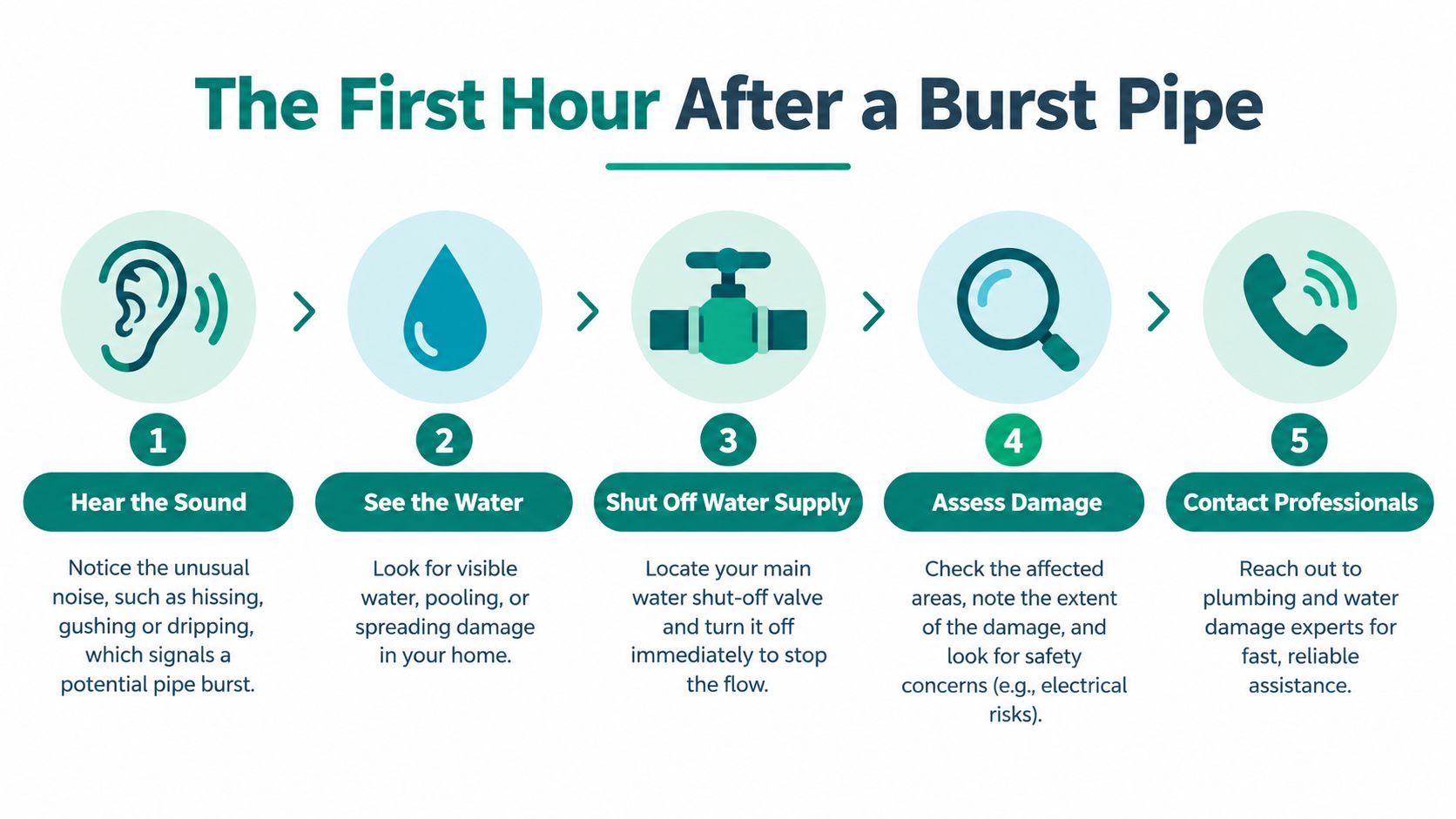
The First Hour After a Burst Pipe
A burst pipe is a race against spread, not just a plumbing problem. Water moves under trim, behind drywall, into insulation, and across flooring faster than many realize, so the first move has to be safety, then shutoff, then documentation.
Start with electrical safety
If standing water is near outlets, appliances, or the panel, leave the area and don't touch anything wet. Water and electricity are a bad combination, and a calm exit is better than trying to prove the area is safe before it is.
Practical rule: if there's any doubt about electrical exposure, step back first and cut power only if it can be done safely from a dry location.
Shut off the water at the source
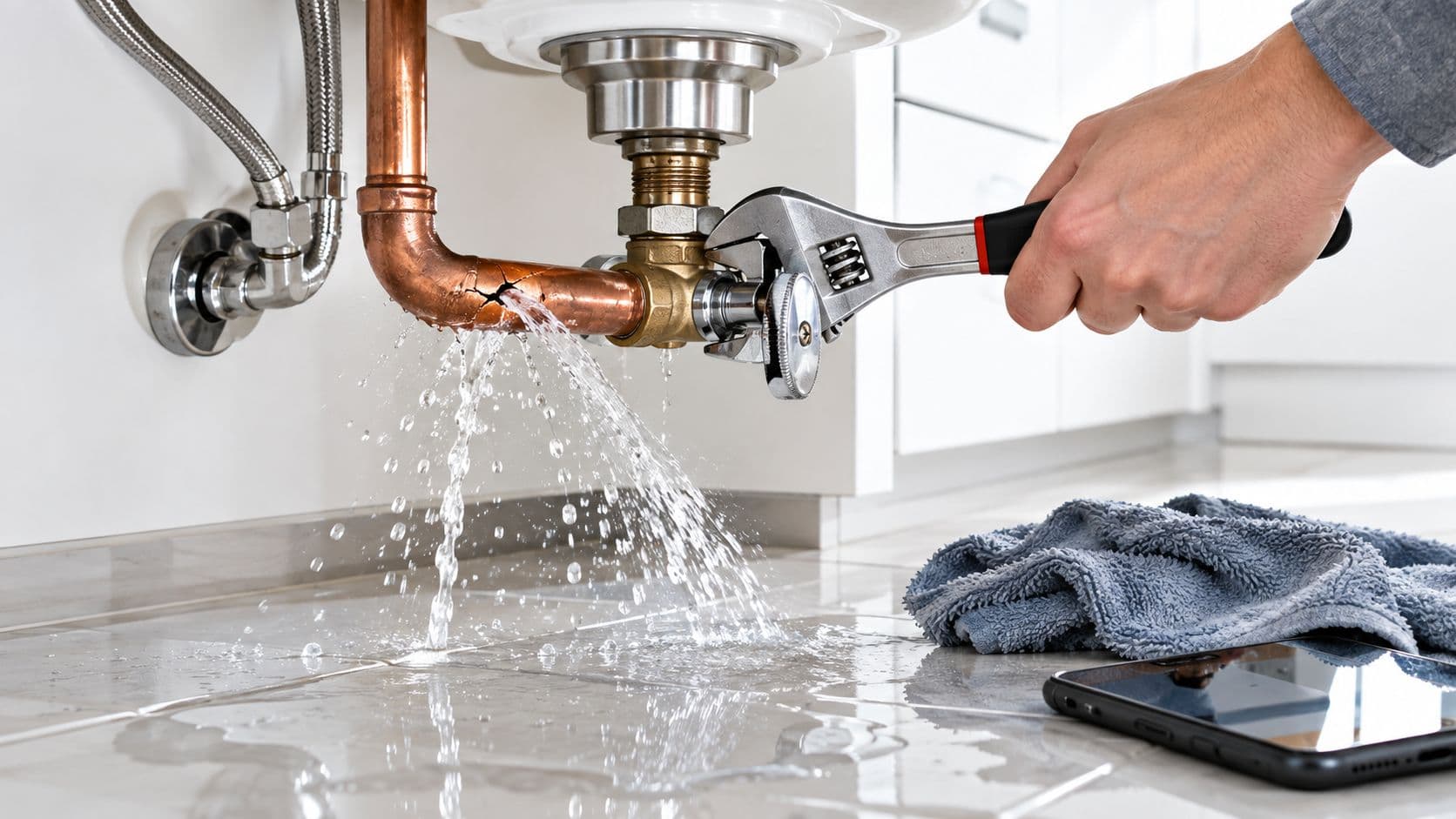
Find the main water valve and close it fully. If the property has a zone shutoff that isolates the affected area, use that if the main valve can't be reached quickly. Once the supply is off, open faucets downstream to relieve pressure and drain what remains in the line.
The reason this works is simple. Stopping the flow limits how far the damage can travel while the pipe and surrounding materials are still shedding water.
Document before moving belongings
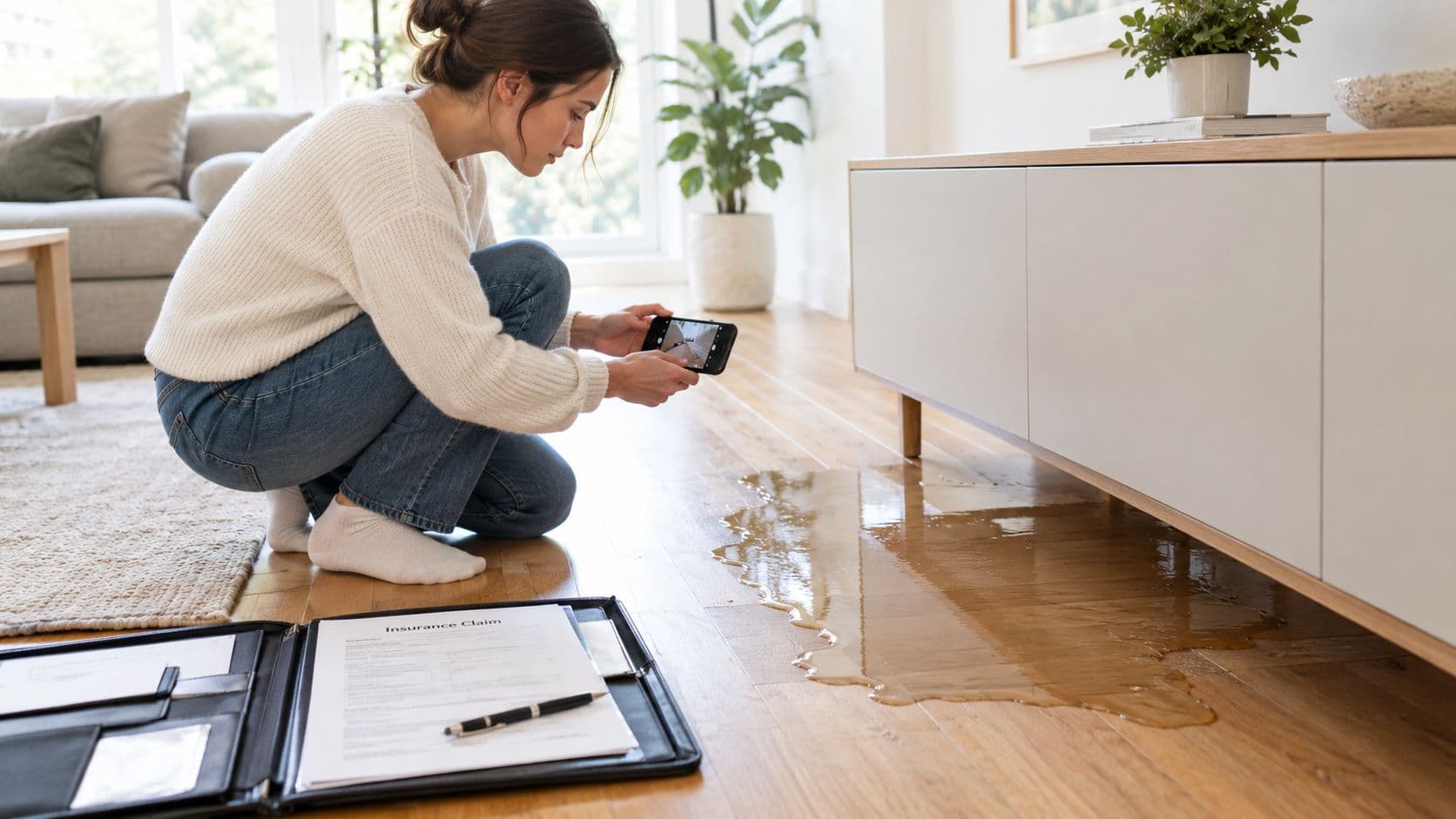
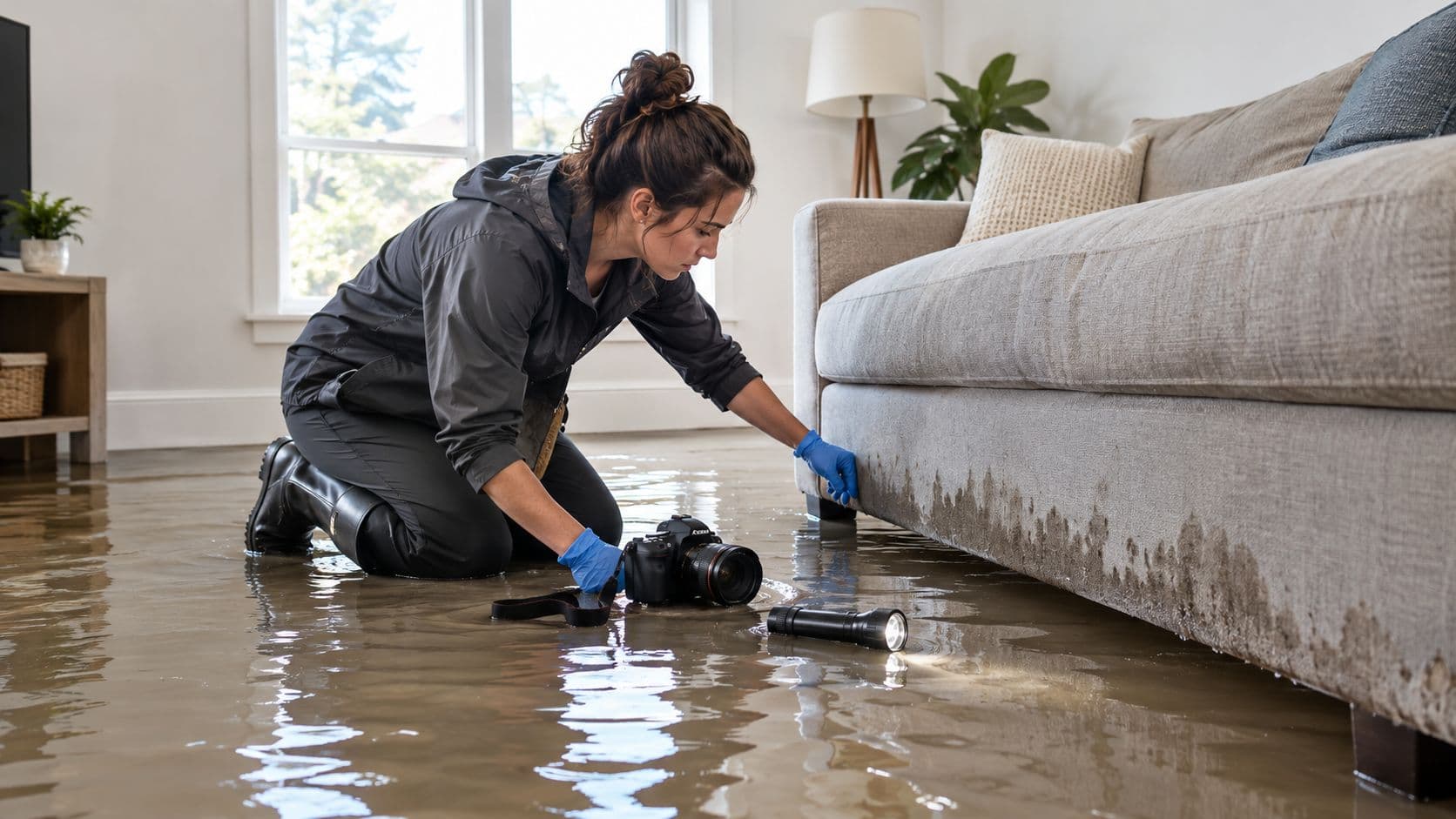
Take photos and video before pulling items out of the way. Capture the pipe, the spread of water, damaged finishes, and any belongings that were hit. A quick record of the scene is often more useful than a neat room with the evidence already gone.
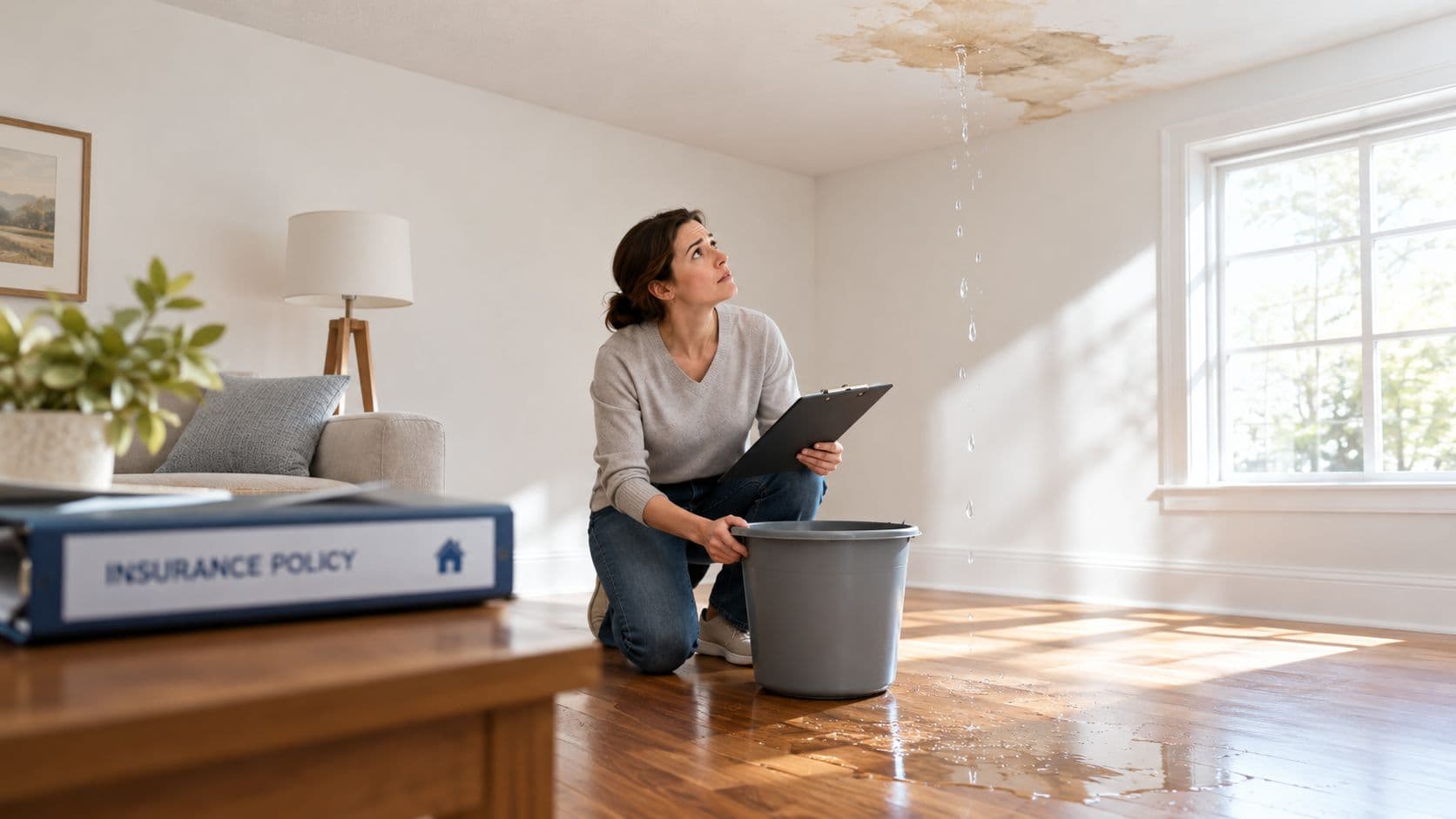
A good habit is to narrate the basics while recording, including where the water started and what areas it reached. If a ceiling is involved, this can also support a later review of water coming through structure above, which is why a related guide on water leaking through a ceiling is useful once the emergency is under control.
Call for help once the immediate hazard is contained
If the water is widespread, hidden, or near electrical systems, professional help should follow quickly. The safest first hour is not about finishing cleanup, it's about stopping the loss from getting bigger and preserving evidence for the next step.
Removing Water and Protecting Your Belongings
Once the source is closed, the focus shifts to removing standing water before it gets absorbed into building materials. The job here is speed with judgment, because some items can be saved easily while others just trap moisture and create more work later.
Remove the water in the least damaging way
Use a wet vac, pump, mop, or bucket depending on the amount of water. Household vacuums aren't meant for standing water unless they're rated for it, so that shortcut can create another problem fast. On hard surfaces, drying with moving air helps, but only after the bulk water is gone.
Carpet is the tricky one. If it's soaked, lift it promptly and get the padding out from underneath, because the padding behaves like a sponge and holds water against the subfloor. That hidden layer is where slow drying tends to fail.
Sort belongings by salvage value
Prioritize what can't be replaced, then move to what can survive drying. Photos, documents, electronics, and sentimental items usually deserve the first pass. Furniture made from solid wood has a better recovery path than particleboard or MDF, which tends to swell and break down when wet.
Good field habit: keep furniture legs from staining hardwood by placing foil or plastic separators under them while the room dries.
Use the drywall rule carefully
Wet drywall is not something to assume can be aired out indefinitely. Once it has been saturated for more than a few hours, the paper facing and core can lose integrity, and the wall may need more than surface drying.
That's where the material matters. Drywall, insulation, and carpet padding are porous and difficult to recover once they've stayed wet too long, while some dense surfaces can tolerate drying if the damage is addressed quickly. A detailed guide on how to dry wet drywall helps clarify that line when the wall is part of the problem.
Protect what can still be saved
Set aside items that are damp but not ruined, and keep them separate from materials that are clearly unsalvageable. Don't stack wet fabrics, don't close cabinets full of soaked contents, and don't leave soaked items in place just because the room looks tidier. Tidiness can wait. Moisture can't.
Documenting Damage for Your Insurance Claim
Insurance adjusters don't evaluate a burst pipe claim by guesswork. They review what the homeowner can prove, so the documentation package needs to show what happened, when it happened, and what was affected before anything was thrown away or repaired.
Build the record while the scene is still intact
Start with wide photos of each room, then move closer to the source, the spread, and the damaged finishes. Video helps show how far the water traveled, especially when it moved under furniture or through multiple rooms. If possible, include a ruler, tape measure, or similar object in the frame so the scale is obvious.
Write a short timeline while the details are fresh. Include when the leak was discovered, what was done to stop it, and which areas were affected. That note becomes valuable when the claim is reviewed days later and the scene no longer looks the same.
Keep the claim file organized
Save receipts for emergency supplies, rentals, and any immediate cleanup costs. Record every insurer interaction, including the date, the representative's name, and the claim number. That paper trail helps if questions come up later about what was reported and when.
Do not throw away damaged materials before the adjuster has seen them or given clear permission. Soaked drywall and carpet are often the first things people rush to remove, and that can weaken the file by erasing evidence of the original condition.
Insurance habit that saves time: call with the policy number, a plain description of what happened, and a rough estimate of the affected rooms so the conversation starts cleanly.
Notice matters as much as evidence
Many policies require prompt notice after a water loss, often within a short window after discovery. Delaying that call can give the insurer a reason to question the claim, especially if the damage appears to have spread after the fact. Documentation and notice should begin as soon as the burst pipe is discovered.
DIY Drying Versus Hiring Restoration Professionals
Not every burst pipe needs the same response. Some losses stay contained and dry cleanly, while others push water into wall cavities, under flooring, and into insulation where a shop vac and a few fans won't reach the problem.
When DIY drying can make sense
A contained area with clean water, fast shutoff, and quick cleanup may be manageable for a homeowner using fans and a dehumidifier. The key condition is timing. If drying starts within hours and the water hasn't moved into hidden spaces, the situation may stay within a reasonable DIY range.
That still requires discipline. Airflow needs to reach the wet surfaces, and the room has to stay monitored so the moisture doesn't hide behind baseboards or under flooring.
When the job has crossed the line
Call professionals if water has migrated into wall cavities, under subfloors, or into insulation. Also call if the source is gray water or worse, because contaminated water changes the cleanup standard. If materials are still wet after a day or two, the risk picture changes again, especially for porous building products.
Professional structural drying usually follows a controlled workflow, with extraction first, then engineered airflow and dehumidification, then verification using moisture readings instead of touch. That process is built to find hidden moisture, which is the part homeowners miss most often.
Here's a simple comparison.
| Factor | DIY Appropriate | Call Professionals |
|---|---|---|
| Water source | Clean water from a supply line | Gray water, contaminated water, or unknown source |
| Scope | One contained room | Multiple rooms or spreading damage |
| Hidden moisture | Not present | In walls, subfloors, or insulation |
| Drying speed | Can start right away | Delay already happened or materials stayed wet |
| Materials affected | Hard surfaces, limited contents | Drywall, carpet padding, insulation, flooring layers |
What usually forces replacement
Porous materials that stay wet too long often need to come out rather than be saved. Dense materials can take longer to dry, and hidden moisture is what makes the difference between a manageable repair and a later tear-out. A related guide on what water mitigation involves helps frame the professional side of that decision.
If the homeowner is trying to guess whether the damage is still “small,” the safest test is often where the water went, not how the room looks today.
Understanding Costs and Timelines
Homeowners usually ask about cost before the cleanup is even finished, and that makes sense. Burst pipe water damage can stay small if the leak was contained quickly, or it can turn into a larger restoration project if water spread under flooring, into wall cavities, or through several rooms.
Read the cost in layers
A minor loss may involve one accessible pipe segment and limited surface drying. Moderate damage usually means one or two rooms with some material replacement. Larger losses bring structural drying, demolition, and reconstruction into play, especially when water has moved behind finishes or under flooring.
Insurance can soften that blow, but deductibles and coverage caps still matter. A policy may cover the resulting water damage while still leaving the homeowner responsible for the deductible and any amount above the limit. In some cases, the failed pipe itself is treated differently from the resulting water damage, especially if wear or neglect is involved.
Practical takeaway: the claim should be framed around sudden water damage, the affected materials, and the immediate steps taken to stop further loss.
Know the timeline before the work starts
Emergency shutoff and removal happen first, usually within hours if the response is fast. Structural drying often takes several days, and reconstruction comes after that. Dense materials can stretch the schedule further because they hold moisture longer and are harder to dry fully.
The visible mess can look small at the start while the actual work is still ahead. A surface that feels dry does not guarantee the layers underneath are ready to be closed back up.
Understand what drives the final bill
The biggest cost swings usually come from hidden moisture, demolition, and the amount of rebuilding required after drying. If materials have to come out, the bill rises quickly because cleanup turns into repair. Fast action in the first hour matters because it can limit how far the water travels and reduce the amount of reconstruction later.
Your Next Steps After the Emergency Passes
Once the water is stopped and the obvious hazards are handled, the next moves should be orderly. The mistake many people make is calling three different trades before the claim, the scope, and the safety issues are clear.
Get the claim moving and the scope defined
Finish the documentation package and contact the insurer promptly. Then get written estimates from licensed restoration companies before authorizing work, and compare the proposed scope instead of assuming the first estimate is complete. If the property is a rental, the landlord or property manager should be notified immediately so structural responsibilities are clear.
For owners who want guided help identifying the next step, PostDamage can be used as a single-request option that connects the incident to the right kind of local help. That kind of coordinated request is often cleaner than juggling multiple vendor calls while the property is still unstable.
Decide who handles what
The restoration company should address extraction, drying, and repair scope. The insurer should review the claim and confirm coverage questions. The occupant should keep tracking changes, saving receipts, and avoiding unnecessary demolition until the file is in order.
A calm response after the first-hour scramble usually produces better results than trying to solve everything at once.
Keep the focus on water damage
This kind of loss is about water intrusion, structural drying, material replacement, and the claim path that follows. The best outcome usually comes from one person coordinating the details instead of five people guessing at them.
When burst pipe water damage hits, the first hour decides how hard the rest of the week becomes. Use PostDamage to describe what happened and get pointed toward the next right step, whether that means restoration help, insurance guidance, or another type of local professional.