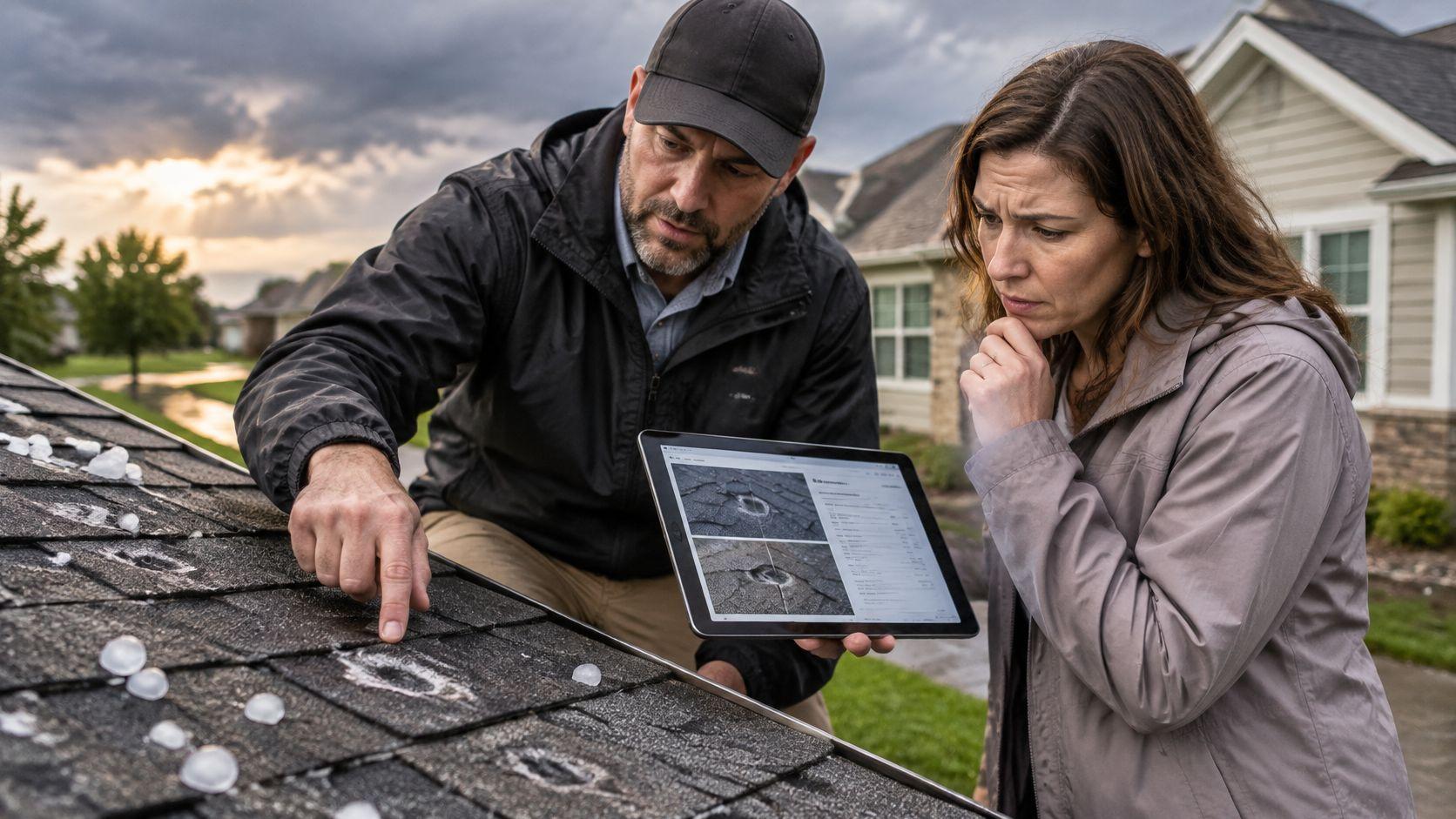
Contingent business income pays lost income and eligible continuing expenses when covered physical damage at a dependent property, such as a supplier or customer, halts a business's operations, subject to policy terms.
The building may be open, employees may be ready, and equipment may work perfectly. But a critical shipment hasn't arrived because the supplier's facility suffered damage, and customers are starting to cancel orders. The insurance question isn't whether the business lost money. It's whether the policy covers the event at the other property and the resulting loss at the insured business.
Contingent Business Income in Plain Terms
A bakery can pass every inspection and still have nothing to sell. The ovens are clean, the staff is scheduled, and the sign says open. Then the flour supplier's mill burns, deliveries stop, orders thin out, and rent keeps coming due.
Contingent business income, often called CBI or contingent business interruption, addresses that dependency exposure. It is a time-element extension of business interruption insurance: recovery is measured by income lost during a covered interruption period at the insured business.
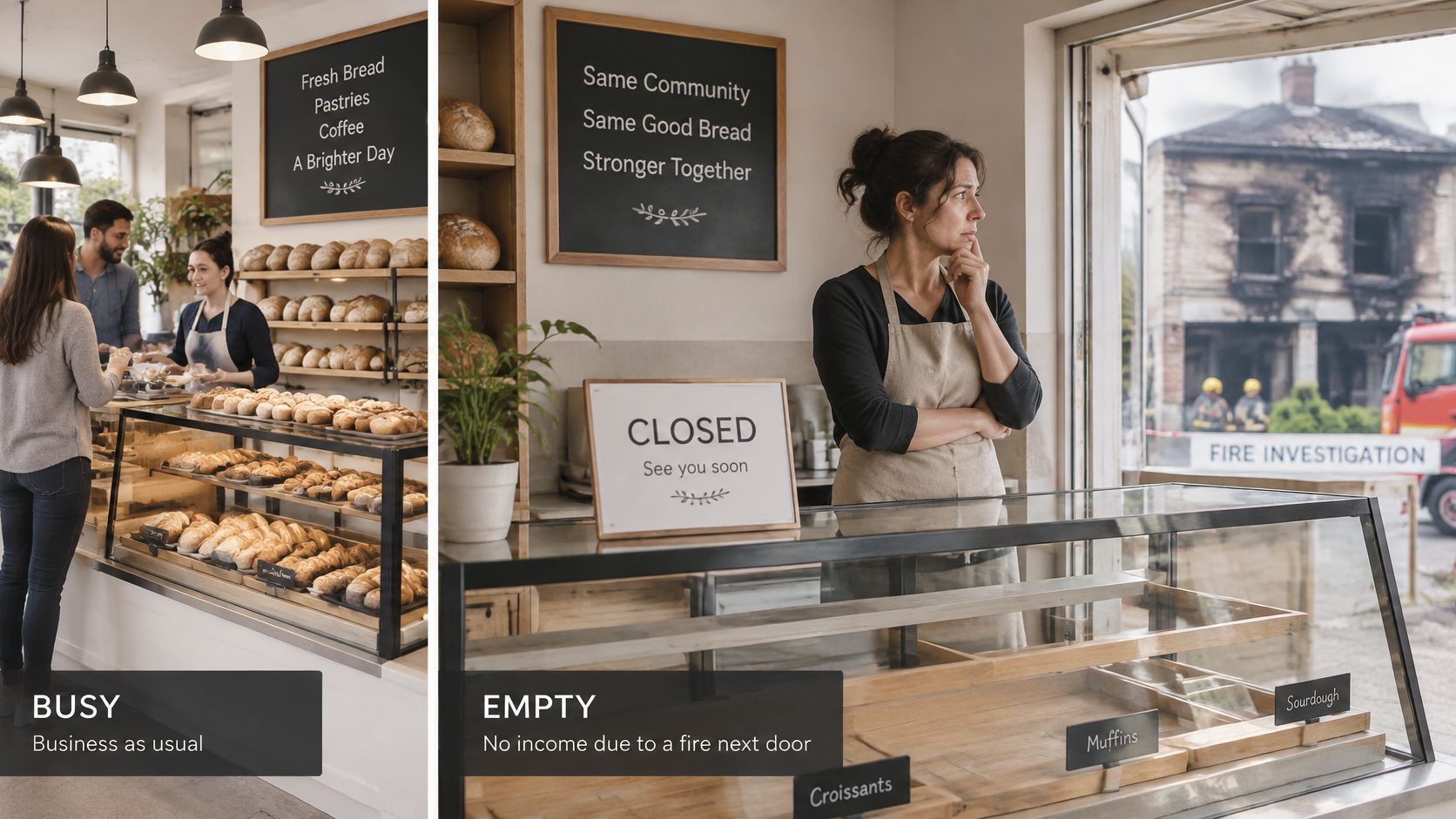
The mill is the bakery's dependent property. The same pattern can involve a component manufacturer, a major customer, or a logistics facility. Utilities can create similar operational exposure, although utility interruption is not automatically included under every CBI policy. A ransomware outage or cloud-platform failure can stop orders just as completely, but standard CBI wording usually looks for qualifying physical damage, so nonphysical disruptions generally need separate cyber or service-interruption terms.
If coverage applies, the bakery's claim is for its own lost earnings and eligible continuing expenses during the covered period. The mill's repair bill belongs to the supplier's property claim, and a canceled order becomes insured only when the policy's trigger and proof requirements are met.
CBI responds to a dependency's qualifying physical loss; a dependency's failure alone is not enough.
Two questions stay separate: whether an eligible dependent property suffered covered physical damage, and whether the insured business can prove the income loss that followed.
Why dependency protection deserves attention
In 2025, more than half of surveyed manufacturing companies said they were considering contingent business interruption insurance for supply-chain exposure, according to Chubb's analysis of National Center for the Middle Market survey data. That interest reflects a practical concern: a business can insure its own building while remaining exposed to interruptions somewhere else.
Among disaster-affected small firms surveyed by the Federal Reserve Bank of New York, 65% cited power or utility problems as a source of losses, while 17% reported having business-disruption insurance. Those findings describe operational dependence and insurance ownership; they do not decide whether a specific utility claim qualifies.
For the bakery owner, the useful distinction is straightforward:
- Potentially covered: Income lost because qualifying damage at an eligible dependent property interrupts operations.
- Not automatically covered: Every supplier failure, missed delivery, utility outage, or reduction in sales.
- Still subject to review: Eligible expenses, the covered period, exclusions, and the amount available.
The plain version is this: CBI may respond when insured damage elsewhere causes a proven income loss at the insured business, within the limits and exclusions of the policy.
How It Differs From Ordinary Business Interruption
Coverage types compared by trigger and scope
| Coverage | What triggers it | Typical scope |
|---|---|---|
| Own-premises business interruption | Covered physical damage at the insured location | Lost income and eligible continuing expenses associated with the insured operations |
| Contingent business income | Covered physical damage at an eligible dependent property, such as a supplier, customer, utility, or logistics facility | Lost income tied to that dependency, subject to policy terms |
| Cyber business interruption | A qualifying cyber incident or system outage, often without physical damage | Income loss and eligible expenses authorized by cyber or service-interruption wording |
| Supply-chain slowdown without damage | A price rise, embargo, supplier insolvency, or slowdown without qualifying physical loss | Typically outside the property-style CBI trigger |
The key distinction is where the triggering damage occurs. Ordinary business interruption generally accompanies insured damage at the policyholder's premises. CBI extends the analysis to a qualifying location operated by another business. Two separate tests follow from that split: the dependent property must show qualifying physical damage, and the insured must still prove its own income loss under the policy's income definition. Neither alone is enough.
A real payment illustrates the own-premises side. For the year ended December 31, 2024, a company reported receiving C$2.3 million, equivalent to US$1.688 million, in business-interruption insurance payments following equipment damage at its Celgar mill, according to a filing with the U.S. Securities and Exchange Commission. That is an example of income protection associated with damage to the company's own operating equipment, not proof of coverage for a supplier interruption.
Similar financial losses, different coverage questions
A furniture manufacturer unable to finish customer orders faces a different coverage question depending on where the problem sits. A fire in its own workshop raises an own-premises business interruption question. A fire at its timber supplier raises a dependent-property question. A vendor's disabled ordering system raises a technology coverage question, because standard CBI wording ties recovery to physical loss and may not reach a nonphysical outage at all.
Each scenario can produce the same accounting result: fewer completed orders and lower earnings. Each coverage form requires a different event, location, and relationship before a loss is payable.
A business-income limit on the declarations page doesn't establish that every interruption is insured. The relevant coverage form and endorsements still control.
Practical rule: Damage at the insured premises points toward ordinary business interruption. Damage at a business partner's premises calls for a CBI review. An outage without property damage calls for careful examination of cyber, system-failure, or service-interruption wording.
This distinction also prevents a common filing mistake: describing a genuine income loss without identifying which insuring agreement could respond. A useful claim notice explains both the operational problem and the coverage being considered, without treating the policy's title as a promise of payment.
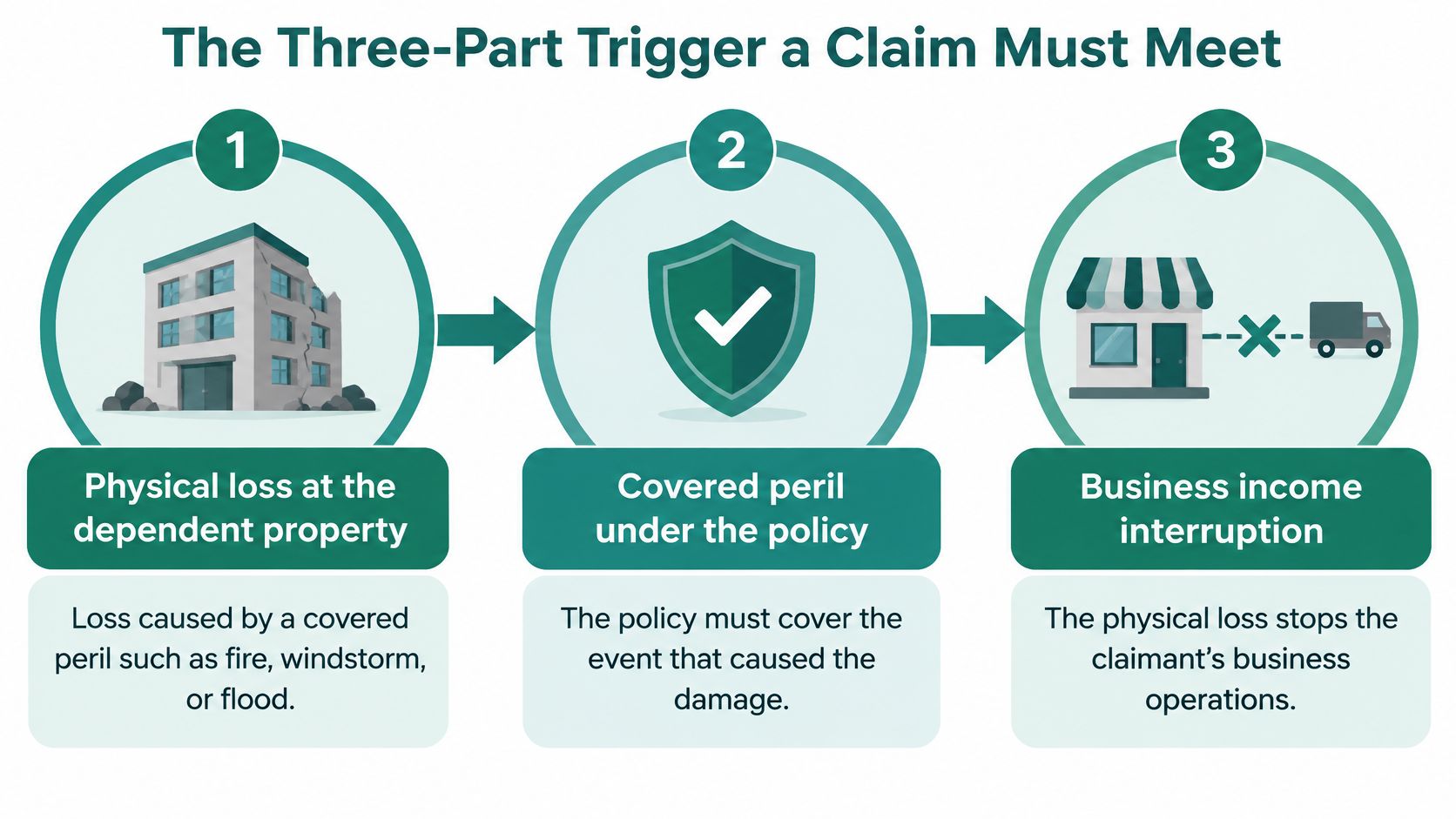
The Three-Part Trigger a Claim Must Meet
A property-style contingent claim requires more than evidence that a supplier stopped shipping. The claimant needs a connected explanation of the external damage, the operational interruption, and the insured business's financial loss.
The Cozen O'Connor practical guide to contingent business interruption losses describes coverage built around physical loss at a dependent property, a covered cause of loss, and resulting interruption of the insured's business. The insured premises generally needn't suffer damage themselves.
The evidence chain
Qualifying damage at the dependent property. Establish what was physically damaged, where it happened, and what caused it. Then test that cause against the insured's policy, rather than assuming that the supplier's own insurance determines coverage.
A resulting suspension of insured operations. Connect the damaged facility to a specific operational failure. Purchase orders, shipment notices, inventory records, and production logs can show why the business couldn't continue normally.
Actual business-income loss from that suspension. Demonstrate the financial effect using the policy's income definition. A supplier shutdown may occur without a recoverable income loss if available stock or replacement sourcing allows sales to continue.
Supplier insolvency, a price increase, an embargo, or a slowdown without qualifying physical damage may fail this chain at the outset. A genuine commercial hardship isn't necessarily a covered property event.
Applying the trigger to a supplier flood
Suppose a parts supplier's plant floods. Before calculating the manufacturer's lost earnings, the claim reviewer needs to determine whether that plant qualifies as a dependent property and whether flood is covered under the applicable wording.
Flood isn't automatically covered because it caused physical damage. If the relevant coverage excludes it, photographs of a submerged production line won't resolve the coverage problem.
If the event qualifies, the manufacturer must still establish its own interruption. Assembly logs might show when available parts ran out, while canceled orders and shipment records show the downstream effect. The supplier's repair estimate supports the external event, but it doesn't prove the manufacturer's earnings loss.
Each link needs its own evidence. The strongest file keeps those records connected through a dated narrative instead of expecting the insurer to infer causation from a falling sales chart.
Timing affects the payable loss
Some policies apply a waiting period before income recovery begins. The claimant should locate that provision in the declarations, coverage form, and endorsements, then record the precise outage and interruption times.
A waiting period isn't necessarily the same as a monetary deductible. Its operation must be read alongside the policy's covered period and other timing provisions.
Before submission, the business should test a practical question: can its records establish the qualifying external damage, the resulting operational interruption, and the financial consequence in that order?
Which Dependent Properties Count Under the Policy
A restaurant group's produce distributor may be covered only if it is listed on the schedule. That is the definitional issue: contingent business income turns on whether the policy recognizes the dependent property where the physical damage occurred. Proof that the restaurant group lost orders, sales, or income is a separate requirement.
Scheduled coverage identifies particular dependent businesses or locations. It operates like a guest list: a supplier's importance does not bring an unlisted premises inside the coverage. Blanket or unscheduled coverage may reach broader categories, but those categories still have boundaries. A business name alone may not establish that a different facility, affiliated company, or upstream supplier qualifies.
The National Association of Insurance Commissioners' business-interruption guidance identifies CBI as an extension of business-interruption protection and notes that recovery may require property damage at the dependent location. The claimant therefore has to examine the actual coverage rather than assume that an operational relationship is enough.
Definitions come before the size of the loss
Under scheduled wording, a covered fire at an unlisted produce distributor can create an eligibility problem before anyone calculates the restaurant group's lost earnings. Blanket wording could produce a different result, but only if the distributor and damaged location meet its terms. The claimant should check whether coverage reaches direct suppliers only, particular territories, or specified types of goods and services.
Technology providers require particular care. A cloud or payment outage may interrupt revenue without physical damage to the provider's premises, and standard CBI wording may not reach that nonphysical disruption unless an endorsement or applicable cyber form supplies the required trigger.
Common dependency reviews should address:
- Component and merchandise suppliers: Identify the actual manufacturing or distribution site.
- Major customers: Determine whether the policy includes properties that receive the insured's products.
- Transport hubs: Check whether the facility and its role meet the covered definition.
- Utilities and communications providers: Look for express inclusion or applicable service-interruption wording.
- Technology providers: Confirm eligibility under the relevant property or cyber form.
A qualifying property can still have limited recovery
A CBI sublimit caps recovery under that extension, potentially below the main business-income limit. A manufacturer with a covered named supplier may therefore establish a valid income loss yet recover only part of it.
The business should also identify whether the sublimit applies per occurrence, per location, or under another stated basis. The headline property limit is not a reliable substitute.
A practical dependency worksheet pairs each critical business and facility with the revenue it supports, replacement options, and its policy status. The policy review should pull together the definitions, endorsements, dependent-property schedule, and sublimit schedule in one place.
Loss Components and the Evidence Each Needs
Each part of a contingent income loss needs its own proof. The categories below separate what the policy pays from the records that establish it.
| Component | What it covers | Evidence to gather |
|---|---|---|
| Net income lost | Profit the business would have earned without the interruption | Pre-loss financial statements, sales forecasts, and post-loss sales records |
| Continuing expenses | Eligible costs that continue during the interruption | Payroll registers, leases, invoices, and relevant loan statements |
| Extra expenses | Eligible additional costs incurred to reduce the loss or maintain operations | Invoices, receipts, purchase orders, and explanations of necessity |
| Mitigation efforts | Actions taken to limit the interruption, not a separate automatic payment category | Emails and logs of alternate-supplier contacts and responses |
A hardware retailer's loss calculation separates earnings it could not generate from expenses it kept paying. When the retailer's principal distribution center supplier is destroyed by a storm, the income side shows missed sales, while the expense side shows rent, payroll, and the added cost of obtaining replacement stock.
The insured loss is the income shortfall net of expenses the retailer avoided. Continuing payroll or rent may qualify under the policy's income definition. Loan principal sits in a different position: a payment that continued does not make it an insured expense, so the policy wording and the business's accounting treatment both need review before that amount enters the claim.
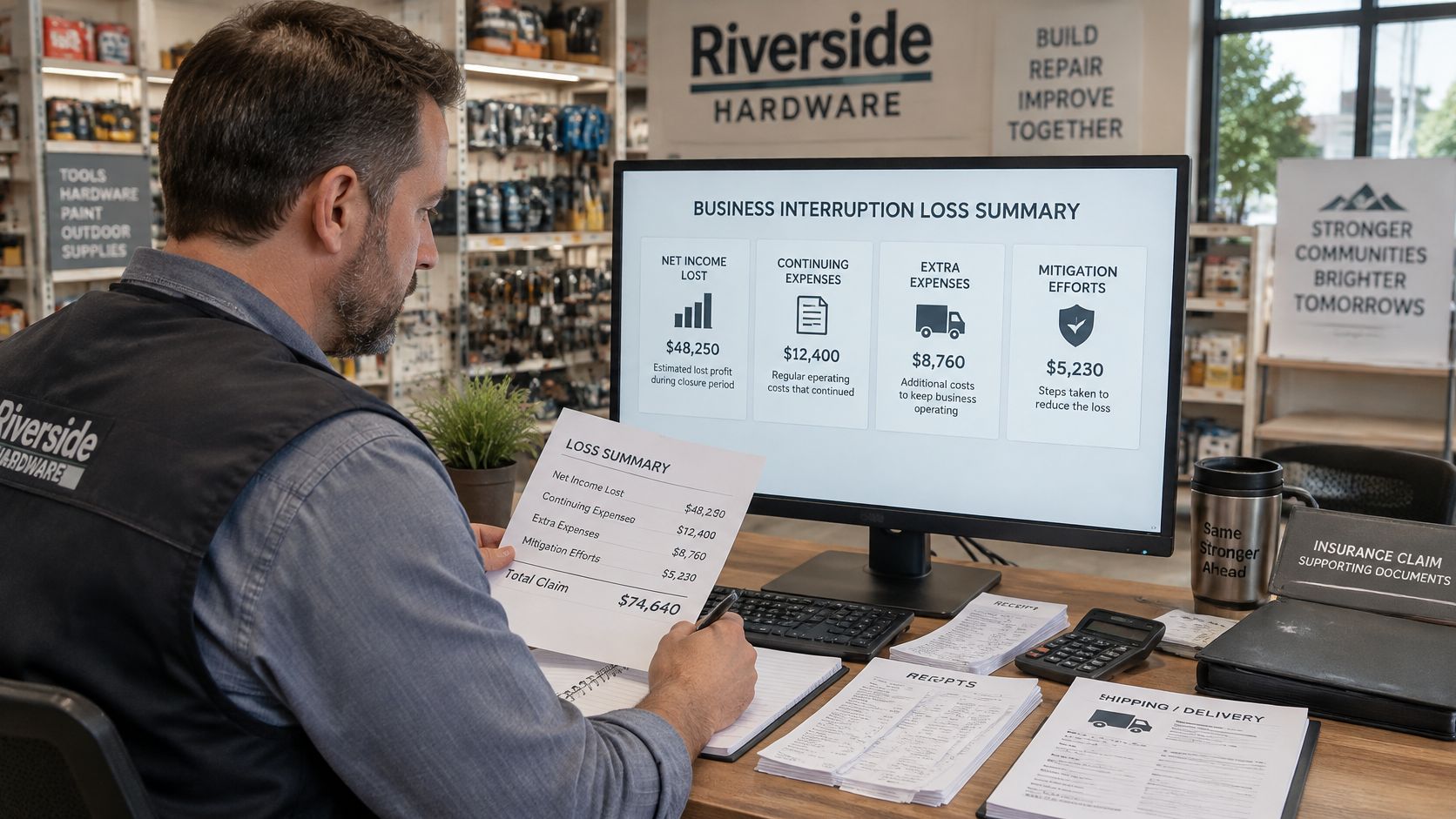
Premium freight receipts should explain what replacement goods were shipped and why the expense was necessary. Alternate-supplier emails help distinguish an unavoidable shortage from a decision to wait for the original supplier. The recordkeeping principles in this water-damage insurance claim filing guide support the same disciplined file, though a contingent claim adds its own dependency and income evidence on top.
The nonphysical interruption gap
A cloud or software provider's cyber incident raises a different issue. Property-style CBI wording generally requires qualifying physical damage at the dependent property, while a cyber policy may require a specifically defined security event or system failure. A nonphysical outage can fall between the two forms.
Contingent business interruption events represented 15% of large cyber claims by value in the first half of 2025, up from 6% in 2024, according to the Allianz cyber risk trends report. That finding describes cyber claims and does not widen property-policy coverage.
Where more than one policy could respond, the business should disclose the overlapping claims, track each waiting period, and reconcile payments against the same underlying loss to prevent duplicate recovery of an expense or income shortfall.
The pre-filing review should identify the weakest evidence category and any wording that excludes the event or expense. More invoices can support an amount, but they cannot supply a missing coverage trigger.
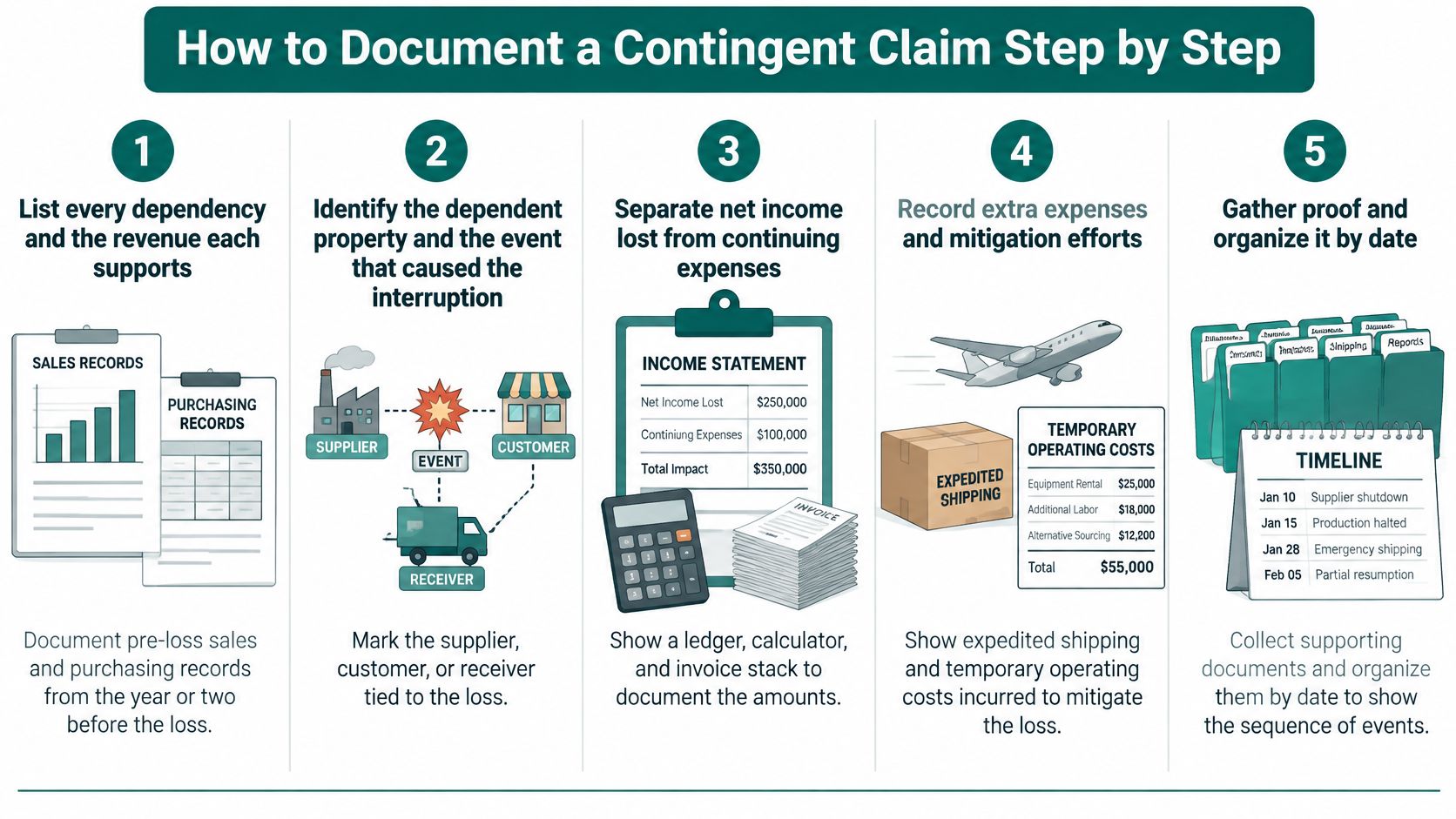
How to Document a Contingent Claim Step by Step
The most useful claim file tells a dated story that an unfamiliar reviewer can verify. It separates what happened at the dependent property from what happened inside the insured business.
Aon's supply-chain analysis highlights the value of that preparation: 28% of organizations reported a recent supply-chain loss, while 12% quantified their exposure, according to its 2025 Global Risk Management Survey discussion. Knowing which dependency failed isn't the same as knowing the resulting financial exposure.
Build the operational and financial record
List dependencies and supported revenue. Use pre-loss purchasing records, customer sales reports, and contracts to identify the relationship involved. Include enough history to explain ordinary trading patterns, seasonality, and material changes rather than relying on an unsupported average.
Request evidence of the dependent property's loss. A damage report, incident notice, repair update, or public statement can establish the event and affected facility. If the supplier won't release detailed records, document the requests and discuss acceptable alternative evidence with the insurer.
Record the interruption timeline. Match the external event with inventory depletion, production changes, shipment failures, and customer cancellations. The supplier's shutdown date may differ from the date the insured business first lost productive capacity.
Maintain a mitigation log alongside the accounting file. Record alternate-supplier outreach, expedited freight, temporary subcontracting, quoted lead times, and reasons an option wasn't workable. Without that explanation, an expense or delay may look like an ordinary business choice rather than a necessary response.
Separate restoration-period loss from later effects. Keep evidence of when the dependent property resumed service and when usable supplies or customer demand returned. Continuing financial effects may require separate extended-income wording rather than automatic inclusion in the original covered period.
Compare actual results with a defensible pre-loss forecast. Explain expected sales, saved expenses, continuing costs, and changes unrelated to the event. Missing baseline records invite disputes, while a forecast created only after the loss needs particularly clear support.
Check notice and proof-of-loss requirements promptly. Send written notice through the required channel and preserve delivery records, forms, and correspondence. A business shouldn't delay initial notice until its final calculation is complete; policy requirements and applicable law govern the process.
Check the file before submission
The submission should include a short narrative and an indexed set of supporting records:
- Coverage documents: The policy, relevant endorsements, dependency schedule, and applicable limits.
- Event evidence: The dependent location, cause of damage, available reports, and repair information.
- Operational records: A dated timeline, purchase orders, shipment logs, and cancellations.
- Financial support: Baseline statements, income calculations, expense records, and supporting assumptions.
- Response history: Mitigation records, notices, proof-of-loss submissions, and insurer correspondence.
File discipline: Every claimed amount should connect to a record, and every material interruption date should connect to an operational event.
For a disputed or complex submission, the insurance claim help information explains an avenue for exploring professional assistance. A well-organized file remains important whether the business handles the claim itself or seeks outside help.
Check Your Dependency Coverage Before You File
A sound filing decision starts with coverage eligibility, not the size of the revenue decline. The business should work through this sequence before presenting its final demand:
- Confirm the dependency. Match the damaged business and location to the schedule or blanket definition. Resolve name, address, and relationship discrepancies rather than assuming that a familiar trading name is sufficient.
- Confirm the trigger. Identify the physical damage, covered cause, and resulting operational interruption. If either the eligible-property requirement or the triggering-event requirement fails, investigate other potentially relevant coverage instead of forcing the event into a contingent claim.
- Test the available recovery. Apply the sublimit, waiting period, covered period, and relevant exclusions. For a technology outage, identify the actual cyber or service-interruption grant.
- Complete the evidence file. Reconcile the dependency records, operational timeline, and loss components before submission. Clearly identify information still being requested from the dependent business.
When outside assistance may help
A licensed public adjuster may assist with damage documentation, claim estimates, and negotiations where permitted by the professional's license and applicable law. Hiring one is optional and may not suit every claim, particularly when the issue requires legal interpretation rather than loss measurement.
Where water caused the dependent property's damage, this water-damage insurance coverage guide provides additional context, but the commercial policy's own cause-of-loss language remains essential.
PostDamage is an independent referral platform, not an insurer, public adjusting firm, or law firm. It doesn't guarantee claim outcomes, and coverage depends on policy terms and applicable law. Professional availability, services, and fees vary by location and provider.
Need help with a commercial property insurance claim? PostDamage can help connect a business with an experienced, licensed professional, including when a claim was denied, delayed, or paid less than expected. Visit PostDamage to request assistance with a contingent business income claim and explore available professional support.