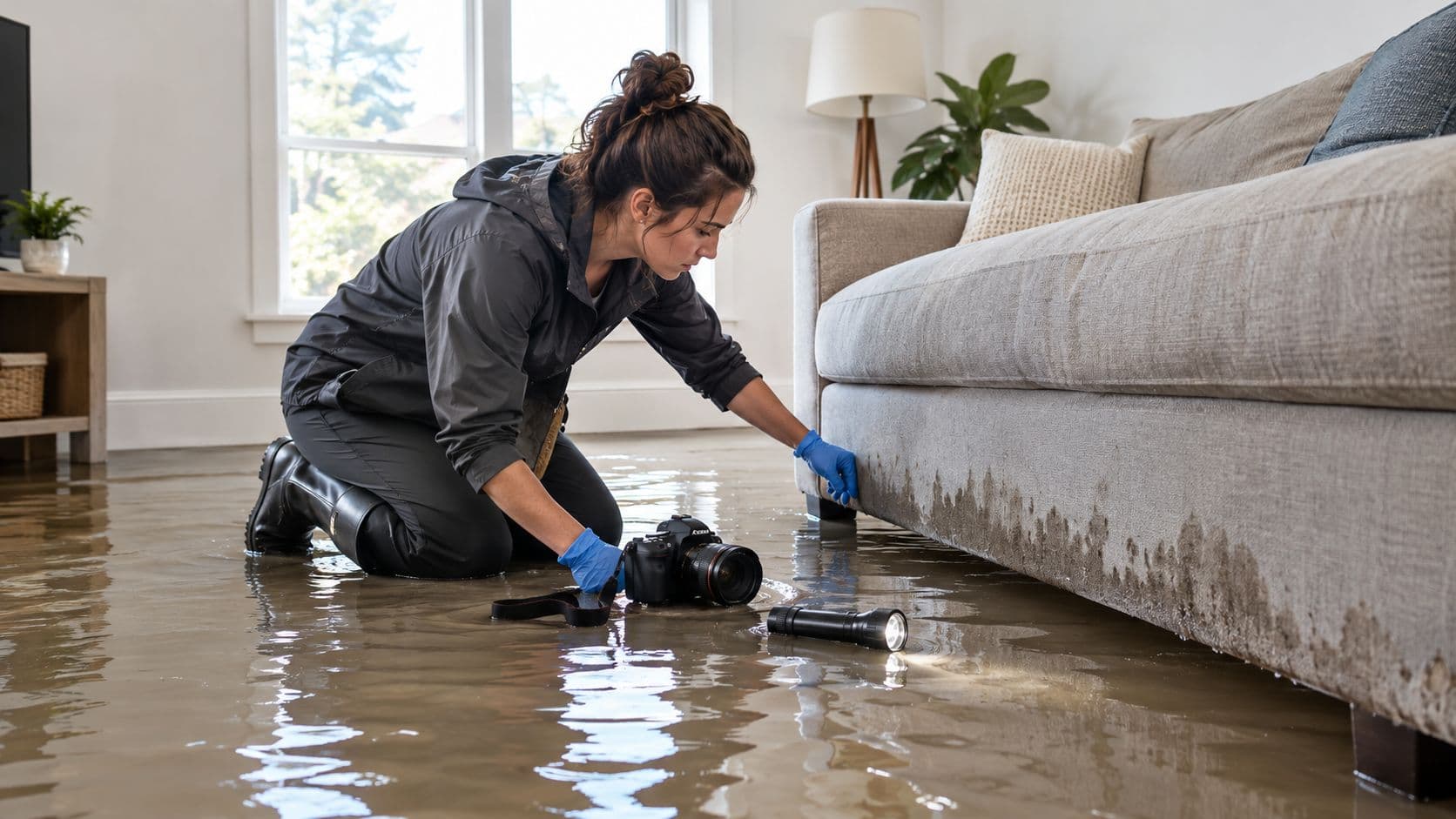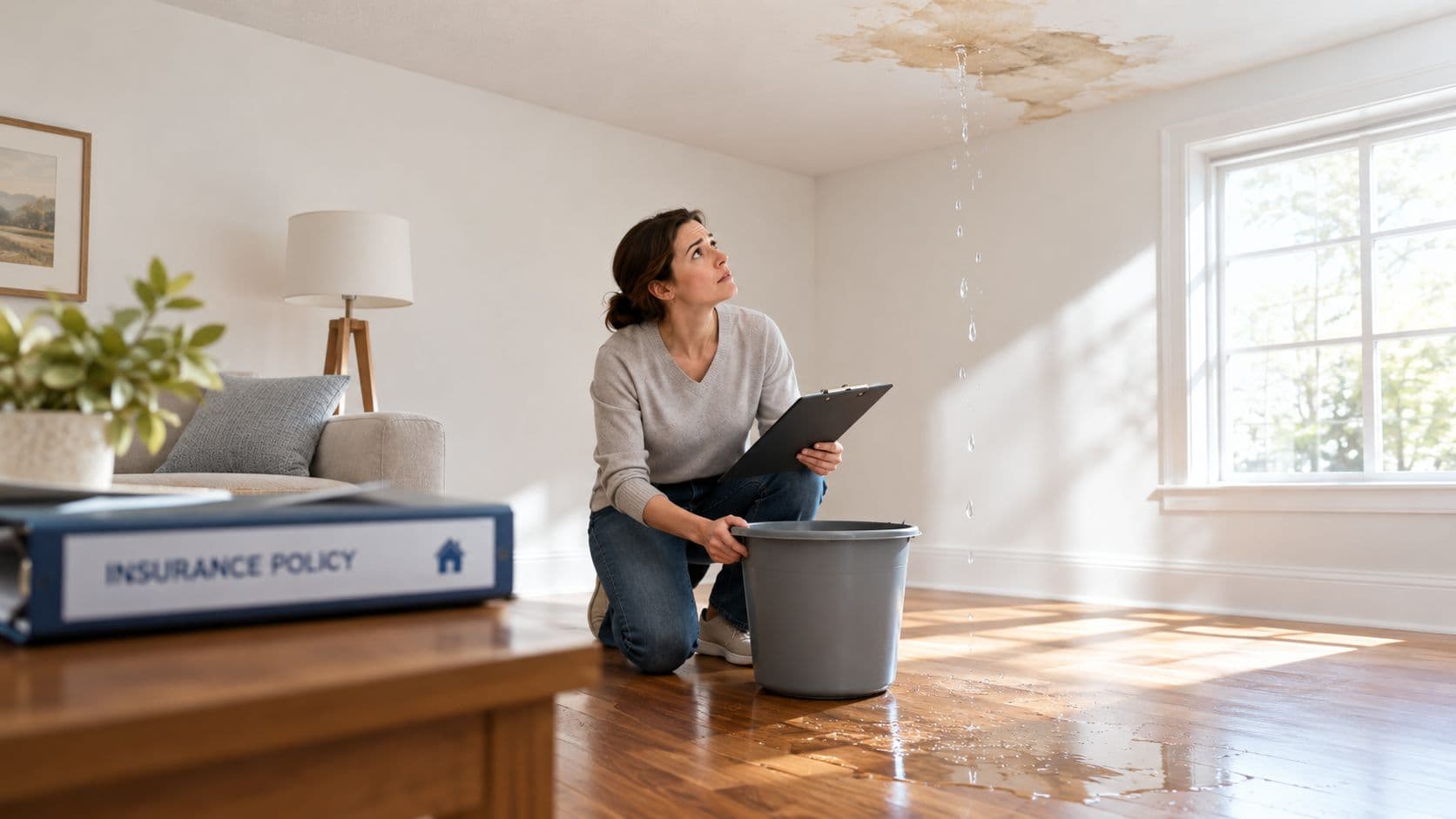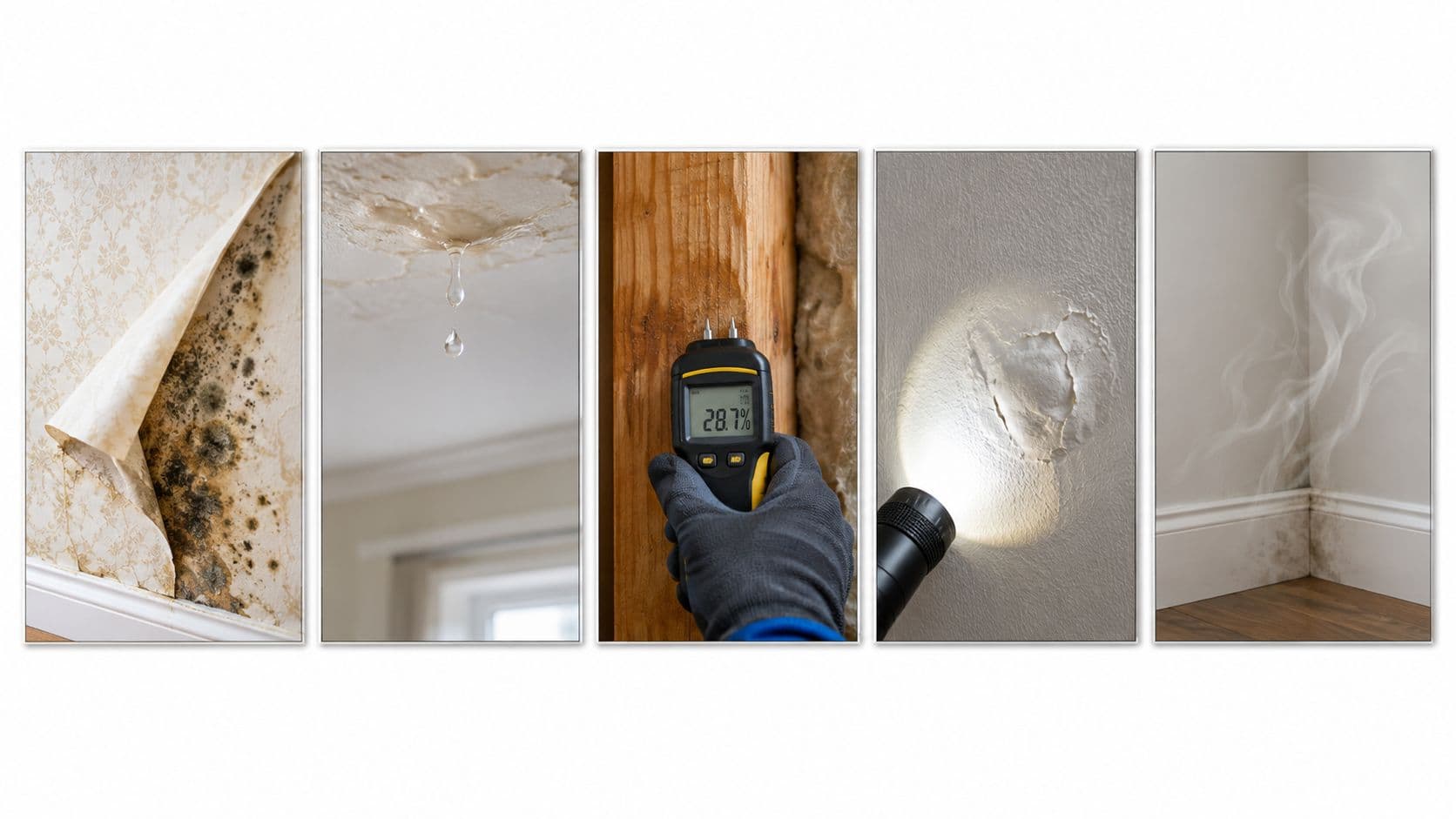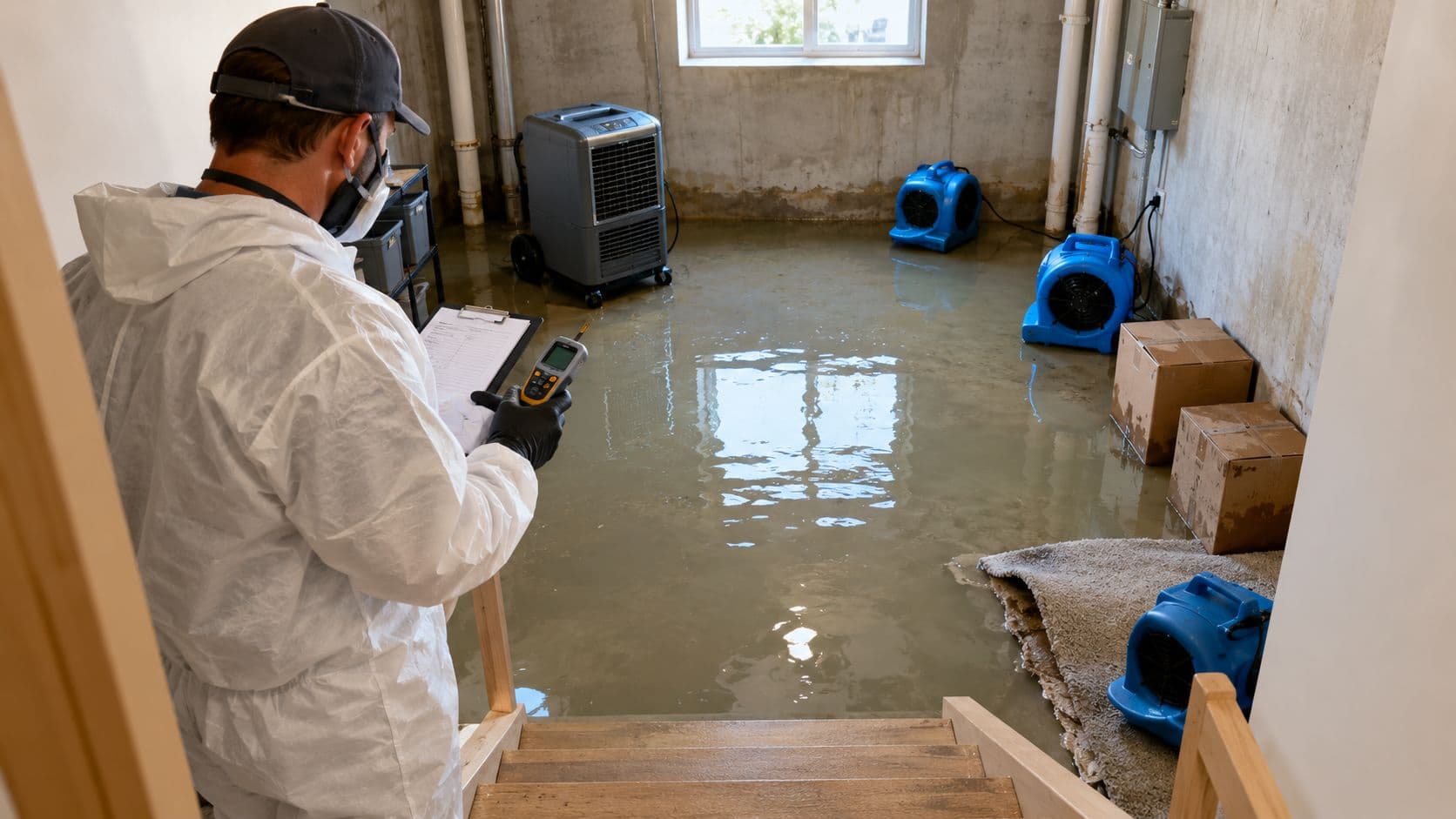
A basement flood rarely feels abstract. One minute the floor is damp, the next it's ankle-deep water, the lights are off, and somebody is asking whether the carpet can be saved, whether the breaker is safe, and whether the insurance company is going to treat this like a normal leak or something much bigger. The right basement flooding clean up service starts with one blunt question, what kind of water is this, because that answer changes the cleanup, the safety rules, and the claim path.
What Kind of Basement Flood You Actually Have
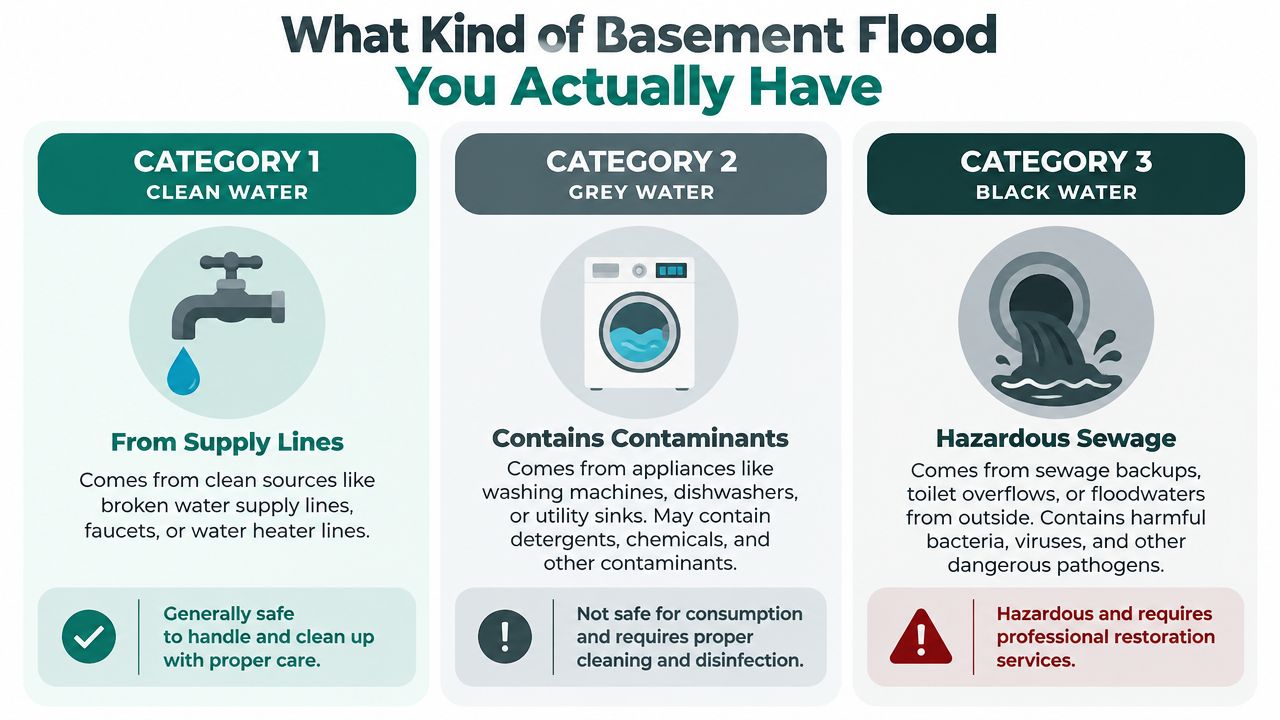
Start with the source, not the puddle
A basement flood is not one problem. It's three different problems wearing the same look. Category 1 is clean water from a supply line, a water heater, or another internal clean source. Category 2 is grey water, the kind that comes from appliances or contaminated overflow. Category 3 is the ugly one, sewage backup, groundwater intrusion, or floodwater that carries harmful contamination.
The water's appearance gives clues, but the source matters more than the color. A clear-looking flood can still be dirty if it came through a drain or from outside the home. A homeowner who assumes every basement flood is “just water” usually makes the most expensive mistake in the room.
Practical rule: classify the source before anyone starts pumping, scrubbing, or moving soaked materials.
Why the category changes everything
Category 1 can sometimes be handled as a controlled cleanup if the loss is small and caught early. Category 2 and Category 3 change the work completely, because contamination controls, disposal rules, and protective gear come into play. The International Institute of Cleaning and Restoration Certification says Category 3 water is grossly contaminated and can contain harmful agents, and it says Category 2 or Category 3 intrusions should be remediated before restorative drying begins IICRC position statement.
That distinction also affects insurance. A burst supply line is handled differently from sewer backup or outside floodwater, and a homeowner who calls the wrong loss type by habit can waste time with the wrong vendor and the wrong claim path. The better move is simple, identify the source first, then decide whether the space is even safe to enter.
Safety First Before Anyone Walks Into the Water
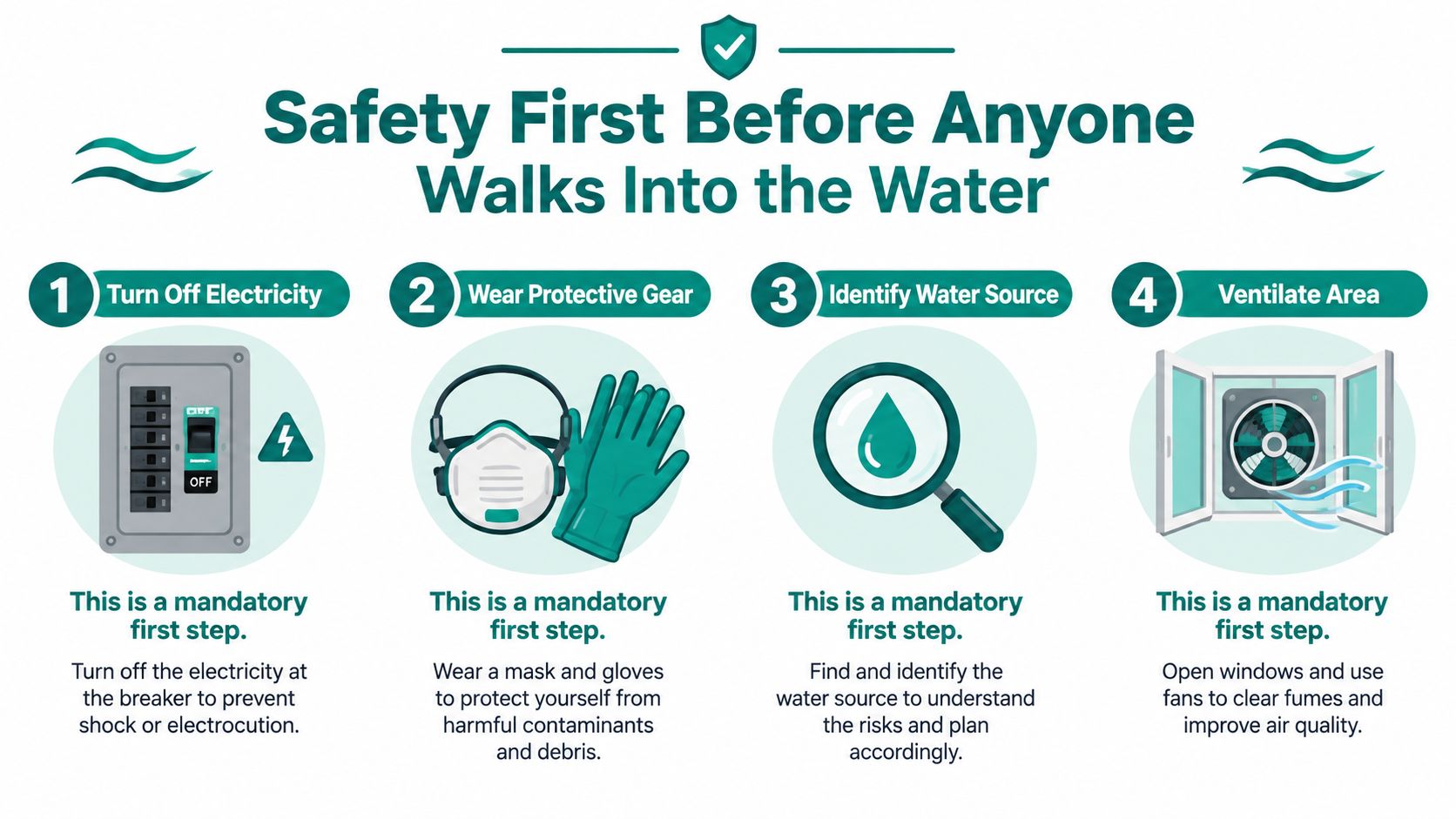
Shut off power the right way
A wet basement is not the place to improvise. Turn off electricity at the breaker, not by flipping a wall switch, and keep everyone out if water reached the panel until it has been inspected. If the panel, outlets, or wiring got wet, that's not a cosmetic issue, it's a shock hazard.
Gas and water shutoffs matter too. Confirm the gas line is intact and close the water main if the source is still active. If stairs, joists, or flooring look bowed, soft, or unstable, don't test them by walking farther into the room.
Keep people and gear out until the hazard is clear
Children, pets, and anyone without proper protective gear should stay out. So should a household vacuum, because that's not extraction equipment and it can make a bad situation worse. Never mix cleaners, either, because a basement that smells “clean” can still contain contamination, and mixing chemicals is a separate risk nobody needs while standing in floodwater.
Ventilation comes before drying equipment. Open what can be safely opened, and if the space is contaminated or poorly ventilated, a legitimate crew will set controls before they start moving air. That's not overcaution, that's the part that keeps a cleanup from becoming a health and liability problem.
If the first crew member through the door starts with a pump and ignores the room, that's the wrong crew.
Can You Clean It Yourself or Do You Need a Pro
Use the right threshold, not optimism
DIY only belongs in a narrow lane. A Category 1 loss from a clean supply source may be manageable if it is shallow, isolated, and caught fast. Once the water is dirty, spread through a finished area, or sitting long enough to soak materials, the job stops being simple cleanup and becomes controlled drying and demolition.
Source matters. So does depth and finish. A small amount of clean water on an unfinished slab is one thing. Several inches in a finished basement with carpet, drywall, and built-ins is another. Time changes the call too, because wet materials left in place too long raise the risk of microbial growth.
DIY versus professional basement flood cleanup
| Factor | DIY May Be Reasonable | Hire a Professional |
|---|---|---|
| Water source | Clean supply-line leak only | Grey water or Category 3 intrusion |
| Depth and spread | Thin, isolated, small area | Several inches, wide spread, or hidden wet zones |
| Finish level | Unfinished slab, few porous materials | Carpet, drywall, insulation, cabinets, built-ins |
| Time since loss | Caught fast and actively drying | More than 24 to 48 hours, or unknown delay |
| Documentation | Basic photos and receipts | Insurance-grade moisture readings and scope |
What DIY really means
DIY is not “dry it with fans and hope.” It means extracting standing water, removing wet materials that cannot be saved, running dehumidifiers for days, and documenting every step for insurance. It also means accepting that hidden moisture can remain in wall cavities and under flooring even when the surface looks fine.
A professional brings stronger extraction, moisture mapping, and a written drying plan, see what is included in professional water mitigation (https://www.postdamage.com/blog/what-is-water-mitigation/). That matters because the crew can confirm what stayed wet, what has to come out, and what can dry in place. It also shifts the liability if a wet cavity gets missed and the room gets put back together too early. For many homeowners, that risk is the reason to stop treating a wet basement like a weekend project.
What a Basement Flooding Clean Up Service Does On Site
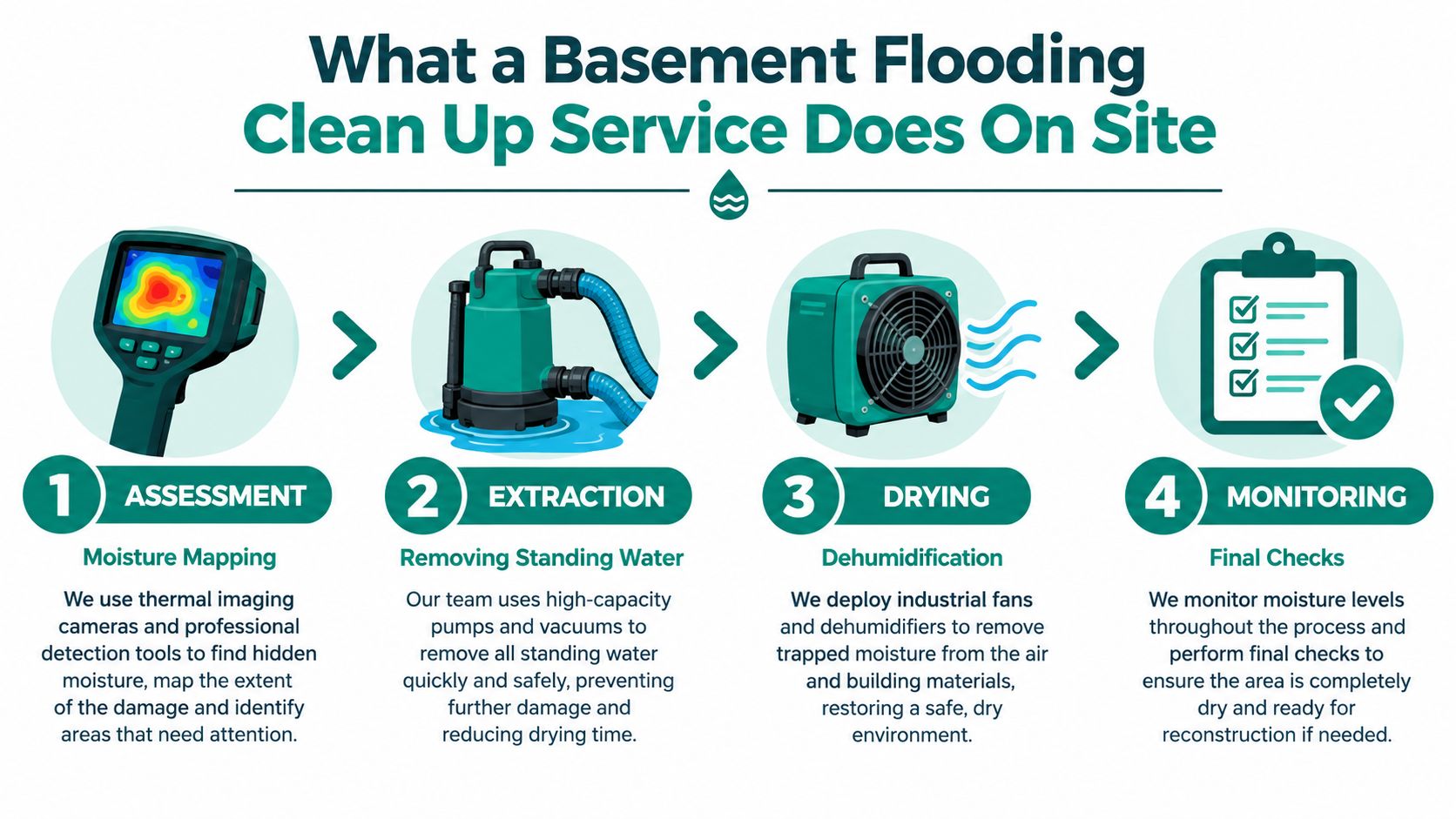
The first hour is assessment, not demolition
A real crew starts by finding the wet boundary. That means moisture mapping with thermal cameras and pin or pinless meters, taking photos for the claim file, and writing a scope before anything gets torn out. The point is simple, decide what is wet, what can be saved, and what has to come out. Learn how a full water damage restoration (https://www.postdamage.com/water-damage-restoration/) sequence is scoped from assessment through drying and closeout.
Once the layout is clear, extraction starts. Crews use truck-mounted or portable pumps, then weighted extraction wands to pull water out of carpet and pad-less surfaces. Standing water comes out first because drying air cannot do much while liquid water is still sitting in the room.
Drying is measured, not guessed
After extraction, the crew decides what gets removed. Carpet and pad may come up, baseboards may be drilled or removed, and drywall may be cut back to a measured line above the water mark if the assembly is compromised. FEMA's basement guidance says wet wallboard and fiber insulation should be cut away at least one foot above the high water line, and wet porous materials should be removed rather than left in place FEMA basement repair guidance.
Then the drying phase begins. Air movers, low-grain refrigerant or desiccant dehumidifiers, and daily psychrometric readings do the work. The crew keeps checking the structure until the numbers say the materials are dry enough to release, not until the room merely feels better.
Final steps before equipment leaves
The closeout phase is where sloppy jobs get exposed. Crews verify dry standards, document remaining readings, and handle deodorization or antimicrobial treatment when needed. That last part matters because the visible flood is only one piece of the damage, and putting the basement back together too early can trap wet materials behind the finish.
A service worth hiring does not rush past the monitoring phase. It proves the structure is dry, then leaves.
What It Typically Costs and Why Quotes Vary
Sanity-check the quote against the scope
Basement flood cleanup costs move with three things, extraction, drying, and demolition. Independent market reporting estimated the U.S. water damage restoration market at $8.5 billion in 2023 with a projection of $11.2 billion by 2028 and a 5.2% CAGR, and it said the average water-damage job takes 2 to 5 days with an average cost of about $3,500 market reporting. Those figures are broad, but they explain why a real cleanup is usually a multi-day service, not a quick visit.
FEMA-oriented cleanup also reflects the amount of tear-out involved. Water damage restoration accounted for 32.6% of North America disaster restoration services revenue in 2025, and another industry summary placed it at 35% of total property restoration revenue, which shows how central water intrusion is in this field North America market data.
Typical basement flood cleanup cost ranges
| Service | Typical Range | Main Cost Drivers |
|---|---|---|
| Emergency water extraction | About $1,500 to $5,000 | Water volume, depth, response hours |
| Structural drying | About $1,000 to $3,500 | Equipment run time, material type, moisture load |
| Demolition and disposal | About $500 to $2,000 | Carpet, pad, drywall, insulation, hauling |
| Category 3 contamination work | About $1,000 to $4,000 extra | PPE, antimicrobial treatment, stricter disposal |
The cost spikes come from finish level, square footage, and how long the water sat. Finished basements cost more because drywall, insulation, and flooring have to be cut out or replaced, while unfinished spaces often dry more cleanly. A quote that ignores water category or hidden moisture is not a useful quote.
What usually is not included is the rebuild, mold remediation if it becomes a separate scope, or contents restoration. A cheap cleanup number can be misleading if it leaves out the work that gets the basement back to normal.
Questions Worth Asking Before You Sign a Contract
Credentials, scope, and paperwork
Before signing, ask whether the technicians hold IICRC Water Restoration Technician certification and whether the firm is licensed and insured in your state. Then ask exactly what's included, extraction, drying, demolition, and antimicrobial treatment, and what's excluded, such as contents, rebuild, or a separate mold scope.
Documentation matters just as much as the work itself. A serious crew should be willing to provide daily moisture readings, photo logs, equipment logs, and a written completion record that can be handed to an insurer. If they can't explain how they'll document the job, they're asking for trust without accountability.
A homeowner should never have to guess what was dried, removed, or left behind.
Process and timing questions that expose weak operators
Ask who the project manager will be, what response window they can give for tonight or tomorrow, and whether pricing is binding or open-ended. That one question usually tells the truth fast, because honest firms can explain how they charge and what can change it. Also ask whether they use subcontractors, and what happens if drying takes longer than the initial equipment run.
A few more direct questions help:
- What equipment will be set the first day? The answer should name the extraction and drying gear, not just “fans.”
- How will hidden moisture be checked? Look for moisture meters, not hand-feel.
- What happens if contaminated materials are found? The crew should explain how the scope changes.
- Who signs off before the equipment comes out? The answer should be a named person, not “the crew.”
A company that answers clearly is easier to manage. One that dodges these questions usually creates surprise costs later.
Insurance Documentation and Your Next Practical Step
Photograph and log the right evidence early
The claim file gets stronger when the homeowner documents from minute one. That means pre-flood condition photos if they exist, waterline measurements on walls, serial numbers for failed equipment, receipts for emergency mitigation, and the contractor's moisture readings and psychrometric chart. Those records help separate the actual loss from guesswork after the room is dry.
FEMA's flood-damage guidance also makes clear that some materials are meant to be removed, not saved, so the photos should show what was there before tear-out and what remained afterward FEMA flood-damage guidance. Keep the carrier paperwork separate from your own file, but keep both complete. The insurance company wants a clean record, and the homeowner wants proof of what happened.
Use one intake point, then keep control of the decision
A service like PostDamage can work as a single intake point when the basement flood needs professional help. The homeowner describes the water source and the scope, then the request gets routed to one vetted restoration professional instead of a pile of cold calls. That still leaves the homeowner in charge of choosing the company, reviewing the contract, and keeping the documentation trail.
The next move is simple. Gather the photos, note the source, and tell the service exactly what kind of flood happened, what materials got wet, and how long the water sat. That gives the right crew a chance to respond with the right equipment, which is how basement losses stay smaller instead of getting worse.
If a basement has flooded, PostDamage can help turn a confusing first hour into a clear next step. Tell the platform what kind of water intrusion happened, and it can connect the homeowner with a properly equipped restoration professional through PostDamage, without turning the problem into five separate sales calls.