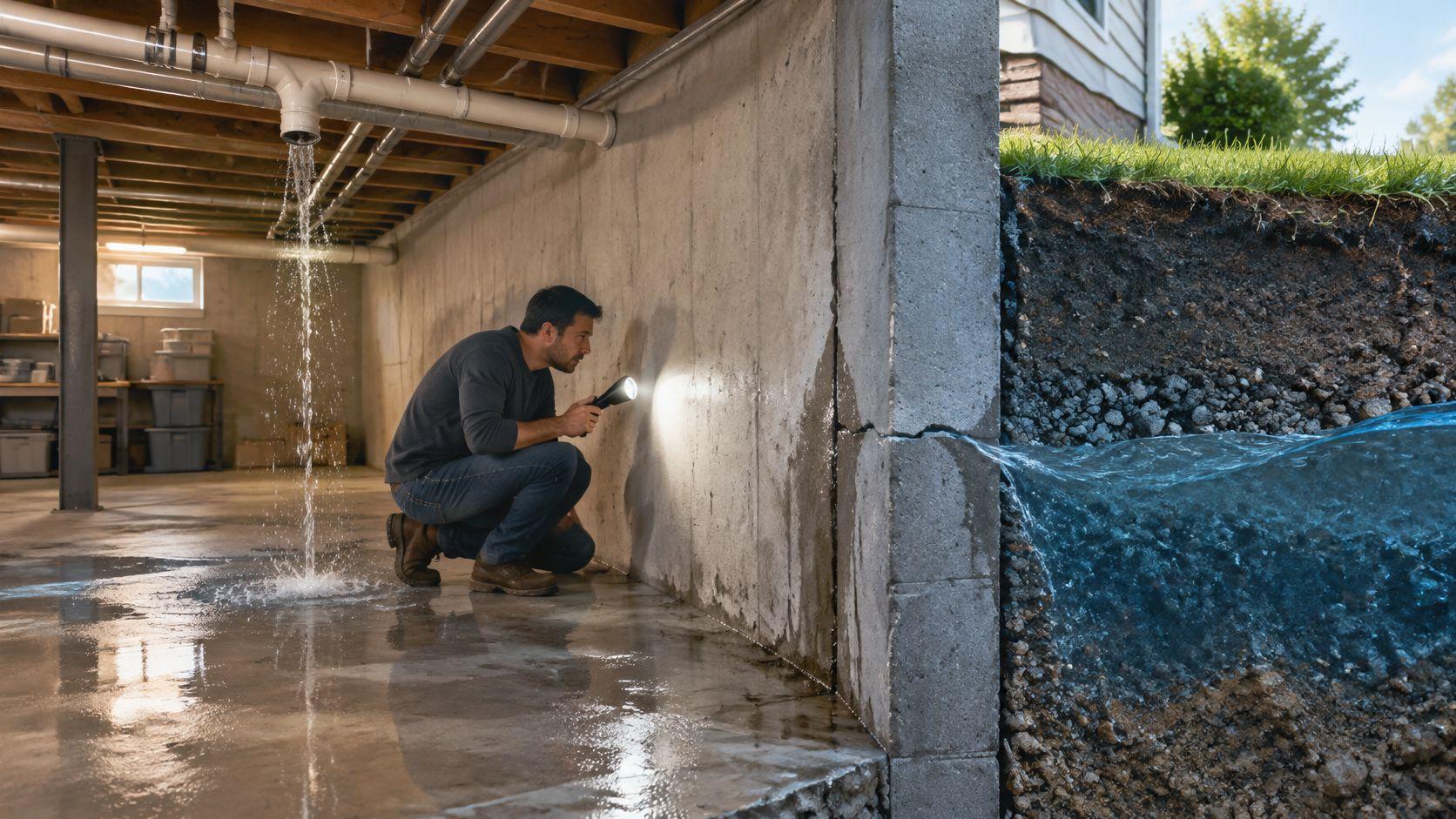
Homeowners insurance rarely covers mold automatically. When coverage applies, a mold or fungus sublimit and the deductible can restrict payment, and the policy may require proof that a sudden, covered event caused the moisture. A homeowner who finds mold after a burst pipe may assume the water coverage settles the whole question. The policy may assess the resulting mold separately.
Hold onto this: A covered water event opens the door, but the sublimit sets the amount paid.
The key facts are what caused the moisture, how quickly it was addressed, when the loss was reported, and what the policy says about mold. Those details help clarify which parts of the damage may be considered under the policy.
When Homeowners Insurance Covers Mold Damage
Standard homeowners insurance generally does not provide broad, automatic coverage for mold damage. The National Association of Insurance Commissioners groups mold with the perils policies often exclude, treating it as a commonly limited risk rather than a universally covered loss. What moves the needle is why the mold developed, not how much of it is visible.
So the useful question isn't whether mold is covered in the abstract. It's which situation the loss fits, and what limits attach to that situation.
| Situation | Usual coverage result | What still limits payment |
|---|---|---|
| Burst pipe or sudden accidental discharge | Limited mold remediation may be considered if that water loss is covered | Deductible, mold or fungus sublimit, exclusions, and prompt notice |
| Gradual seepage or an unresolved leak | Commonly excluded as preventable or outside covered perils | Cause and timing rarely overcome a maintenance exclusion |
| Long-term humidity or deferred maintenance | Usually excluded | No sudden covered peril for the mold to attach to |
| Flood | A standard homeowners policy typically excludes the flood itself | Separate flood policy rules, and preventable mold may still be denied |
| Sewer, drain, or sump-pump backup | Not automatic and often needs its own endorsement | Endorsement wording and any mold cap |
| Fungus or mold endorsement | May add capped cleanup when the form is on the policy | Availability, covered causes, sublimit, and remediation conditions |
Read the right-hand column as carefully as the middle one. Even on a good day, four brakes apply to every dollar: the deductible comes off the top, the mold sublimit caps the remediation line, exclusions can knock out specific causes, and prompt notice requirements can bar a claim that was otherwise payable. A homeowner who reports a leak three months after noticing a stain has handed the carrier its easiest argument.
Where to Look First
The declarations page gives you the policy form number and the endorsement list. From there, find the fungus or mold exclusion and read the language that follows it, because that's where the sublimit usually lives. Then check whether an endorsement changes either one.
Some insurers do sell limited fungus or mold protection as an endorsement, though the availability, the sublimit amount, the covered causes, and the conditions attached to remediation all vary by policy and by state. What one neighbor's policy pays has no bearing on yours unless the form numbers match.
Until that reading is done, any assumption that testing, demolition, drying, or reconstruction will be reimbursed is a guess. The rest of the analysis flows from cause and timing, which is where the next problem sits.
How the Cause of the Water Decides the Claim
Mold after a leak is closer to rust after a leak than to a tree through the roof. Rust forms when moisture remains on metal; mold can develop when building materials stay damp. For insurance purposes, the policy's treatment of the water event often shapes whether related mold damage may be covered.
Three Questions That Decide the Claim
- Was there a sudden and accidental discharge the policy names as covered? A supply line that fails suddenly may qualify. A joint that has been leaking for weeks may be treated differently.
- Did the mold result from that event, or from a condition the homeowner was expected to manage? Humidity, an unrepaired drip, and deferred maintenance can complicate a claim.
- Was the loss reported promptly, with a provable discovery date? Dated photographs and repair records can help establish when the damage was found.
Consider a washing-machine hose that bursts while the owner is home. The owner shuts off the water, documents the damage, and has a plumber confirm the line failed suddenly. That differs from a closet with a faint damp smell that has lingered for months as moisture slowly wicks into the drywall. The visible damage may look similar, but the water source and timeline are different.
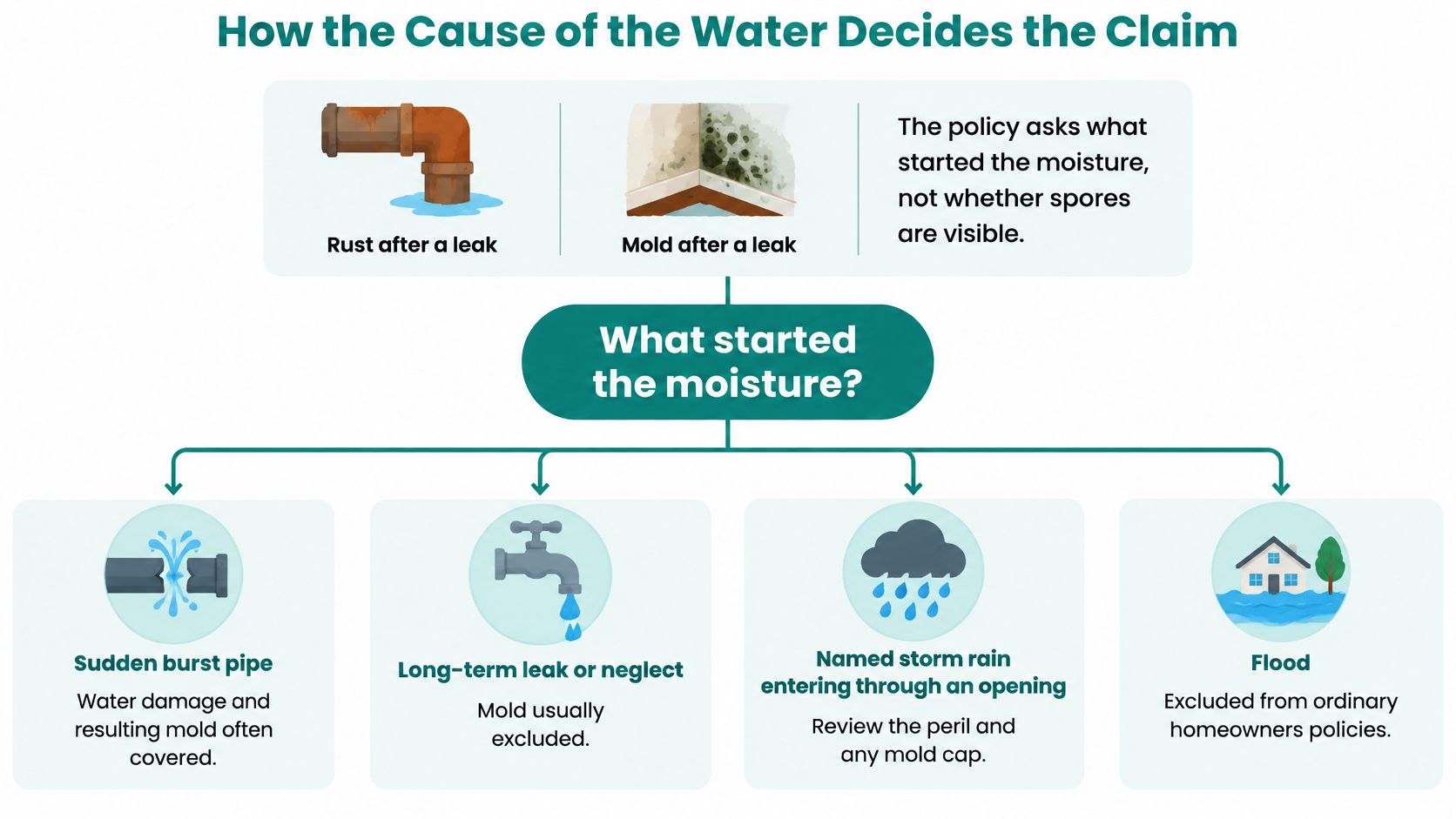
Photographs and moisture readings taken before demolition can help document what was wet and where. If earlier records show the area was dry, and later readings show moisture, that timeline may help clarify whether damage followed a particular event.
The claim turns on where the water came from, and visible growth tells you little about that. State law and the policy form can affect how the loss is handled, so the contract's wording matters. For more on how the water event itself is assessed, read this guide to a water damage insurance claim.
Even when an insurer accepts the water damage, mold-related payment may be limited under separate policy terms.
Mold Sublimits and the Payments Still Possible
A carrier that accepts the burst pipe and pays almost nothing toward the remediation isn't contradicting itself. It's applying a sublimit, and the sublimit is the single most overlooked number in the whole policy.
Consumer guidance tends to stop at the exclusion. The NAIC's consumer checklist is more useful than most, because it prompts homeowners to ask separately whether the policy covers sewer, drain, or sump-pump backup and whether mold is excluded. Two questions, not one. That separation is the whole game, and it holds even when mold arises from a peril the policy clearly covers, since payment can still be restricted by a fungus or mold sublimit, endorsement wording, a deductible, or a requirement that the underlying water loss itself be covered.
The Inventory, Not the Argument
Instead of arguing about the mold invoice, inventory each coverage piece and match it to a form number.
| Coverage piece | Question to answer | Why it changes payment |
|---|---|---|
| Source of the water loss | Is the burst, discharge, or opening a covered peril | Mold rarely stands alone if the water event is excluded |
| Mold or fungus sublimit | Is cleanup capped, and what does the cap include | Remediation can be limited even after a covered leak is accepted |
| Water-backup or hidden-water endorsement | Is backup or hidden discharge added, and does it mention mold | These are separate forms, not automatic mold coverage |
| Dwelling versus personal property | Are building materials and contents handled on different terms | Belongings may not follow the same mold limit as the structure |
| Additional living expenses | Does uninhabitability trigger ALE, and is mold carved out | Hotel or rental costs can be capped or excluded on their own |
| Ordinance or law | Does code require work beyond replacing what was there | Extra code work is not the same as mold remediation |
| Notice and proof of loss | What deadline and form does the policy require | A late or incomplete proof can limit an otherwise covered loss |
The personal-property line catches people off guard. A policy can treat the structure and the contents under different terms, so a sofa, mattress, or stored clothing set may not follow the same mold limit as the drywall, and additional living expenses can be capped or carved out just as separately.
The contrarian point worth arguing: a mold exclusion doesn't automatically erase every related payment. Drying, tear-out to reach a failed pipe, reconstruction of the water-damaged area, and resulting property damage can be analyzed apart from mold remediation, depending on policy language and state law.
That split is where large residential, rental, HOA, and commercial losses get underpaid even after the carrier agrees the leak was covered. The remediation line is small and capped. The reconstruction line is larger and evaluated under the water claim. Treat them as one number and the settlement looks reasonable. Separate them and the gap appears.
Write each piece down from the declarations page, with the form number next to it, before anyone argues about the mold invoice.
Claim Examples for Covered and Excluded Mold
Mold in two homes can look alike and lead to different insurance decisions. The policy terms, the source of the moisture, and what happened after the damage was discovered all matter.
The condo riser leak. A shared water pipe inside a condominium wall fails and damages a unit's drywall, flooring, and personal property. The unit owner and association may each have a policy that applies to part of the loss. The covered water damage, mold remediation, and any tear-out needed to reach the pipe may be evaluated under different terms, including separate deductibles and mold limits. The owner should identify which policy addresses each part of the damage rather than assuming either policy covers the entire rebuild.
The roof leak reported late. Rain enters through a damaged roof, but the owner reports the stain only after mold appears on the ceiling. The claim may turn on whether the roof damage was covered, what the policy says about resulting mold, and whether the delay affected the damage. A covered roof loss does not automatically mean every mold-related expense is covered.
The rental ceiling stain. A tenant reports a brown stain, and the landlord arranges an inspection soon afterward. If the inspection finds mold, the claim may still involve separate questions about the cause of the leak, the policy's mold terms, and the costs of repairing the ceiling. Prompt attention can help establish what happened and limit further damage, but it does not determine coverage by itself.
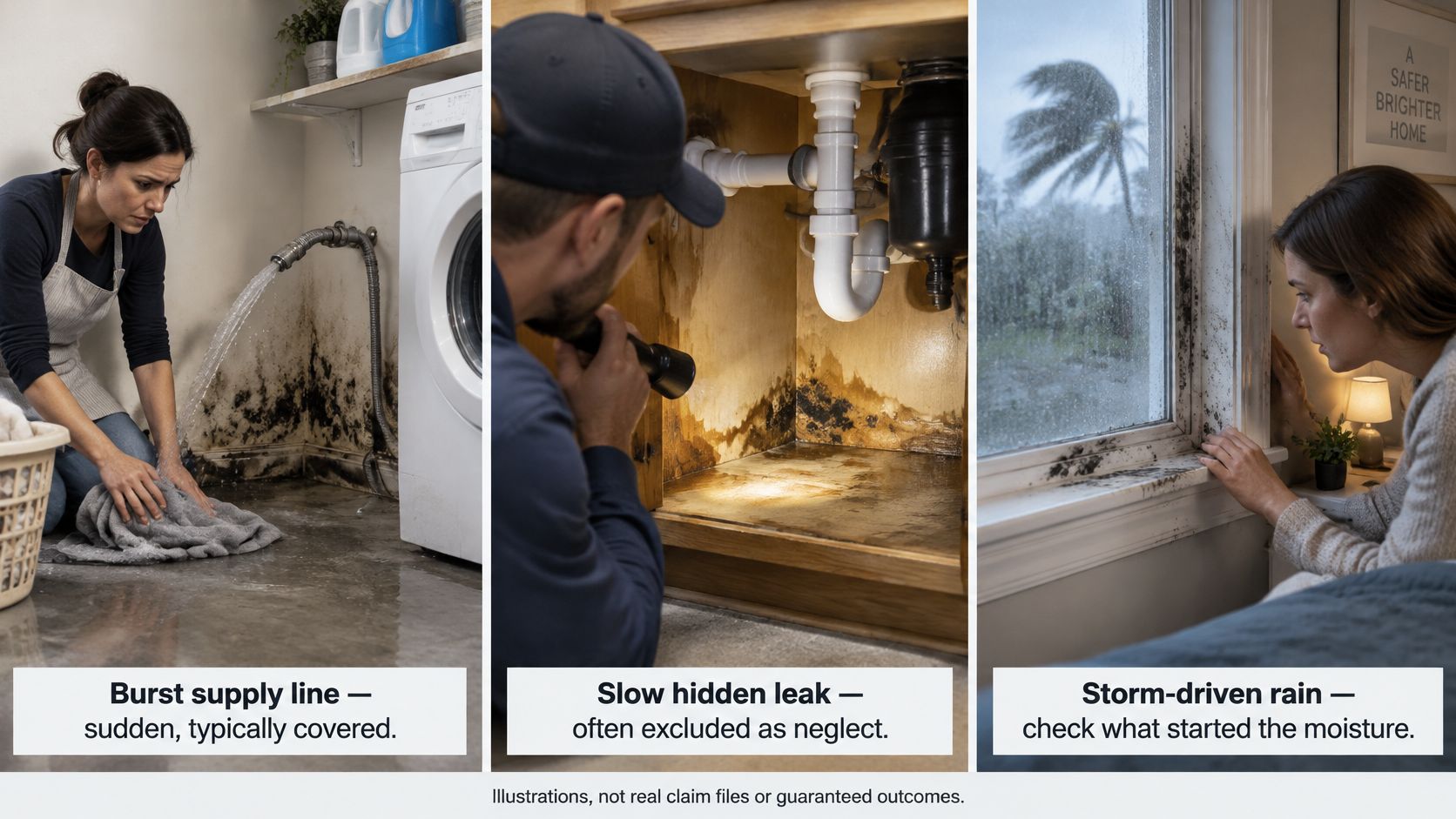
A mold exclusion or sublimit does not necessarily answer every part of a claim. The covered water event, tear-out, repairs to damaged property, contents, and additional living expenses may each be assessed under their own policy terms. Separate the costs and compare each one with the relevant coverage language.
Practical rule: Match each expense to its cause and policy provision. The mold, the water damage, and the work needed to access or repair the damaged area may not receive the same coverage decision.
What to Document in the First 48 Hours
Mold is first a moisture-timing problem, and the coverage question follows from it. CDC guidance on mold and NIOSH research identify indoor mold growth as a sign of moisture. NIOSH recommends drying wet materials within roughly 24 to 48 hours or removing them. The longer water remains, the more opportunity it has to soak into building materials.
Act promptly, but keep a record of what you do. Those records can help show how the water entered, what was damaged, and how you tried to limit further harm.
- Stop the water and notify the carrier. Shut off the supply if it is safe, then report the loss promptly. Keep a note of when you discovered the damage and when you contacted the insurer.
- Photograph before anything is removed. Take wide shots of the room, close-ups of the failed part, and pictures of standing water before extraction. If wet drywall must be removed, photograph it first.
- Keep the paper trail. Save moisture readings, the plumber's invoice, restoration drying logs, and a short timeline of when the water was noticed and stopped. NIOSH recommends addressing the source of moisture; records of repairs can show what was done.
- Dry the area rather than covering it. Document extraction and dehumidification, and keep records of the affected area and work performed. Painting or sealing damp or mold-affected materials can hide the condition without resolving its cause.
- Get written approval before non-emergency demolition. Work needed to protect the property may need to happen quickly. For larger repairs that are not urgent, ask the carrier what documentation or approval it requires before work begins.
- Use caution with fans once mold is present. CDC guidance advises against using fans to dry items that are moldy or wet for more than 48 hours. List discarded belongings, photograph them when possible, and keep receipts for related expenses.
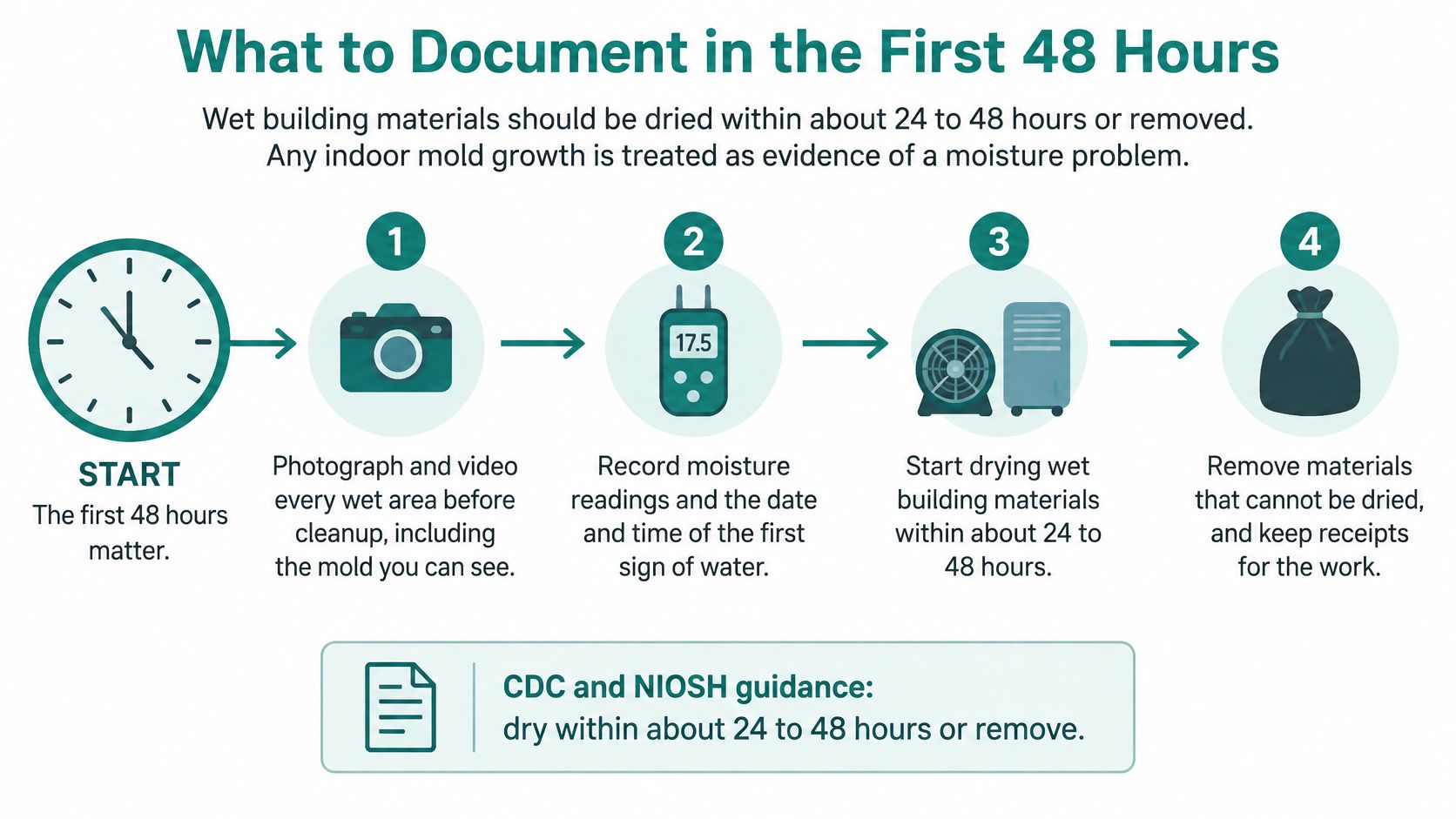
What to organize: photographs of wet materials, moisture readings, invoices for work already done, and the date you discovered the damage. Keep them together with your timeline and receipts.
Clear records help distinguish emergency work to limit damage from later repair decisions, and preserve details that may be harder to establish after materials are removed. For help understanding the steps involved, see this guide to filing a water damage insurance claim.
Flood Mold and the Second Coverage Gap
Flood mold can involve two separate coverage questions. Ordinary homeowners insurance typically excludes flood, and FEMA states that most homeowner and renter policies do not cover flood damage. A flood policy may address the water damage, while mold coverage depends on the policy's terms and what happened afterward.
According to FEMA's guidance on mold after a disaster, National Flood Insurance Program policies will not cover mold when the policyholder fails to act to prevent its growth and spread. The flood loss and the mold loss can therefore be assessed separately: coverage for the flood does not guarantee payment for resulting mold.
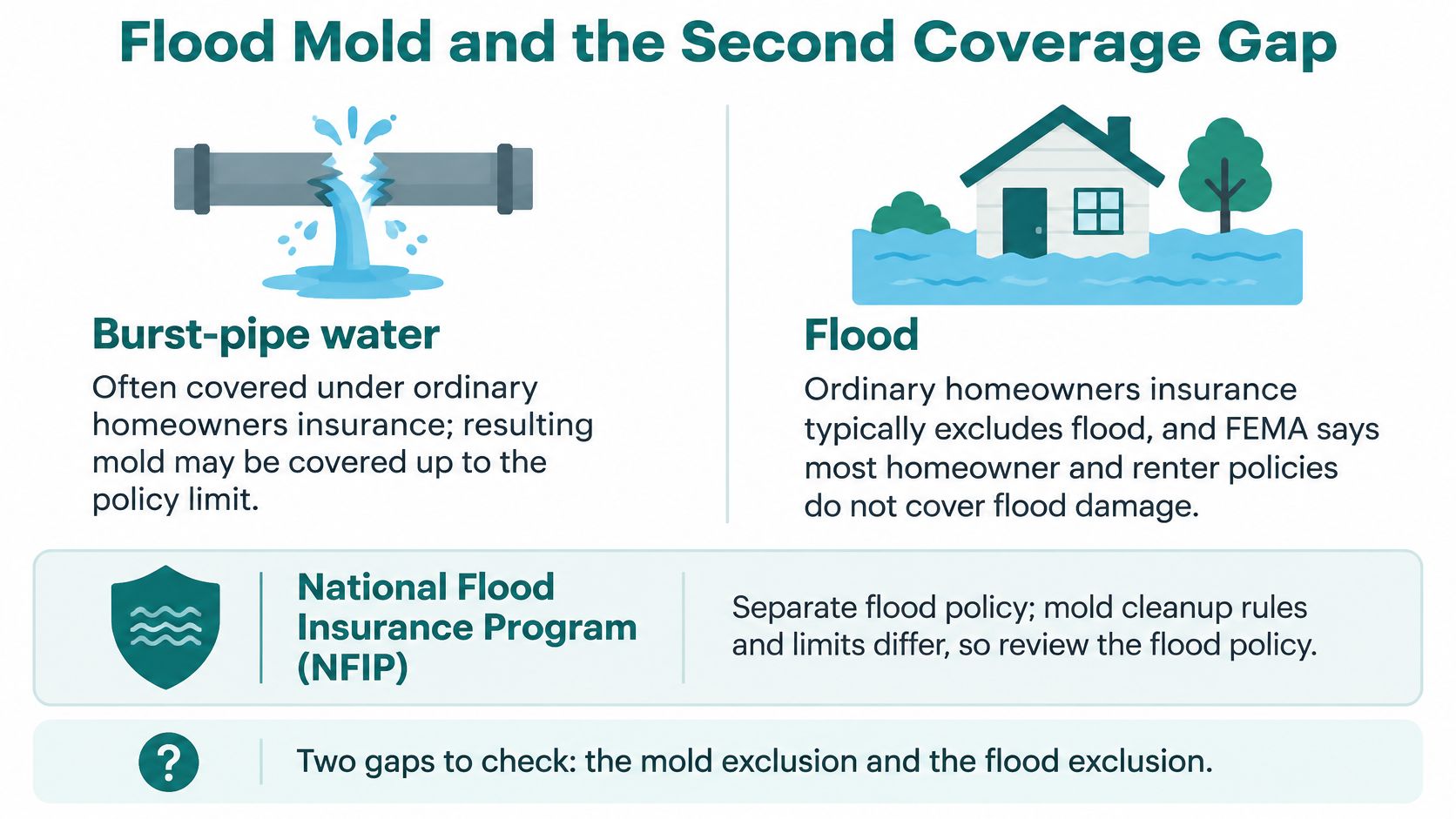
A burst pipe and rising surface water are different causes of damage. A pipe failure is a plumbing event inside the home, while a flood involves surface water rising or overflowing. Different policies and rules may apply, so a mold endorsement on a homeowners policy does not settle the flood claim.
What Federal Help Does and Doesn't Do
Federal disaster assistance can provide limited help, subject to eligibility and disaster-specific decisions. FEMA may provide Home Repair funds for cleanup, removal, or remediation of disaster-caused mold when it verifies that the homeowner cannot safely live in the home because of the mold. For minor damage in a habitable home, homeowners and renters may instead qualify for Clean and Sanitize Assistance.
After a flood, report the loss, photograph affected materials before removal, keep receipts, follow the insurer's or FEMA's instructions, and preserve evidence for inspection. A mold endorsement, flood coverage, and disaster assistance address different parts of the loss. The applicable policy wording, cause of damage, exclusions, deadlines, and law determine what may be covered.
Decide Whether to Dispute or Get Claim Help
By this point the file falls into one of two paths, and the right move depends on which one you're on.
Path One, the Carrier Accepted the Water
If the event was sudden, documented within a couple of days, and the carrier paid a small mold figure alongside a real water settlement, the claim probably wasn't denied. Compare three numbers before calling it one. Does the mold payment match the sublimit on the declarations page? What does the deductible remove, and was it applied once or twice? And was drying or tear-out left unpaid because it was bundled into the remediation line instead of the water line?
Disputing a sublimit that was applied correctly rarely pays. Disputing an unpaid tear-out line that belongs to the accepted water claim sometimes does, and it starts with a written request for the estimate breakdown.
Path Two, the Carrier Declined
If the letter cites gradual damage, maintenance, flood, or late notice, don't argue the conclusion. Match the stated reason to the exact policy page and exclusion, then ask the carrier, in writing, to explain how it applied that language to the facts. Written reasoning either holds up or exposes a gap.
Where a professional fits: a licensed public adjuster, where state law allows, can document damage, prepare an estimate, and negotiate on the policyholder's side. It suits larger or genuinely disputed losses better than small claims or clearly excluded ones.
Hiring a public adjuster is optional and may not be appropriate for every claim. PostDamage offers an insurance claim help service for property owners whose claim was denied, delayed, or paid less than expected, and it can connect homeowners, landlords, and commercial owners with a licensed professional. PostDamage is not an insurance company, public adjusting firm, law firm, or restoration contractor, and doesn't directly adjust, negotiate, or settle claims. Coverage still turns on your policy and applicable law, so the referral is a next step, not a guarantee.
Mold claims get denied, delayed, and underpaid for reasons that are specific and fixable, and the difference between a capped check and a properly funded one is usually documentation and the right professional eyes on the file. If a mold-related loss was turned down, stalled, or settled below what remediation costs, PostDamage can review the situation and connect you with a licensed professional who handles claims like yours. Start with the damage category that matches your loss, whether that's visible mold, standing water, or storm damage, and get a clear read on where the claim stands.