The bathroom looked fine until the door opened and water was already moving. It might be creeping across tile, pooling at the tub, or darkening the baseboard before anyone has time to think. In that moment, the job is simple, stop the source, keep people safe, and decide fast whether this is a cleanup or a restoration claim.
A flooded bathroom turns on two clocks. The first hour decides whether the water keeps spreading into drywall, subfloor, and rooms below, and the first 48 hours decide whether wet materials can be dried or start becoming a replacement job. Insurance adjusters care a lot about what happened before the contractor arrived, so the photos, shutoff time, and first actions matter more than most homeowners realize.
The mistake many people make is treating every bathroom flood the same. A clean supply-line leak is one problem. A toilet overflow or drain backup is another. The right next move depends on that difference, and the wrong drying method can make contamination worse instead of better.
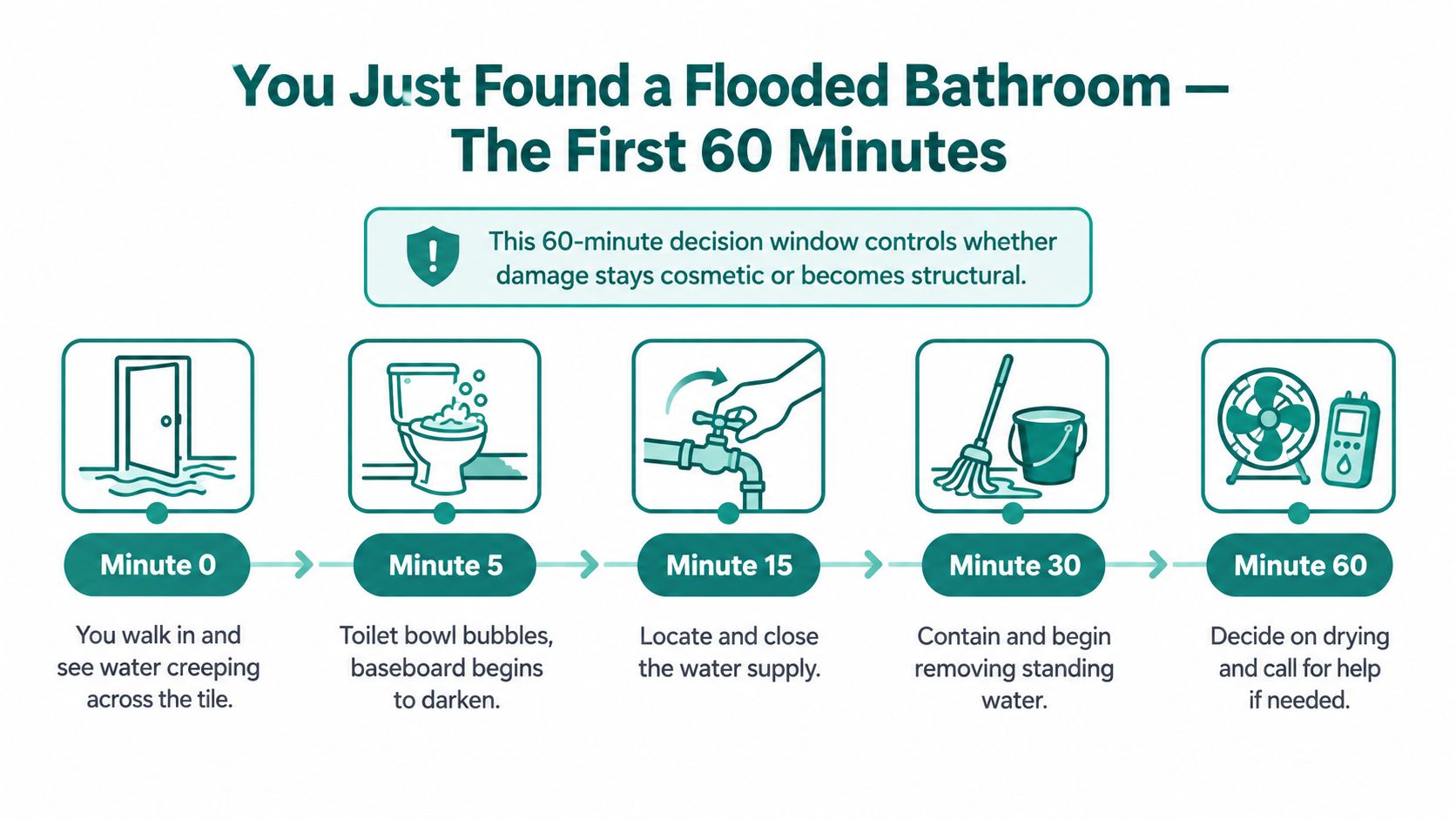
You Just Found a Flooded Bathroom
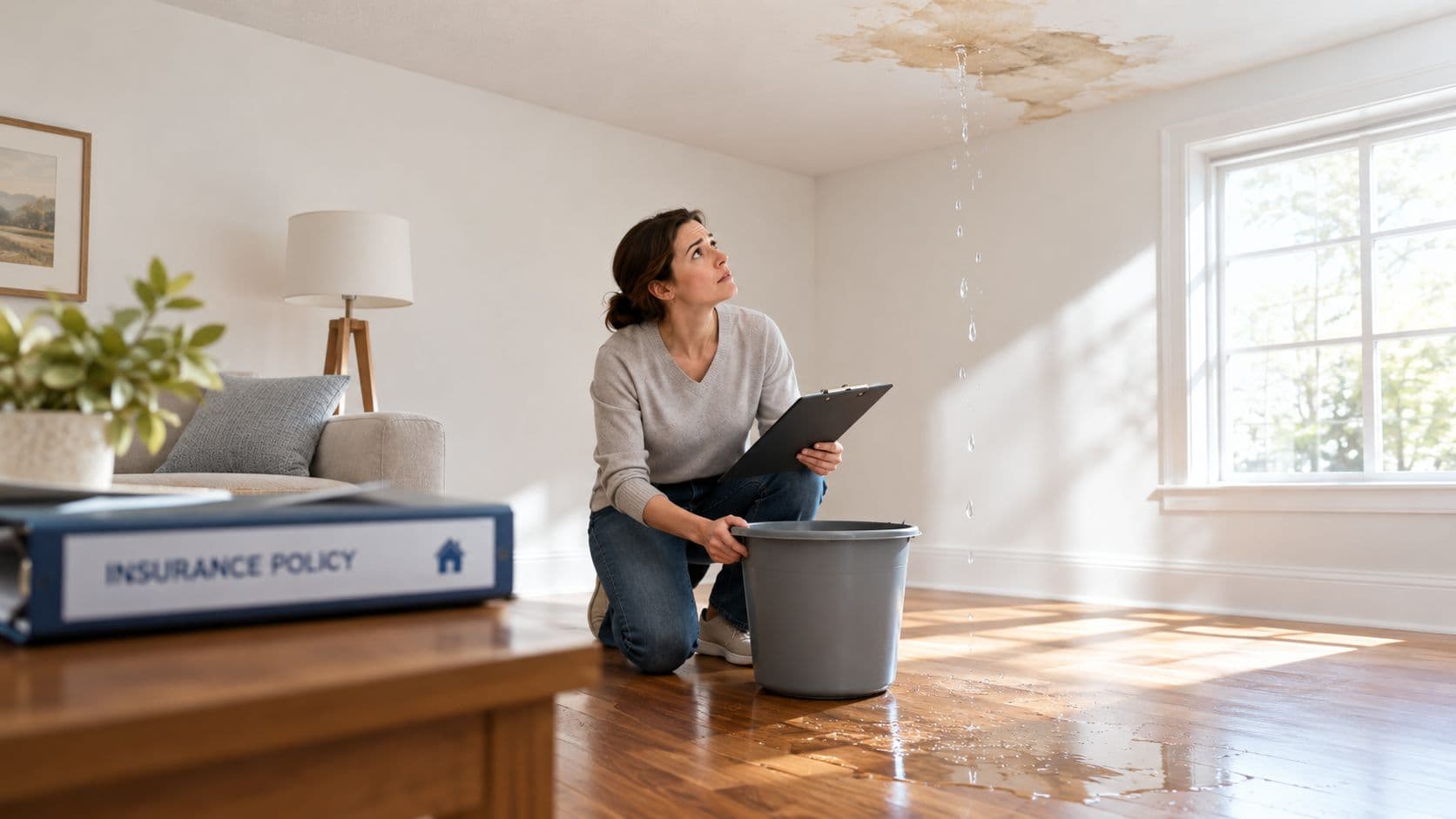
A homeowner opens the door and gets the worst kind of surprise, water across the floor, a toilet that won't stop moving, or a vanity base that's already turning dark at the bottom. The instinct is to start mopping, but the better move is to think in terms of damage control, because the first 60 minutes decide whether the water stays in the room or starts soaking structure. The Insurance Information Institute says about 1 in 60 insured homes files a water damage or freezing claim each year, the average claim severity was $13,954 over 2018 to 2022, and water damage and freezing accounted for 27.6% of all homeowners insurance losses in 2022. For a bathroom flood, that means a small-looking spill can become an insurance-level loss if it reaches flooring, drywall, baseboards, cabinets, or the room below. Insurance data on water damage claims
Treat the first hour as the control window
The next move is not to debate the cause. It's to stop additional water and document the room exactly as found. If the flood reaches below a door sweep, into a hallway, or behind cabinets, the visible area is no longer the whole problem.
Practical rule: if the water is still moving, the priority is source control, not cleanup speed.
That's why the first hour matters more than the first scrub. A damp towel can wait. A closed valve, a switched-off breaker, and a clear record of the room cannot. If the bathroom is part of a larger water event, the broader mitigation process should follow the same logic used in water clean up and mitigation, source first, then extraction, then drying.
The article below treats the timeline in two frames on purpose. The first hour is about stopping the water and staying safe. The first 48 hours are about extraction, drying, and deciding whether the materials still have a chance. The clearest escalation rule comes later, and it draws a hard line between a fresh clean-water event and a situation where fans can make contamination worse.
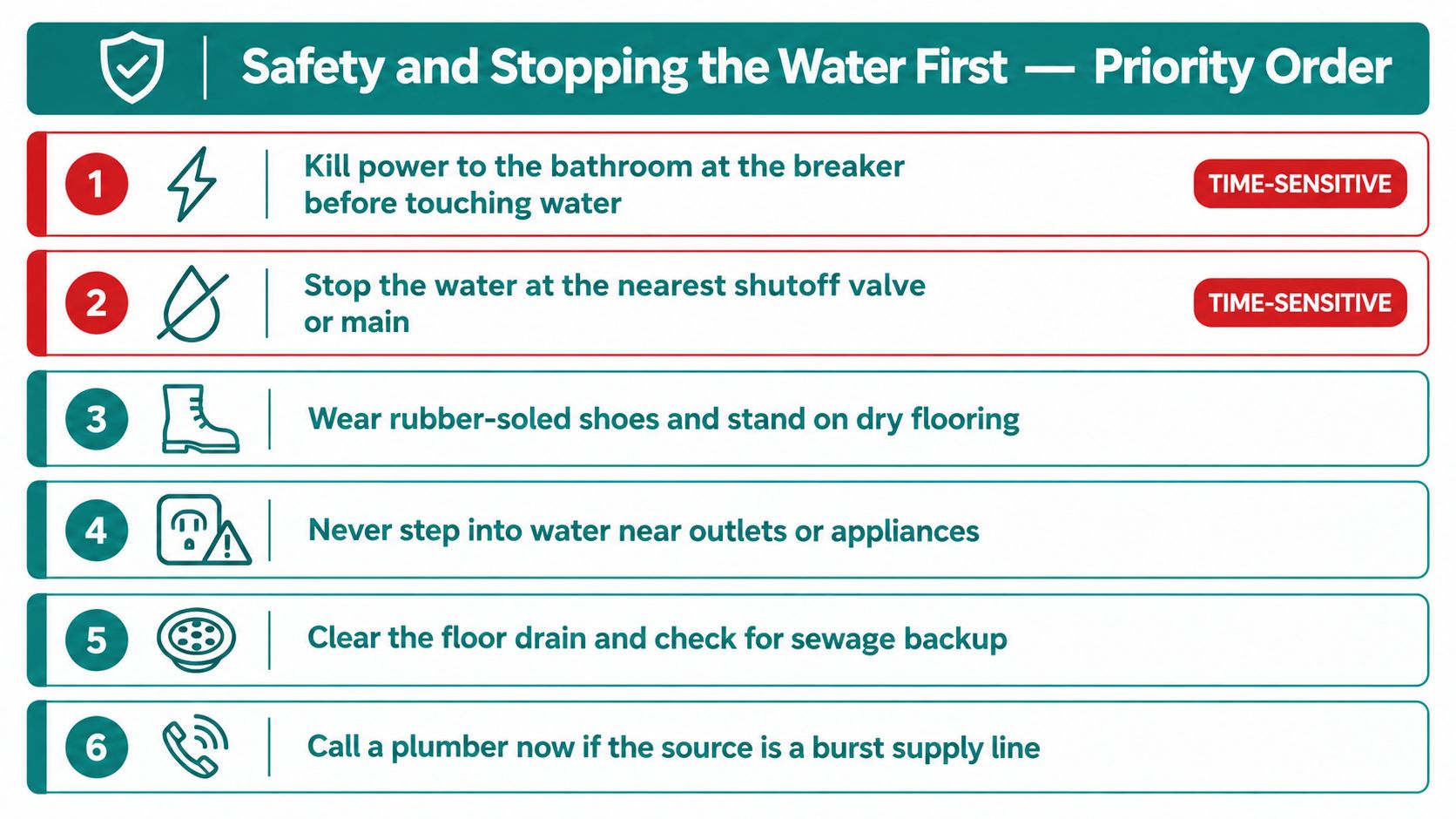
Safety and Stopping the Water First
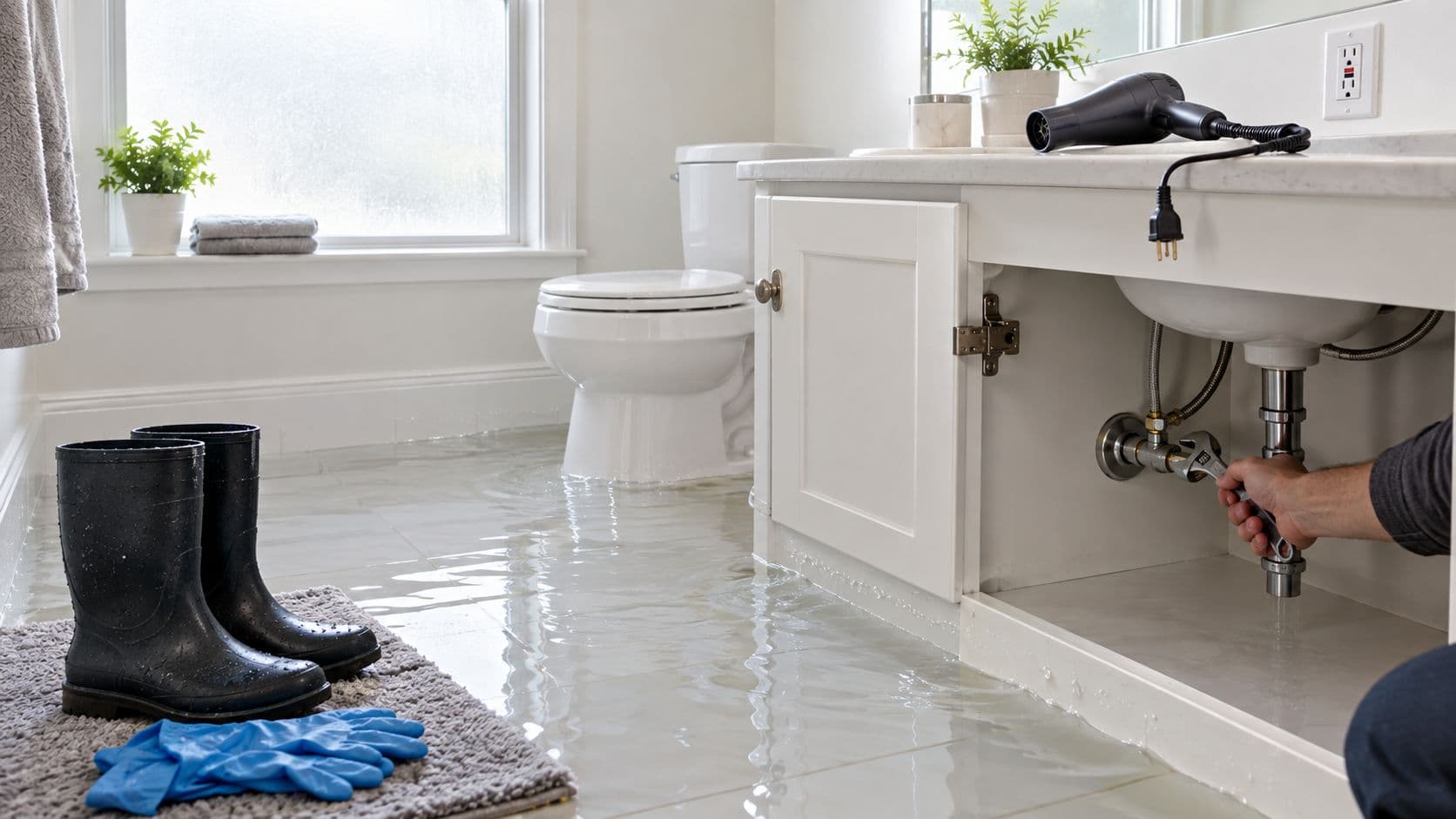
The first hard rule is simple, electricity and standing water do not belong in the same room. If water has reached outlets, an appliance, or anything plugged in, the breaker for that bathroom or the wet zone should be turned off before anyone steps into the water. If the shutoff point is on the bathroom side and the room is already wet, shoes with rubber soles and a dry path in and out matter more than speed.
Stop the source before chasing the puddle
A lot of homeowners start mopping while the supply line is still running. That only spreads the problem. The nearest fixture shutoff is the first target, and if that valve doesn't work or can't be found, the main water shutoff is the next move. If the source is a burst supply line, that is not a “wait and see” problem, it needs to be isolated now and the plumber needs to be called right away.
Water that looks shallow can still hide live electrical risk, especially near outlets, heaters, or appliances.
Contamination changes the response. A toilet overflow is not the same as a clean supply-line leak. If the water came from a toilet, floor drain, or anything that smells like sewage, keep children and pets out of the room, avoid barefoot entry, and treat the area as contaminated until it's cleaned properly. Rubber boots and nitrile gloves are basic protection, not overkill.
A stuck valve changes the game. If the closest shutoff won't move, don't force the point of breaking it. Go to the main water shutoff, and if the water is still actively running and the source can't be stopped safely, the right call is outside help, not improvisation. The point is to stop the source, not just stop the water from spreading across the floor.
Don't confuse source control with damage control
Source control means stopping the incoming water. Damage control means dealing with what's already on the floor. Those are different jobs, and they happen in that order. If the source is still feeding the room, every minute spent on mopping is a minute the water keeps winning.
Once the source is shut down and the room is safe to enter, the next step is bulk removal. That's when the wet vacuum, towels, and mop come in. But if the water is contaminated, or if you're not sure what backed up into the room, the room should be handled more like a restoration job than a housecleaning task.
The First 24 to 48 Hours of Drying
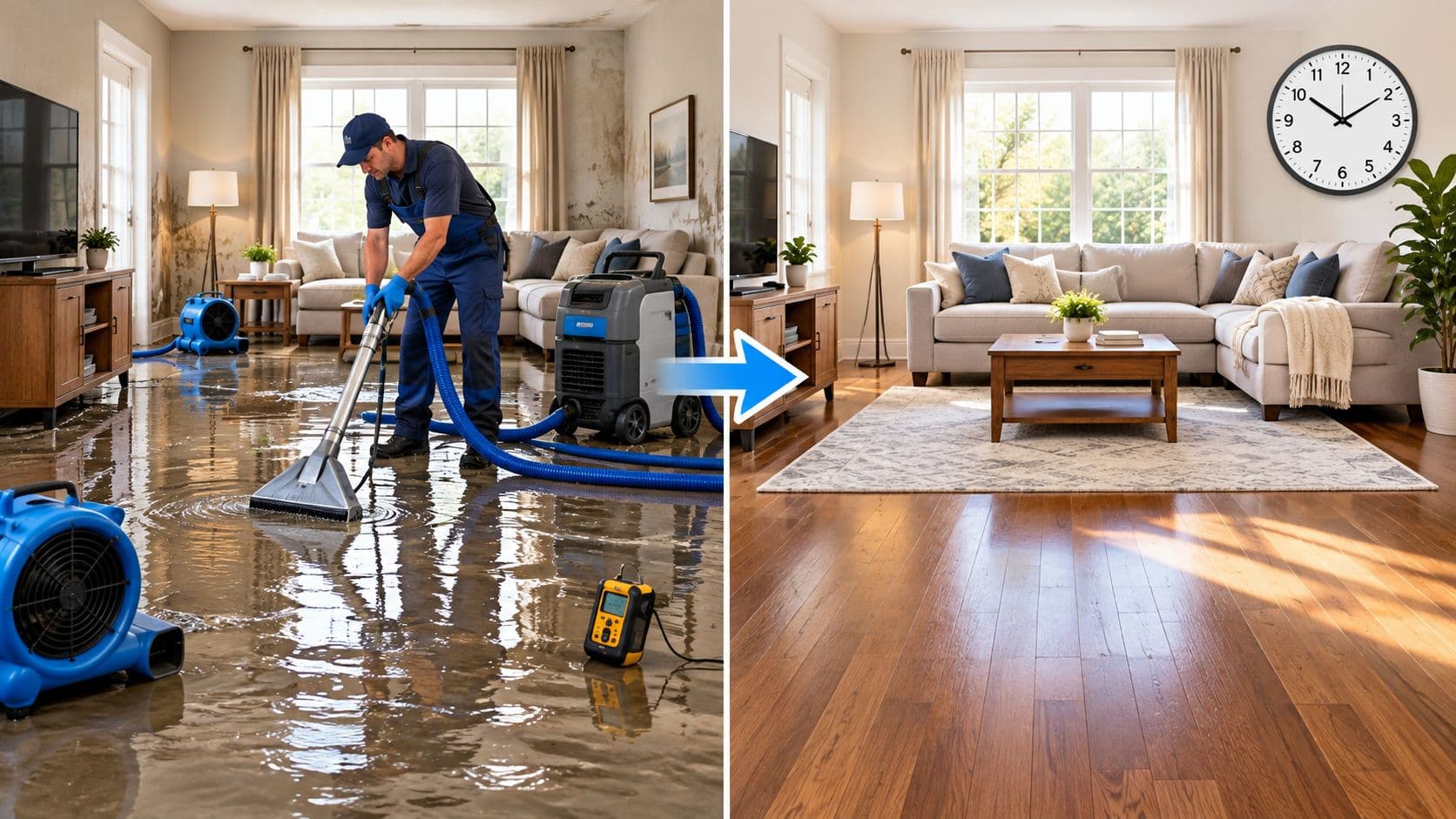
This is the part many underestimate. A bathroom can look dry on top and still hold moisture in the subfloor, baseboard, wall cavity, or vanity base. The CDC and EPA both use a 24 to 48 hour drying window to reduce mold amplification, and the CDC advises opening cabinet and vanity doors, using fans and dehumidifiers once electricity is safe, and avoiding fans if visible mold has already started because fans can spread spores. CDC homeowners and renters mold guide
Remove bulk water in the right order
For a typical bathroom, the sequence should be practical, not fancy. A wet vacuum beats a mop, and a mop beats towels when there's enough standing water to move. Towels still matter for corners, behind the toilet, and around the base of a vanity, but they're not the main extraction tool.
The floor needs to be as dry as possible before any serious drying starts. Cabinets should be opened, drawers pulled out, and anything that blocks airflow should be moved away from the wet zone. If the bathroom has a floor drain, check whether it's taking water away or backing up. If it's backing up, stop and treat the room as contaminated.
Split the response by water type
Clean water from a supply line, tub overflow, or sink overflow can usually be dried aggressively once the source is stopped and the electrical risk is gone. Contaminated water from a toilet or drain backup needs containment first. Fans are helpful in one case and risky in the other because they can spread contaminated moisture and whatever is in it.
| Action | Clean Water, supply line or tub overflow | Contaminated Water, toilet or drain backup |
|---|---|---|
| Remove standing water | Yes, start immediately with wet vac, mop, towels | Yes, but treat as contaminated cleanup |
| Open cabinets and vanity doors | Yes | Only after the area is contained and safe |
| Run fans | Yes, once electricity is safe | Not at first if contamination is present |
| Use a dehumidifier | Yes | Often yes, after contaminated water is handled |
| Call a pro | If hidden moisture or soaked materials are found | Usually yes, especially for extraction |
Moisture readings matter more than surface feel. Dry on top is not dry underneath. In restoration work, small clean-water bathroom losses often dry in about 1 to 3 days, while more typical residential losses take 3 to 5 days, and a tiled bathroom from a clean supply-line leak can dry in roughly 1 to 2 days with the right setup, but saturated subfloor or wall-cavity materials can push drying to 5 to 10 days. That's why the reading needs to be checked daily, not guessed from touch alone. Bathroom water damage drying timelines
If the room stays damp past the first day, the risk changes quickly. By the time the 48-hour mark passes, the priority becomes whether hidden materials have already absorbed too much water to save. The cleaner the source and the faster the extraction, the better the odds.
If the water source was contaminated, fans are not a cleanup shortcut. They can make the room harder to contain.
Which Bathroom Materials You Can Save
Bathroom materials do not all fail the same way. Some can be dried if they were only briefly wet. Others turn into replacement work fast, even if the surface looks fine. The right question is not “Does it look okay?” It's “Did water get into the material, and for how long?”
Save the hard surfaces, replace the absorbent ones
Ceramic and porcelain tile can survive a flood well if the substrate underneath dries properly. Grout is the weak point because it can wick water into the layer below. Vinyl flooring and glue-down tile often release from the floor within the first day, so once they start lifting, they're usually on a short clock.
Drywall is the material that causes the most trouble. If it's been saturated and especially if it's past the baseboard line, it usually needs replacement rather than rescue. A good rule is simple, if the drywall has been wet long enough to sag, crumble, or stay saturated past 48 hours, replacement is the safer call. That matches practical restoration guidance that treats saturated drywall as a replacement candidate rather than a salvage project. Flooded bathroom cleanup guidance
Watch the hidden materials behind the room
Vanity bases made of solid wood can warp quickly. MDF and particleboard are worse because they swell and break down when exposed to water. Carpet and pad in a bathroom flood are usually total losses, not drying projects. Cement board and green board can hold up longer than drywall, but they can still trap moisture behind tile, which is why the wall assembly matters more than the face of the wall.
Practical rule: if the water reached anything porous, the decision is no longer just about drying. It's about whether the material can be cleaned, dried, and verified.
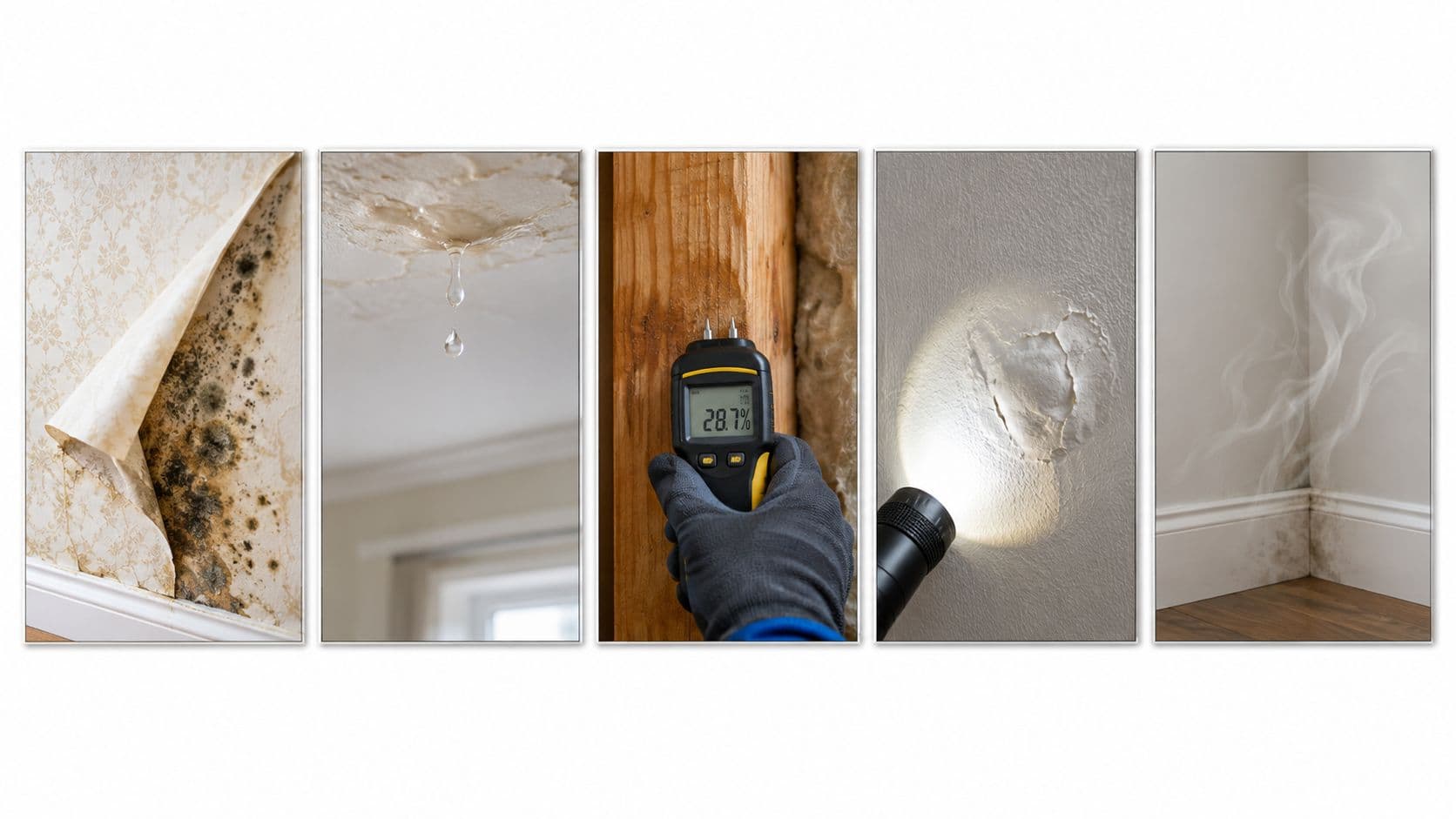
A moisture meter is the only honest way to judge hidden wetness in the subfloor or wall cavity. A surface that feels dry can still read wet behind tile or baseboard. That's especially true around tubs, toilets, and vanity bases where water often hides under trim before it becomes obvious.
| Material | Can Dry In Place? | Replacement Trigger |
|---|---|---|
| Ceramic or porcelain tile | Often yes | Substrate stays wet or loosens |
| Grout and tile joints | Sometimes | Water reached the layer below |
| Drywall | Usually no once saturated | Sagging, crumbling, or wet beyond 48 hours |
| Solid wood vanity base | Sometimes if minor | Warping or swelling |
| MDF or particleboard | Rarely | Swelling, softening, crumble |
| Vinyl flooring | Sometimes | Lifting, buckling, adhesive failure |
| Glue-down tile | Sometimes | Release from the floor |
| Carpet and pad | No in a bathroom flood | Any standing water exposure |
The material judgment should happen after extraction, not before. A room can look manageable and still hide a wet subfloor or soaked wall cavity. That hidden moisture is what turns a simple cleanup into a reconstruction schedule.
When to Call a Plumber or Restoration Pro
The cleanest decision rule is also the safest one. If the source is a burst supply line, a failed wax ring, or a leak behind a wall that can't be accessed, call a plumber immediately. If the water has stood longer than 24 hours, reached porous material like drywall or wood, or the bathroom smells musty, the work is no longer a simple homeowner cleanup. A restoration company needs to look at extraction, drying, and hidden moisture. If you need a broader overview of that handoff, water mitigation basics explain the sequence in plain terms.
Use the source and the material as the trigger
A clean supply-line failure caught in the first hour can sometimes be handled by a homeowner if the room is small, the water stayed on hard surface, and hidden materials never got soaked. That is the narrow DIY lane. It closes fast once water gets under tile, into drywall, or behind a vanity.
Anything involving a toilet overflow, a drain backup, a washing machine backup, or a sump failure is different. Those situations bring contamination into the room and push the work toward professional extraction. The size of the room matters less than the type of water. A small contaminated overflow can be more serious than a larger clean leak.
Look for the signs that the job has already grown
Musty odor within 48 hours means the room has likely stayed wet too long. Moisture readings above 20% on a wood subfloor after three days of drying mean the problem has not been resolved, even if the surface seems better. That is the point where DIY usually stops being efficient and starts becoming risky.
If the leak is behind a wall, under tile, or under a cabinet, the visible puddle is only part of the loss.
A restoration pro brings extraction equipment, moisture meters, and a drying plan that can be documented for insurance. PostDamage also fits here as one option for homeowners who want guidance on next steps and help understanding which kind of professional matches the loss. The important part is not the brand name. It's making the call before wet materials turn into demolition.
Documenting the Damage for Insurance
Insurance claims rise or fall on proof. The first photos should be taken before anything gets moved, tossed, or scrubbed. Wide shots of the whole bathroom, close-ups of the waterline, damage to baseboards and cabinets, and the exact source point all matter. Video helps because it shows how far the water spread and how the room looked before cleanup began.
Record the times that matter
The most important timestamps are when the flood was discovered and when the water was stopped. Insurers care about those moments because they frame the size of the loss and the speed of the response. Save receipts for towels, a wet vac rental, plumber charges, and any emergency supplies. Those small costs belong in the claim file.
Keep a written log of every call, including the date, the person's name, and the outcome. That log helps when the claim gets passed between an insurer, an adjuster, and a contractor. If a restoration pro is involved, ask for a moisture map and psychrometric readings, because those documents support why drying equipment stayed in place for several days instead of one.
Keep the damaged materials until they're documented
Do not throw away damaged materials just because they look ruined. The adjuster needs to see them, or there needs to be written approval before disposal. That includes soaked drywall, warped trim, damaged vanity parts, and anything else that proves the scope of the loss. A complete inventory with photos and approximate purchase dates makes the claim much easier to verify.
Sudden and accidental toilet overflows are commonly treated as covered water-damage events under typical homeowners policies, but documentation still matters. Photos, videos, receipts, and moisture readings are the paper trail that proves the work was necessary. Without them, a claim can turn into a debate about what happened and when.
Practical rule: document first, clean second, dispose last.
That order protects the claim and keeps the story of the loss clear. A bathroom flood that was handled quickly and documented well is much easier to explain than one where everything got tossed before anyone took pictures.
Costs, Timelines, and What Comes Next
A bathroom flood is usually cheaper when the response is fast and clean-water based. It gets expensive when water has time to move under flooring, into drywall, or behind cabinetry. The biggest cost difference is not between small and large rooms, it's between surface water and hidden saturation. A one-room cleanup can stay relatively contained if the source is stopped fast. Once reconstruction starts, the price and timeline both stretch.
Use the clock to judge the likely scope
The first hour is about shutoff, safety, and photos. The first day is about extraction. The next one to two days are about drying and reading moisture, not just looking at the room. If fans and dehumidifiers are doing their job, the area should gradually move toward dry readings rather than just a less-wet appearance.
By the end of 72 hours, a bathroom that's still holding moisture has already crossed into a more serious category. That's when hidden dampness, warped trim, and lingering odor tend to show up. A sewer backup, structural saturation, or moisture behind tile is not the place to wait and hope.
| Response Scenario | Typical Cost Range | Expected Duration | Notes |
|---|---|---|---|
| Quick DIY cleanup of a small clean-water spill | Lower cost, mostly supplies and cleanup materials | Same day to a couple of days | Works only if water stayed on hard surface and was stopped fast |
| Professional extraction and drying for a bathroom loss | Higher cost, depends on equipment and labor | Several days | Common when hidden moisture or porous materials are involved |
| Contaminated toilet overflow or drain backup | Higher cost than clean water cleanup | Several days or longer | Containment and professional handling are usually needed |
| Drywall, trim, or subfloor replacement | Variable and often the most expensive phase | Adds days to weeks | Starts when materials cannot be safely dried in place |
The homeowner can usually handle shutoff, light extraction, and documentation. The pro should handle contamination, hidden moisture, structural drying, and anything behind walls or under tile. That split keeps the job from getting bigger than it needs to be.
The final rule is blunt. If the water came from sewage, if the subfloor is soaked, or if you can't tell where the moisture stopped, stop DIY and call a mitigation company immediately.
If a bathroom flood just hit the house, PostDamage can help turn the chaos into a clear next step. It explains what to do after water damage, when to bring in help, and how to think about cleanup, drying, repair, and insurance without guessing. Visit PostDamage to get guided through the next move instead of trying to sort it out alone.