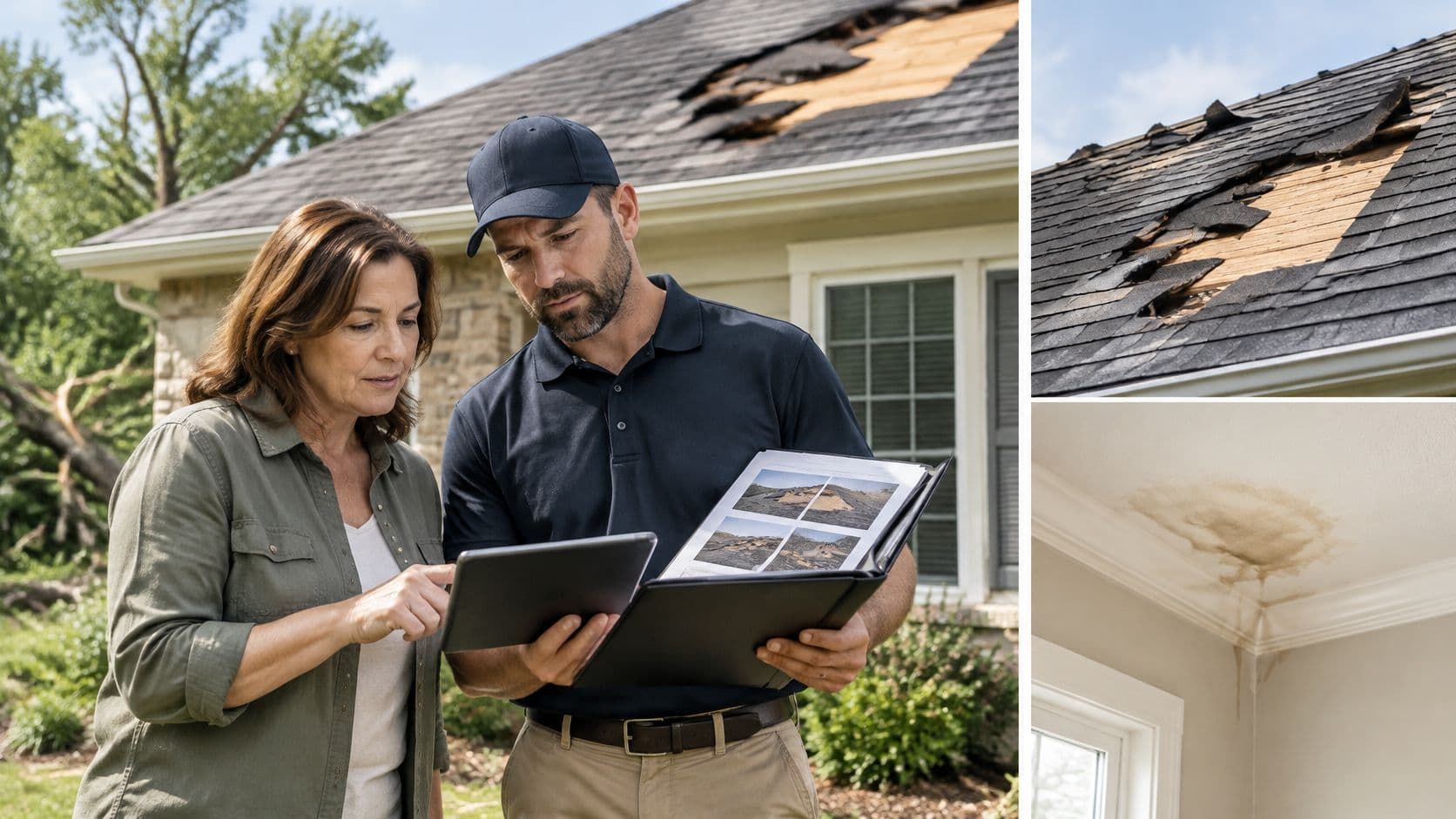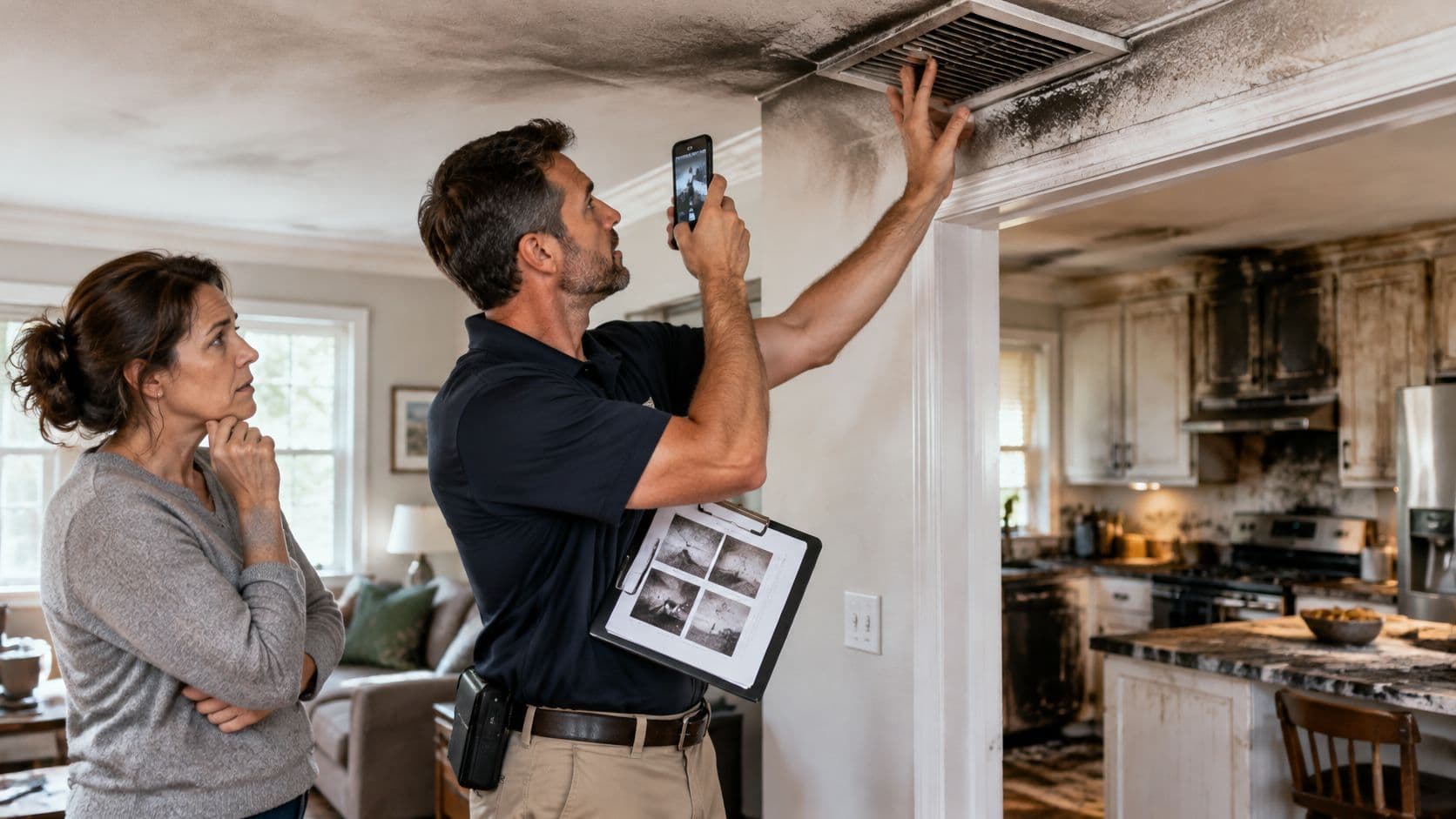
A windstorm has passed, and the roof looks different: shingles are missing, a ceiling stain has appeared, or a fence has come down. The insurer's estimate has arrived, but it may cover only part of what a contractor says needs repair. Before signing a contract or accepting a payment, the property owner needs to understand what the claim includes, what the policy pays, and whether outside help could close a meaningful gap.
A wind damage public adjuster represents the policyholder in an insurance claim, but negotiation is only one part of the job. Careful damage scoping, organized evidence, and a close review of payment terms can matter just as much, particularly when the roof has pre-existing wear or the policy applies a deductible or depreciation.
What a Wind Damage Public Adjuster Does and Who Else Is Involved
An insurer's adjuster assesses the claim for the insurance company, a public adjuster represents the policyholder, and a roofing contractor inspects or repairs the roof without acting as the owner's claim advocate.
Who Works for Whom in a Wind Claim
| Role | Works For | Main Job | How Paid | Negotiates Settlement |
|---|---|---|---|---|
| Insurance company adjuster | The insurer | Estimates the covered loss | Paid by the insurer | Acts for the insurer |
| Public adjuster | The policyholder | Documents, estimates, and negotiates the claim | Set by contract, usually a percentage or fixed fee | Yes, for the policyholder within state law |
| Roofing contractor | The property owner | Inspects and performs repairs | Repair invoice | No, not a claim advocate |
A public adjuster may inspect roof slopes and exterior components, measure the damage, prepare an estimate, and organize photographs, receipts, and other supporting records. The adjuster can present that scope to the insurer and negotiate on the policyholder's behalf, within the scope permitted by state law and the adjuster's license. The insurer's adjuster still conducts the insurer's own inspection. A public adjuster's involvement doesn't replace that review or guarantee that the insurer will accept the estimate.
The contractor's role is different. A roofing contractor can identify repair needs, price the work, and complete it, but a repair estimate alone doesn't establish that the policy covers every listed item. The owner may need to connect each requested repair to storm-caused damage and the policy language.
What to Check Before Hiring
Public adjusters must hold the required state license, and their compensation is set by a written contract. The contract should make clear how the fee is calculated and what services are included. Hiring is optional: a straightforward claim may settle without a public adjuster, while a disputed or complex loss may call for professional claim assistance.
PostDamage explains that public adjusters are different from insurance company adjusters, who work on behalf of insurers. Property owners considering repair work can also review storm damage repair guidance to understand common damage categories. Before signing with an adjuster, the property owner should verify the license with the relevant state authority and read the contract closely, especially the fee, cancellation, and payment provisions.
When a Wind Claim Calls for a Public Adjuster
A windstorm strips shingles from a roof. The insurer's estimate allows repairs on one slope, while the roofer's written estimate identifies damage on every slope. That difference calls for a closer look at the inspection findings, repair scope, and policy terms. Neither estimate is conclusive on its own.
NOAA's U.S. billion-dollar disaster records show 203 billion-dollar severe-storm disasters in the United States between 1980 and 2024, the largest category among 403 billion-dollar weather and climate disasters, with more than $2.915 trillion in cumulative losses adjusted using the 2024 Consumer Price Index. A wind claim may involve more than roof repairs. Exterior components, interior water damage, contents, code-related work, or business interruption may also need to be considered. NOAA's records distinguish severe storms as the most frequent disaster type, while tropical cyclones generally have higher average losses per event.
Signs Outside Help May Be Useful
A public adjuster may be worth considering when:
- The estimates differ substantially: The insurer's estimate is far below a contractor's written estimate, and the gap needs a line-by-line explanation.
- The claim is partly denied: A written denial or omitted damage calls for reviewing the stated reasons and relevant policy terms.
- The roof scope is complex: Damage spans multiple slopes, or a commercial low-slope roof includes membrane, flashing, coping, equipment, or interior components that need assessment.
- Water or contents are involved: Interior damage or personal property may require separate documentation.
- Operations were interrupted: A business may need revenue, payroll, inventory, and closure records to support a lost-income claim.
- The policy or deadline is unclear: Unfamiliar endorsements or an approaching filing deadline may make an early professional review useful.
A single damaged gutter or fence panel may be manageable without professional claim assistance, particularly if the insurer's estimate is close to the repair estimate. The same may be true for an owner who can confidently review the declarations page and relevant endorsements. PostDamage helps property owners understand when hiring a public adjuster may be appropriate. The service is optional, and the owner makes the decision.
The key question is not who offers the larger estimate. Wind claims can lose value through deductibles, actual cash value provisions, and disputes over whether roof conditions came from the storm or existed beforehand. Early scoping can clarify what damage is being claimed and how each item relates to the policy. A public adjuster may help with documentation, estimates, or negotiations, depending on the adjuster's license and applicable law. Outcomes depend on the policy and state law.
How to Document Wind Damage Before Repairs Begin
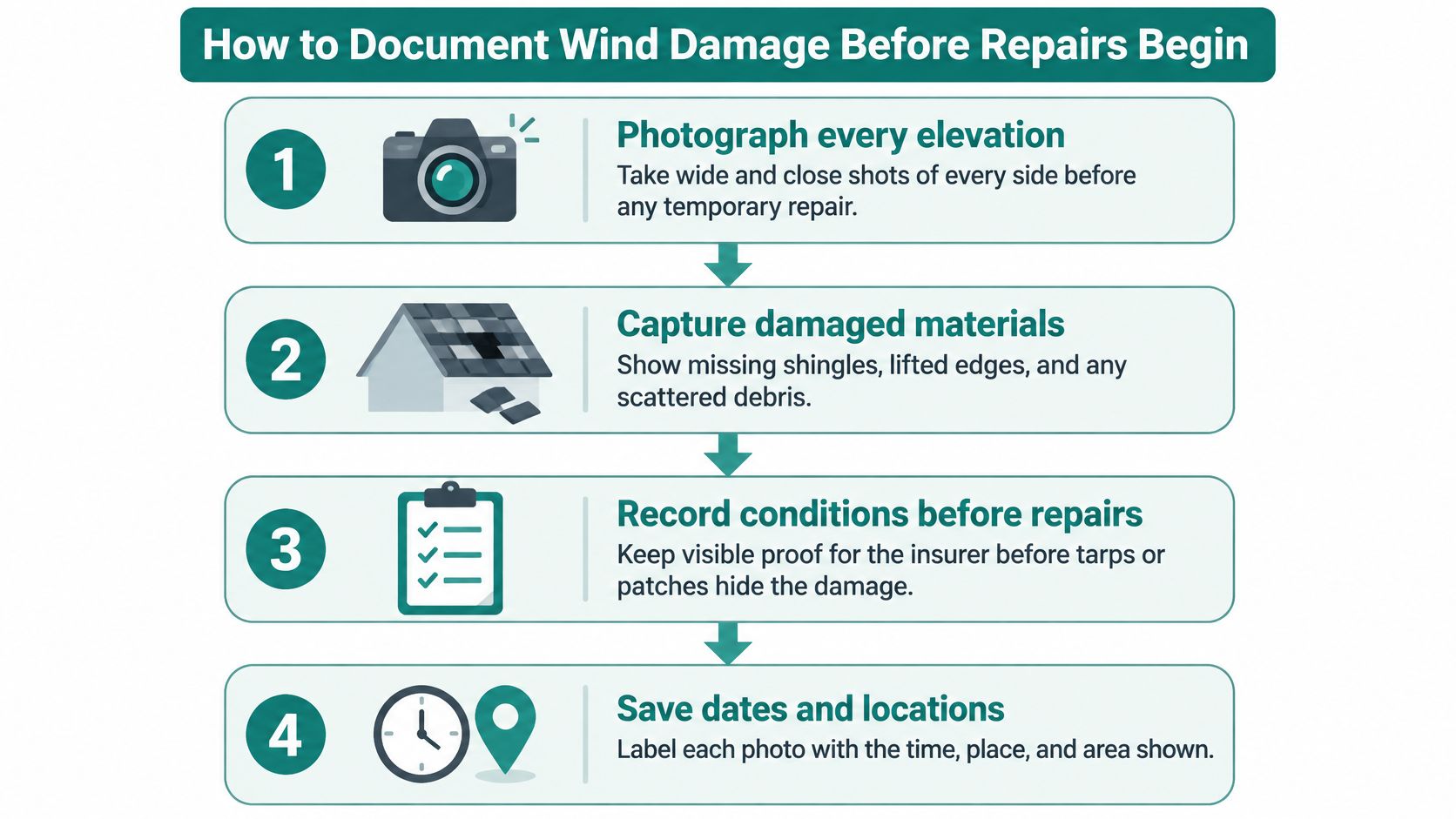
A tarp can stop more water from entering, but it may also cover the condition the insurer needs to inspect. Photograph damage before temporary work begins when it is safe to do so, and keep a record of any repairs. NOAA's account of billion-dollar weather and climate disasters reports 323 disasters in the United States from 1980 through 2021, with direct losses exceeding $2.195 trillion in inflation-adjusted terms. It also reports an annual average of 7.7 events across 1980–2021, rising to 17.8 per year during 2017–2021. After a widespread storm, clear property-specific documentation helps establish what was damaged before cleanup or repairs change the scene.
Build a Record Before the Scene Changes
Photograph each side of the building. Start with wide views, then take close-ups of damaged areas before temporary work begins. Keep the original files and note when they were taken. Photos made only after repairs may not show the original condition.
Record the storm and when damage was noticed. Write down the storm date and the date you first observed damage. Save nearby weather information if available. Neighboring property damage can provide context, but it does not establish what caused damage at your property.
Label each affected component. Photograph roof slopes, shingle tabs, flashing, gutters, siding, windows, fences, and outbuildings. Pair close-ups with wider shots that show each item's location. Without labels or context, photos can be difficult to match to an estimate.
Keep removed materials when practical. Photograph loose shingles, flashing, or other components where they were found, then store them safely if possible. Their condition and location may help explain what failed.
Collect pre-storm records. Gather roof installation details, past inspections, maintenance invoices, and earlier claim documents. These records give the claim file a basis for comparing the property's prior condition with what was found after the storm.
Record interior and contents damage. Photograph affected rooms and items, and retain receipts or other proof of value when available. For commercial property, keep revenue, payroll, inventory, and closure records if operations were interrupted. A repair estimate alone does not document those losses.
Keep the insurer's estimate and written findings. Save correspondence and request written explanations of damage that was accepted, omitted, or denied. Store these with the other claim records so the insurer's scope can be compared with the documented damage.
PostDamage provides general information about claim documentation and options. Owners dealing with a disputed or underpaid claim can review its insurance claim help service to understand how to request professional assistance where available.
Before repairs proceed, organize the file so another person can identify what was damaged, where it was, and when it was recorded. Take photos before emergency work when safely possible, and keep receipts for temporary repairs.
Separating Storm Damage From Wear and Pre-Existing Defects
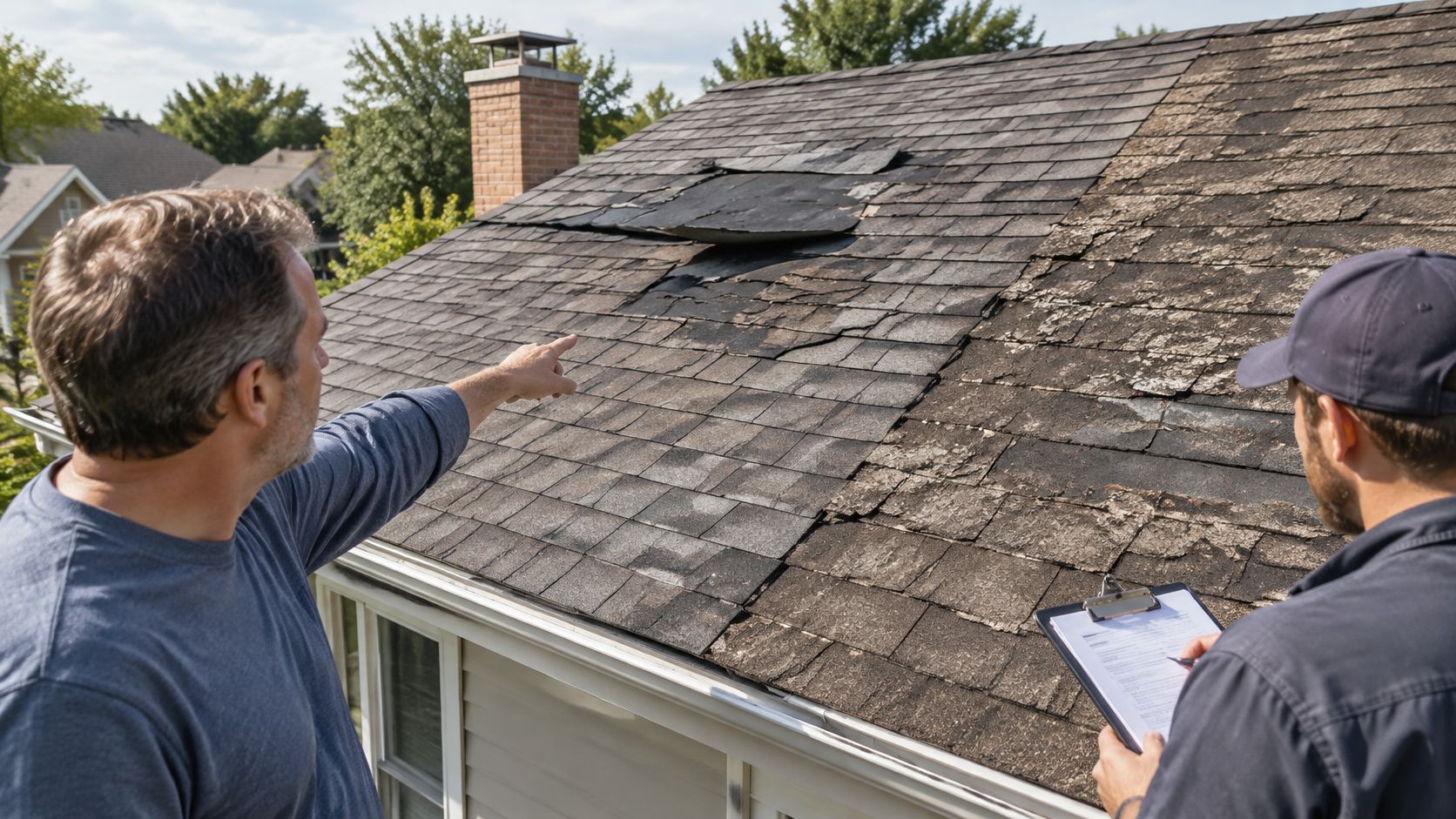
A roof can show fresh wind damage alongside years of wear. That mix can turn a claim on whether the storm caused the specific damage being claimed, and what the policy covers. Liberty Mutual's roof and homeowners insurance guidance says wind damage may be covered, while normal wear, aging, and lack of maintenance are generally excluded. That distinction does not settle a mixed-cause dispute. The roof's condition and the damage pattern still matter.
Read the Damage Pattern, Not Just the Missing Shingles
| Observation | Usually Points to Wind | Usually Points to Wear or Prior Defects |
|---|---|---|
| Creased or torn shingle tabs with fresh edges | Yes | Old cracks with weathered edges |
| Missing shingles concentrated at edges and corners | Yes, if the pattern follows storm wind direction | Scattered loss across an aging roof |
| Granule loss and brittle material | Rarely on its own | Yes, age-related |
| Fasteners pulled through or lifted | Yes, when the pattern matches uplift | Corrosion or installation gaps |
| Leaks at flashing or coping | Possible if flashing was lifted | Long-standing sealant failure |
A cluster of missing shingles at roof edges may support a wind explanation if it fits the storm's direction. Scattered loss on an aging roof is less specific. Roof age, installation details, prior inspections, and earlier repairs help put the visible damage in context. A leak or missing shingle alone does not establish when or how the damage occurred.
The Insurance Institute for Business & Home Safety's Hurricane Ian roof assessment found issues on roughly half of inspected asphalt-shingle roofs, with roofs at least 10 years old especially vulnerable. Its assessments also found damage rates above 50% on low-slope commercial roofs, often involving flashing or coping rather than the membrane field, and rates near 12% for metal roofs. Those findings show why roof age and covering type matter, but they do not establish the cause of damage at an individual property.
When a Technical Assessment Matters
For disputed roof-deck damage, FEMA's wind-vulnerability assessment guidance describes comparing calculated wind-pressure demand with fastener capacity. The demand-to-capacity ratio should be no greater than 1.0. FEMA recommends a detailed Level 2 assessment, including exposing the deck to verify fastener type and spacing, when a preliminary assessment indicates remaining useful life and the building's basic wind speed exceeds 120 mph. The guidance also calls for using ASCE 7 or the governing local code, applying whichever produces the higher loads.
A technical assessment can clarify whether the observed failure pattern fits the roof's attachment and construction. An engineer's calculation may help resolve a dispute over cause or repair versus replacement, while photos alone may leave key questions unanswered. A public adjuster may help document and estimate the storm-related portion of the damage, depending on licensing and applicable law. Early scoping matters: a negotiation cannot make an unsupported damage estimate more persuasive, and coverage remains subject to the policy.
Deductibles and Coverage Terms That Shrink a Wind Payment
A roof repair estimate may exceed the insurance payment by thousands of dollars because the deductible comes off the covered loss, depreciation may be withheld, or a limit may cap payment. The policy determines which amounts apply. A public adjuster may help document and estimate damage and discuss the claim with the insurer, depending on licensing and state law, but cannot change the policy's terms.
| Term | Effect on the Payment | Where to Check |
|---|---|---|
| Wind or named-storm deductible | Subtracted from the covered loss before payment | Declarations page |
| Actual cash value | Reflects depreciation; recoverable depreciation may be paid later under replacement-cost terms | Policy form and endorsements |
| Coinsurance | May reduce payment when the insured limit falls below a specified share of replacement value | Declarations and coverage section |
| Sublimit | Caps payment for certain property or damage types | Endorsements |
| Business income waiting period | Delays business-income payments after a business closure | Business income form |
A wind or named-storm deductible applies after the insurer calculates covered damage. Check whether the declarations page lists a separate percentage deductible, since that can produce a larger out-of-pocket amount than a flat deductible.
Actual cash value can leave a gap between the first payment and the repair cost. Under replacement-cost terms, the insurer may initially deduct depreciation, then consider releasing eligible recoverable depreciation after repairs are completed and required documentation is submitted. The policy sets the conditions and covered costs.
Commercial Losses Need More Than a Repair Scope
For a business claim, preserve records that show how the interruption affected operations: revenue and expenses, payroll, inventory, and dates of closure or reduced operations. A waiting period may delay business-income payments, while coinsurance terms may affect the amount payable. A building repair estimate alone does not establish lost income.
The Kansas Insurance Department's storm-claim report reported 82,498 storm claims and approximately $879.1 million paid in 2025, with paid claim amounts 99% higher than in 2023. These Kansas figures show the scale and variability of storm losses, not the payment a particular property owner should expect.
Before evaluating a settlement, identify the deductible, applicable limits, depreciation terms, and records needed to support the claim. Those terms can shape the net payment as much as the repair scope does.
Public Adjuster Fees and Claim Steps
A public adjuster's compensation should be stated in a written contract, usually as a percentage of the settlement or a fixed fee. The contract needs to explain the basis for the fee and what work the adjuster will perform. Because contract rules can differ by state, the property owner should verify local requirements and not rely on a verbal description of the cost.
Questions to Resolve Before Signing
- How is the fee calculated? Ask whether the percentage or fixed amount is calculated before or after the deductible.
- Does the fee apply to money already paid? Clarify whether an undisputed advance or prior payment is included in the calculation.
- What happens if the contract ends early? Ask which fees, if any, remain due after cancellation.
- How is the settlement check handled? Confirm who signs it, where it's deposited, and how the contract accounts for distribution.
- Is the license current? Verify the public adjuster's state license with the relevant state insurance department before signing.
A low fee doesn't automatically mean good value, and a percentage fee can reduce the amount the owner ultimately keeps. The contract should be weighed against the size and complexity of the claim, not just the adjuster's promise to negotiate.
A Typical Claim Sequence
- Report the loss promptly. Record the policy's notice and filing requirements, and don't assume the same timeline applies to every claim.
- The insurer assigns an adjuster. The insurer's representative inspects the property and develops the insurer's estimate.
- Submit supporting scope and evidence. The owner or public adjuster can provide photographs, a repair estimate, and documents that support the claimed damage.
- Review the written response. The insurer may issue an estimate or explain a denial; compare the response with the requested scope.
- Consider the available dispute process. Negotiation may continue, and appraisal may be an option if the policy provides for it.
- Track payment and any holdback. If the policy allows depreciation to be released after completed repairs, retain invoices and submit them as required.
The sequence can differ based on the policy, state law, and the nature of the loss. A careful file and clear contract are more useful than assuming that hiring an adjuster guarantees a particular settlement.
Choose Your Next Step Before You Sign Anything
Before hiring a public adjuster or accepting a claim payment, the property owner should check the claim's timing, scope, and unresolved questions. A measured decision is better than signing under pressure, especially when the disagreement turns on policy language or technical causation rather than repair pricing alone.
Find the applicable deadline. Review the policy's reporting and filing requirements, then check the rules that apply in the property's state. Don't assume a deadline based on another owner's claim.
Compare the estimates line by line. Match the insurer's scope against the contractor's written estimate, and flag differences in materials, quantities, access, interior work, or omitted components. A total-price comparison alone can hide the reason for the gap.
Decide whether outside help fits the claim. Consider the size of the difference and whether the loss involves multiple roof areas, interior damage, business interruption, or a disputed cause. A simple repair may not justify a fee.
Review the contract before signing. Use the questions in the fee section to confirm how compensation, cancellation, and settlement funds are handled. Verify the license and keep a copy of the signed agreement.
Get the right kind of explanation for a dispute. Request the insurer's written position. An engineer may help address technical causation, while an attorney may be appropriate for legal questions; storm damage legal resources can help property owners explore that distinction.
The right choice depends on the policy, the size of the estimate gap, and state law. A homeowner or business owner with a disputed commercial loss can request assistance from a licensed professional. PostDamage is an independent information and referral platform, not an insurance company, public adjusting firm, law firm, or restoration contractor. It doesn't adjust, negotiate, or settle claims; it offers a way to request professional assistance and connects qualified inquiries with relevant professionals where available.

Property owners dealing with wind damage can use PostDamage to request a claim-help review and, where available, connect with a relevant licensed professional. For a disputed, delayed, denied, or underpaid claim, gather the insurer's estimate and damage records before requesting assistance.