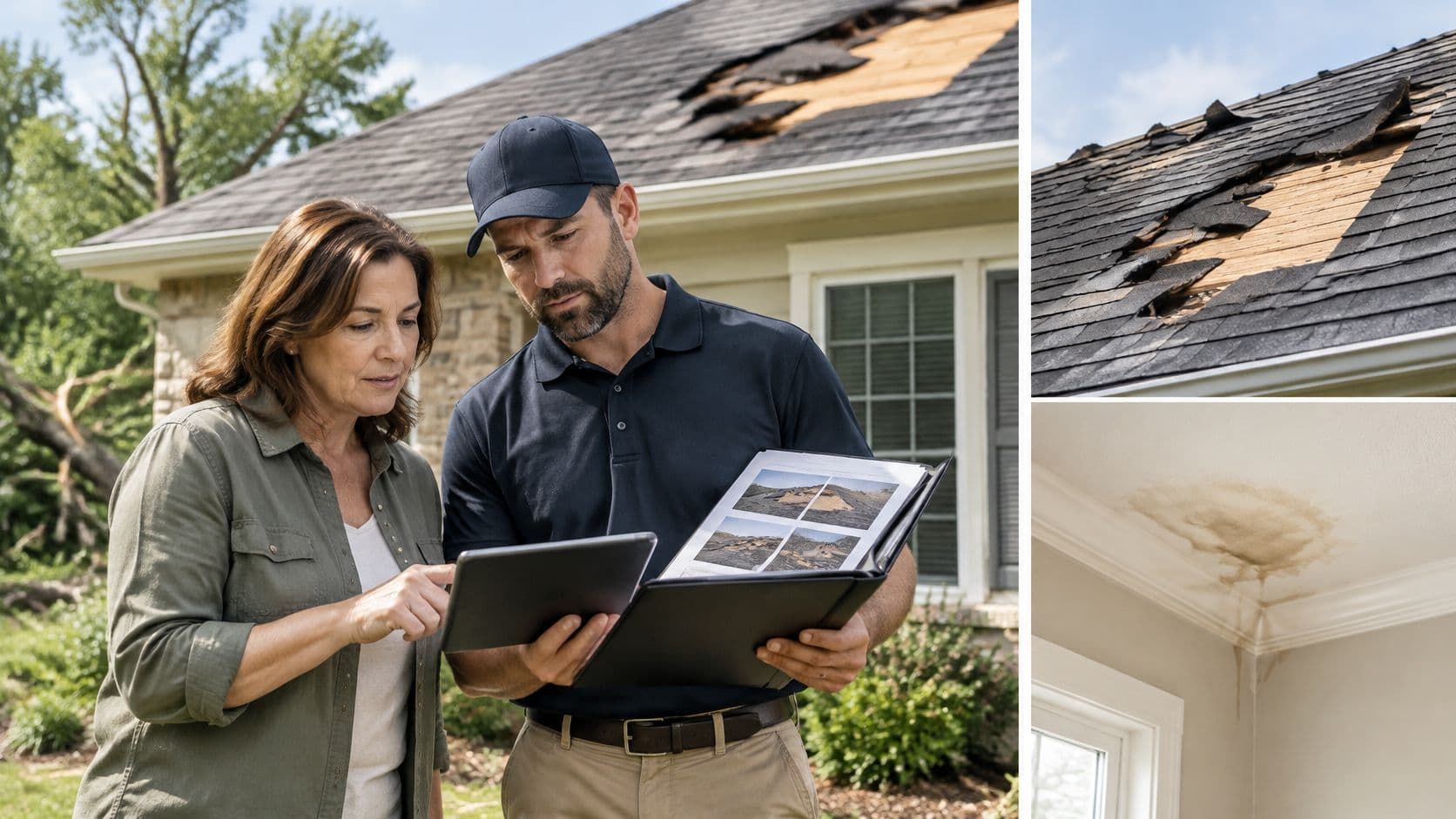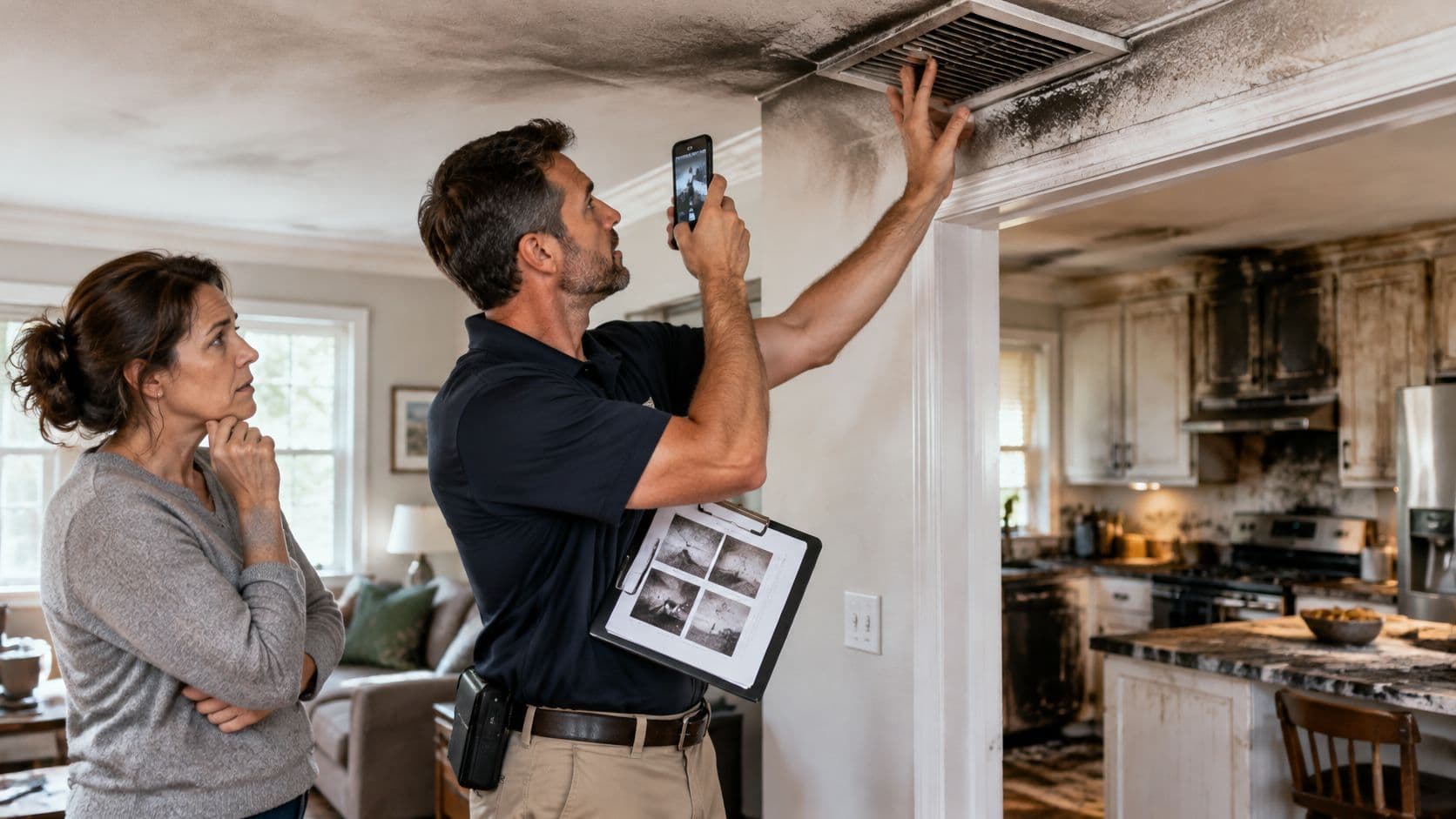
A family walks back into a home after a small kitchen fire and finds the living room untouched by flames. The walls look clean. Then the heat kicks on, the vents blow, and a sharp smoke odor fills rooms that never burned. Clothing in closets smells, the sofa fabric holds residue, and nobody can tell from a quick look how much needs cleaning, how much needs replacing, and what the insurer will pay for.
That gap between what smoke did and what anyone can prove is where these claims get decided. Documentation taken before cleaning, the right questions about the HVAC system, and a clear sense of who works for whom matter more than a single photograph of soot on a wall.
What a Smoke Damage Public Adjuster Actually Does
A smoke damage public adjuster is a licensed professional a policyholder hires to document a loss, organize the claim file, and negotiate with the insurer. The adjuster works within the scope permitted by the license and applicable state law, not as an insurer, contractor, or attorney.
PostDamage provides information about public adjusters, who are professionals that represent policyholders in insurance claim matters within the scope permitted by applicable state law. PostDamage also notes that public adjusters may help with damage documentation, claim estimates, and claim negotiations, depending on their license and applicable law.
Why Smoke Scope Runs Wider Than the Burned Room
Smoke travels on air currents and settles far from ignition. A sound scope may need to cover soot on surfaces, odor that has migrated into drywall, insulation, carpet, and upholstery, contaminated HVAC components, and contents in rooms that never burned. Each category needs its own evidence, because a clean looking wall doesn't prove the ductwork or the bedding behind a closed door is clean.
The scale is not small. The U.S. Fire Administration residential fire statistics estimated residential building fires caused 344,600 incidents and approximately $11.27 billion in property loss during 2023, and smoking related residential building fires accounted for an estimated $408.7 million in property loss within that total. Losses of that size explain why insurers scrutinize scope carefully, and why a thin file invites a thin estimate.
A public adjuster can document, estimate, and negotiate. That professional can't guarantee approval or a higher settlement, because coverage still turns on the policy contract and applicable law.
One practical test helps before signing anything. The homeowner asks the adjuster to state in writing which tasks that adjuster will perform, such as inspections, inventory work, estimate review, and meetings with the insurer, and which tasks fall outside the engagement. A clear written answer prevents misunderstandings later.
Public Adjuster, Insurer Adjuster and Contractor Compared
| Professional | Works for | Main job on a smoke claim | How they are paid |
|---|---|---|---|
| Insurance company adjuster | The insurer | Inspects the loss and writes the insurer's estimate | Paid by the insurer as staff or contractor |
| Public adjuster | The policyholder | Documents the loss, builds the claim file and negotiates with the insurer | Usually a share of the claim payment, subject to state rules |
| Restoration contractor | The property owner | Cleans, repairs and rebuilds damaged areas | Contract price for the work performed |
| Attorney | The policyholder | Advises on legal rights and handles disputes or litigation | Hourly, contingency or other agreed terms |
Whose Side Each Person Is On
The single most important difference is loyalty. PostDamage explains that public adjusters are different from insurance company adjusters, who work on behalf of insurers. An insurer's adjuster inspects the property, applies the insurer's reading of the policy, and writes the insurer's estimate. That estimate reflects what the insurer currently accepts as the scope and price of the loss.
A restoration contractor answers a different question, namely what the cleaning and repair work will involve and cost. The contractor's estimate is a sales and repair document. It can support a claim as evidence of market pricing, but it isn't a claim advocate's analysis of coverage, depreciation, or policy limits. Readers reviewing smoke damage restoration guidance should keep repair scope and claim advocacy as separate jobs.
A public adjuster documents the loss and argues the policyholder's position within what state law allows that license to do. An attorney becomes relevant when the dispute moves toward litigation, a formal legal challenge, or a question about whether the insurer breached the policy.
Decision rule: What should be repaired is a contractor question. What the insurer should pay is a public adjuster question. Whether the insurer breached the policy is an attorney question.
Roles overlap in practice. A contractor may attend an inspection, and a public adjuster may coordinate with one. Because overlap creates confusion, each party should state in writing what that party will and won't do, who communicates with the insurer, and who signs what. That short conversation, held before work starts, prevents duplicated fees and missed deadlines later.
Signs Your Smoke Claim Needs a Public Adjuster
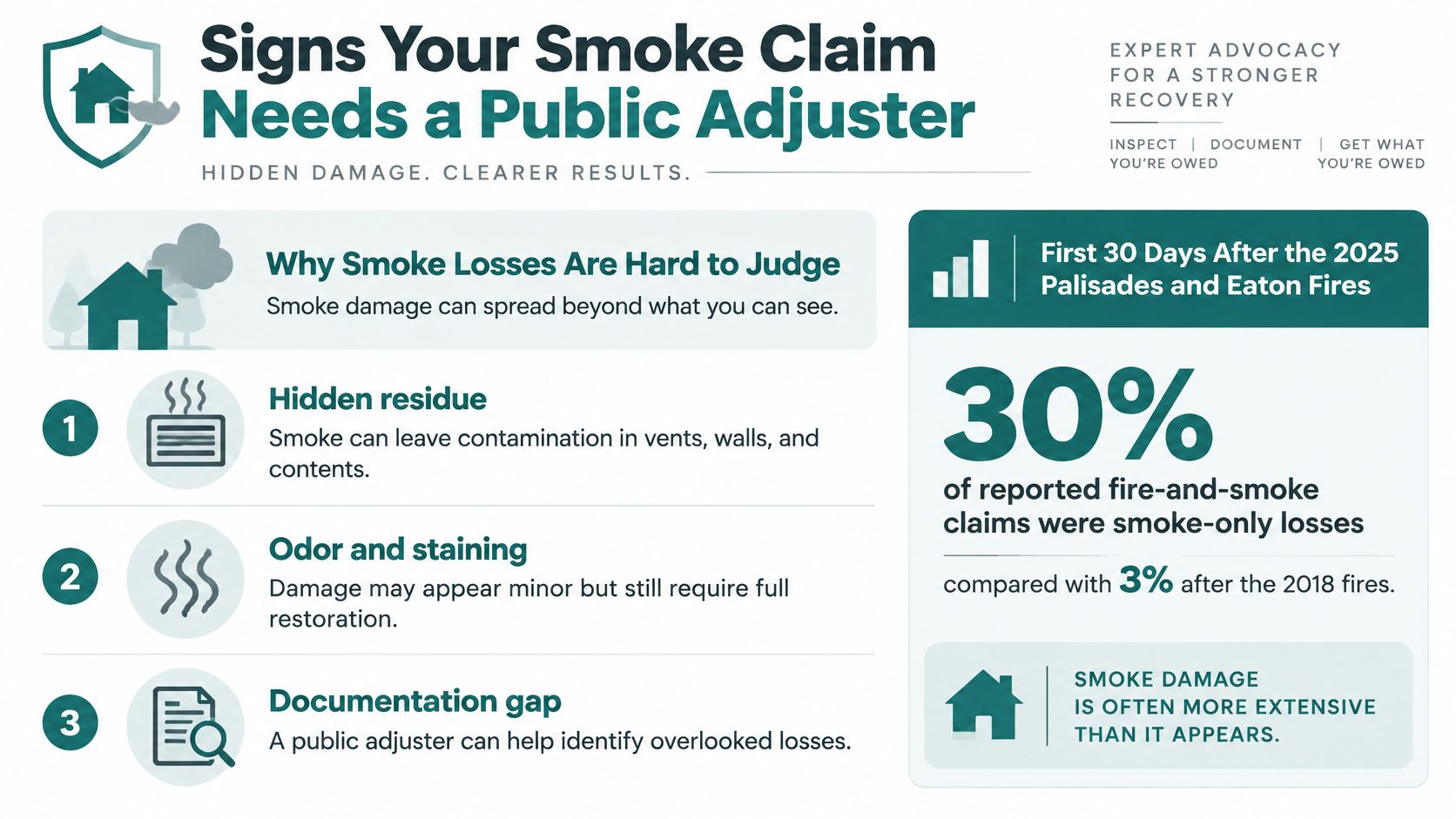
Smoke losses deceive because the building can remain standing and livable while contamination hides in insulation, ducts, and soft contents. The Verisk ClaimSearch trends report found that in the first 30 days after the 2025 Palisades and Eaton fires, 30% of reported fire and smoke claims were smoke losses, compared with only 3% after the 2018 Camp Fire, and California insurers reported that more than 13,000 claims from the January 2025 fires involved standing homes that sustained smoke damage. The report also showed average smoke claim severity for the 2025 fires was 112% higher than for the 2017 to 2018 fires.
Signals That Help Is Worth Considering
- Smoke only damage: No visible fire damage exists, yet odor and residue are present throughout the property.
- Persistent odor: The smell returns after an initial cleaning, which suggests residue in porous materials or the HVAC system.
- System involvement: Ducts, coils, filters, or insulation were exposed while the system ran.
- Large contents exposure: Furniture, clothing, electronics, and stored items are numerous or hard to value.
- An estimate with gaps: The insurer's scope omits rooms, contents categories, or HVAC work the owner can observe.
- Denial, delay, or underpayment: The claim has stalled or the offer doesn't match documented conditions.
- Multiple parties affected: Tenants, HOA members, or commercial occupants add complaints and lost use issues.
PostDamage states that hiring a public adjuster is optional and may not be appropriate for every claim. A small, single room soot event with an insurer estimate that matches actual conditions may not justify the expense. The useful test is simple. The owner writes down what the insurer's estimate covers, then lists what the owner can see, smell, and document. The gap between those two lists is where a public adjuster's work tends to matter most.
How Public Adjuster Fees Are Usually Structured
| Fee structure | How it works | What to check in the contract |
|---|---|---|
| Percentage of claim payment | Fee is a share of the amount the insurer pays | Whether the percentage applies to amounts offered before signing |
| Flat fee | Fixed amount agreed in advance | Whether the fee changes if the claim goes to appraisal or litigation |
| Hourly rate | Billed for time spent on the claim | Written cap, time records and whether supplemental work is billed separately |
| Hybrid | Base fee plus a percentage of the recovery | Which part is owed if the insurer denies the claim |
The Fee Base Question
Cost worries most policyholders first, and the detail that matters most isn't the percentage itself. It's the base the percentage applies to. One contract calculates the fee on the entire claim payment. Another applies it only to the increase above the insurer's first offer. A third may reach amounts the insurer already offered before the adjuster was hired. Those three structures can produce very different bills on the same claim, so the contract language deserves a slow read.
A flat fee is easier to predict because the total is set in advance, although the owner should confirm which stages that fee covers. An hourly rate needs a written cap, regular time records, and clarity on whether supplemental claim work bills separately. A hybrid arrangement needs one direct answer, which portion remains owed if the insurer denies the claim outright.
Contract Checks Before Signing
State law may limit the percentage a public adjuster can charge and may require specific contract terms, so the reader should check the state's rules and confirm the license with the state insurance regulator. Cancellation terms deserve attention too, including how to cancel, any deadline for doing so, and what fees survive cancellation. The contract should also say whether the fee changes if the claim moves into appraisal or litigation.
No fee structure promises savings. A fee is justified only when the documentation, estimating, and negotiation work it pays for actually changes the outcome of the claim.
Every arrangement should appear in a written contract before work begins. Verbal explanations of fees create disputes that a one page summary would have prevented.
Records to Gather Before the Insurer Inspects
Visible soot understates smoke contamination. The EPA wildland fire smoke guidance identifies wildfire smoke's principal health concern as PM2.5, particles with aerodynamic diameters generally at or below 2.5 micrometers, and notes that ash from burned structures may be more hazardous than ash from vegetation because building contents can introduce additional pollutants. Particles that fine settle into HVAC components, insulation, carpets, and upholstery, where photographs of walls won't reveal them.
That evidence problem shapes what the claim file needs. The file has to connect smoke migration to specific cleaning, replacement, or temporary relocation costs, room by room and item by item.
Building the Record Set
- Date stamped photographs: Every affected room, plus the exterior, taken before anything is moved or cleaned.
- Room by room condition log: Odor intensity, soot visibility, and whether the HVAC system ran during and after the fire.
- HVAC evidence: Filter condition, photographs of supply and return pathways, and any duct or coil inspection findings.
- Contents inventory: Each item with age, photographs, and purchase proof where it's available.
- Cost receipts: Emergency mitigation, temporary housing, meals, and other displacement expenses as they occur.
- Communication log: Dates, names, and a short summary of every insurer call, email, and inspection.
- Policy documents: The declarations page and endorsements, kept with the claim file for quick reference.
Protecting the Evidence
Damaged materials shouldn't be discarded before the insurer inspects, because an item slated for replacement is also proof of loss. When anyone proposes cleaning a porous item instead of replacing it, the owner asks for the reasoning in writing, including the method proposed and how success will be verified. Cleaning test results on a small area can settle arguments that opinions can't.
Aggressive cleaning before documentation creates two problems. Dry sweeping or ordinary vacuuming can re-aerosolize particles, spreading contamination to cleaner areas. Early cleaning also alters the evidence, so an inspector who arrives afterward sees a property that no longer matches the loss being claimed.
Coverage still depends on the policy and jurisdiction. A thorough file doesn't guarantee payment, but it's the foundation every later negotiation stands on. Without it, the argument becomes one person's memory against an insurer's written estimate, and memory rarely wins that contest.
How to Move a Smoke Claim From Filing to Payment
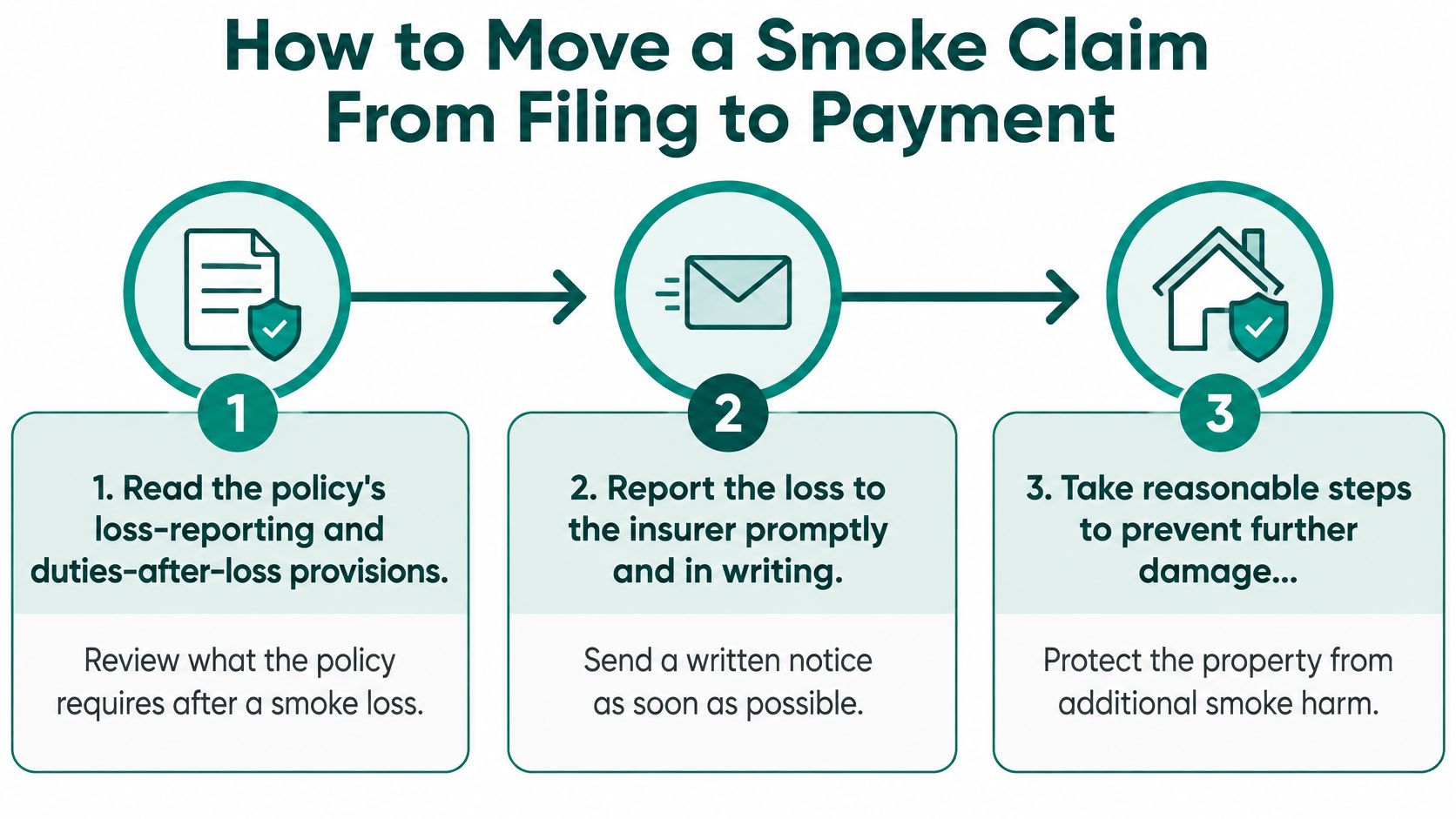
- Read the policy first. The loss reporting and duties after loss provisions set the owner's obligations. The common mistake is assuming a phone call satisfies duties the policy defines more specifically.
- Report the loss promptly and in writing. Written notice creates a dated record. Owners who rely on verbal reports often can't prove when notice was given.
- Prevent further damage. Reasonable steps, such as securing the property and shutting down a contaminated HVAC system, protect both the building and the claim. Every receipt stays in the file.
- Document before cleaning. Photographs, inventories, and condition notes capture the loss as it existed. Removing materials first destroys the evidence the estimate depends on.
- Get specialist assessments. HVAC contamination, structural concerns, or hazardous residue call for qualified professionals rather than assumptions. Skipping this step leaves hidden scope out of the estimate entirely.
- Submit requested documents completely. A proof of loss or similar form should be signed, complete, and supported by the inventory. Incomplete submissions invite delay.
- Review the insurer's estimate line by line. Each room, material, and contents category gets checked against the owner's own records. Accepting an estimate before checking the HVAC scope is a frequent and expensive error.
- Negotiate or escalate. Options may include reinspection, a supplemental claim, appraisal, or a legal route if the policy allows it. Owners weighing insurance claim help at this stage usually face a documented gap rather than a paperwork problem.
A public adjuster typically fits from step four onward, preparing the file and checking the estimate, then handling negotiation at steps seven and eight. Deadlines and procedures vary by policy and state, so the owner confirms dates against the policy and the state regulator rather than relying on general timelines. At submission, a complete file pairs every claimed cost with a photograph, an inventory entry, an estimate line, or a receipt.
Commercial Smoke Losses and Business Interruption
Business owners often ask whether smoke or poor air quality can support a claim when the building looks fine. The honest answer starts with a limit. An Insurance Business analysis of the business interruption gap explains that many property policies require direct physical loss or damage before business income coverage applies, so a revenue decline caused only by hazardous air quality may not automatically trigger coverage.
Scenarios That Lead to Different Policy Terms
- Contaminated property: Smoke physically contaminates inventory, equipment, or interior finishes.
- Civil authority action: A government evacuation or closure order restricts access to the premises.
- Unsafe entry: Customers can't safely enter, or employees can't work in the space.
- Reduced demand only: Air quality conditions cut foot traffic without any physical damage to the property.
Each scenario points to different provisions worth checking, including waiting periods, exclusions, ingress and egress terms, civil authority coverage, extra expense, and contingent business losses tied to suppliers or neighboring properties. Treating all four scenarios as one claim produces a muddled submission that an insurer can deny piece by piece.
Commercial Evidence to Preserve
Point of sale data, cancellation records, and occupancy logs show the income pattern before and during the loss. Air quality logs, closure orders, and payroll records establish why operations stopped and what fixed costs continued. Mitigation invoices, inventory evidence, and a daily loss of income calculation connect the interruption to specific dollars rather than a monthly estimate.
A public adjuster may help quantify covered property and business income losses from those records. That professional can't guarantee the policy's physical damage requirement is satisfied, because the contract language and jurisdiction control that question. Property managers and multifamily owners should also track tenant complaints, unit turnover, and occupancy impacts separately from building repair costs, since those losses follow different policy provisions and need their own documentation.
Decide Whether to Hire Help for Your Smoke Claim
Three questions frame the decision. First, is the damage limited to visible areas, or do odor, HVAC involvement, and contents suggest a wider scope? Second, does the insurer's estimate match what the owner can see and document? Third, is the policy clear about coverage, duties, and deadlines, or does the language leave real doubt?
When the answers point to a gap, a conversation with a public adjuster is worth having before more cleaning erases evidence. Bring the policy and the insurer's estimate to that call so the adjuster can see the gap directly rather than working from a verbal summary.
Next Steps
Two moves protect the claim while that decision gets made, and both hinge on timing:
- Set the timing first: Schedule the adjuster conversation before mitigation begins. Duct cleaning, ozone treatment, and laundering remove the odor and residue that support a wider scope of loss.
- Get a contractor estimate: A written repair scope gives the claim discussion concrete pricing to compare against the insurer's number.
Hiring a public adjuster stays optional, and it may not fit every claim. The decision also has an exit ramp: if the insurer's position rests on policy language rather than on the damage itself, the disagreement has moved into legal territory, and fire damage lawyer resources explain how that separate route works.
PostDamage is an independent information and referral platform for homeowners, landlords, and commercial property owners dealing with property insurance claims. It is not an insurance company, public adjusting firm, law firm, or restoration contractor, and it does not directly adjust, negotiate, or settle claims. Homeowners can start with the residential path, while business owners and property managers should use the commercial one, since documentation and coverage questions differ between the two.
Need help with a homeowners insurance claim? PostDamage can help connect you with a licensed professional who handles smoke contamination, residue, and related losses, and business owners can ask about commercial claim assistance instead. Visit PostDamage to start with the fire and smoke damage category and describe the loss before further cleaning removes the evidence.